



2026 Proton Saga review - all the good & bad in full detail


Sell your car to Carro, get paid in 24 hours

Latest Stories

  • Electric BMW M3 ZA0 previewed with BMW M Concept Neue Klasse – over 800 hp, 800V 100 kWh+ battery?

    Electric BMW M3 ZA0 previewed with BMW M Concept Neue Klasse – over 800 hp, 800V 100 kWh+ battery?

    There is a long and slightly tedious tradition of carmakers rolling out a “concept” that everyone already knows is a production car wearing a party dress.

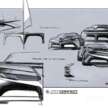
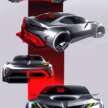
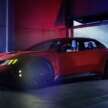
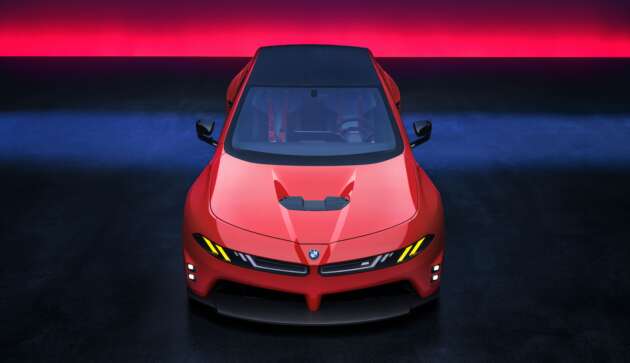
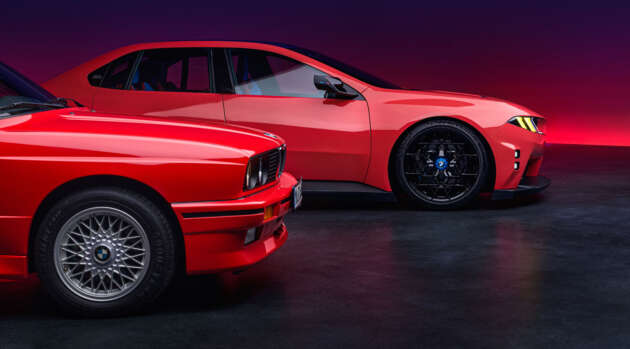
    BMW has just done exactly that at the 24 Hours of Le Mans with the M Concept Neue Klasse, and rather than pretend otherwise, let’s call it what it is: this is our clearest look yet at the first all-electric BMW M3, the car internally coded ZA0, due in 2027.

    BMW won’t say “M3” in the press material – officially this is a design and technology preview, “not currently intended for sale,” with elements that will “be incorporated into future BMW M vehicles.”
    Electric BMW M3 ZA0 previewed with BMW M Concept Neue Klasse – over 800 hp, 800V 100 kWh+ battery?

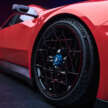
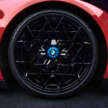
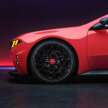
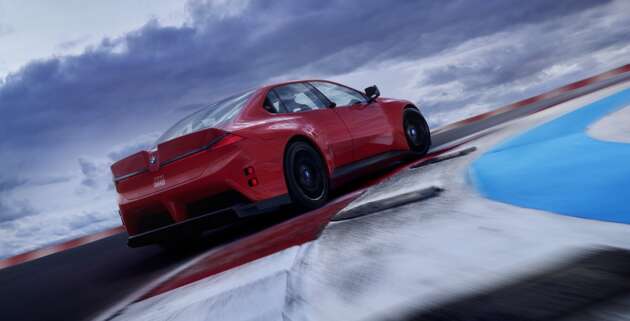
    But strip away the Monza Red paint and the centre-lock wheels and what you’re looking at is the i3 sedan (NA0) sent to the gym, given an M badge, and pointed at a racetrack. The 2027 electric M3 is the car this concept exists to soften you up for.

    The headline is the drivetrain. The BMW M3 has gone from inline-four to inline-six then V8, and back to an inline-six again with turbos. And now finally it is electric. BMW calls it M eDrive, and it is built on the Neue Klasse’s Gen6 electric architecture but reworked specifically for high-performance M applications.

    The setup is four electric motors – one per wheel – with two drive units, front and rear. There are no mechanical differentials anywhere in the car. Torque is metered out to each individual wheel electronically, which means BMW M can do genuine corner-by-corner, wheel-by-wheel torque vectoring that a mechanical diff could only ever crudely approximate.
    Electric BMW M3 ZA0 previewed with BMW M Concept Neue Klasse – over 800 hp, 800V 100 kWh+ battery?

    The brain coordinating all of this is the Heart of Joy, BMW’s centralised high-performance control unit – one of the four “superbrains” running the Neue Klasse platform.

    In M form it runs software called BMW M Dynamic Performance Control, and the key claim is speed: the Heart of Joy processes drive, brake, steering and recuperation inputs roughly ten times faster than current BMW control systems, all in a single integrated stack rather than a handful of separate ECUs arguing with each other over a CAN bus.

    This is the bit enthusiasts should pay attention to, because it’s where the “feel” of the next M3 will be won or lost. Integrated wheel-specific control of both the drivetrain and the brakes is what lets BMW promise high recuperation without unsettling the car mid-corner, optimal traction right up to the limit, and the “particularly direct response” the company keeps repeating.
    Electric BMW M3 ZA0 previewed with BMW M Concept Neue Klasse – over 800 hp, 800V 100 kWh+ battery?

    The decades-old M tuning philosophy – the throttle response, the way the chassis loads up – is now largely a software problem, attempted to be solved in milliseconds by a computer. For a brand whose whole identity is built on how its cars communicate with the driver, that is a genuinely radical reinvention. Drift enthusiasts will be happy to hear that the quad-motor layout reportedly allows the front motors to decouple entirely, dropping the car into a rear-wheel-drive mode.

    The M3 will run a 800-volt architecture and a high-voltage battery with more than 100 kWh of energy content. Crucially, this isn’t the off-the-shelf Neue Klasse pack – reports point to a dedicated M battery exceeding 100 kWh net, with the headroom for 400 kW-plus DC charging. BMW uses an M-specific optimised version of the sixth-generation cylindrical cells that debuted on the iX3, tuned for high output both when feeding the motors and when taking charge back in.

    The battery housing is integrated into both the front and rear axle structures, so the pack is a stressed member contributing to the car’s rigidity and, by extension, its handling. It’s not in the official press details but rumours are that power output sits in the 800–900 hp range. That would make he electric M3 the most powerful series-production M car BMW has ever built, comfortably clearing the 738 hp XM Label Red.

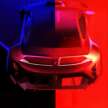
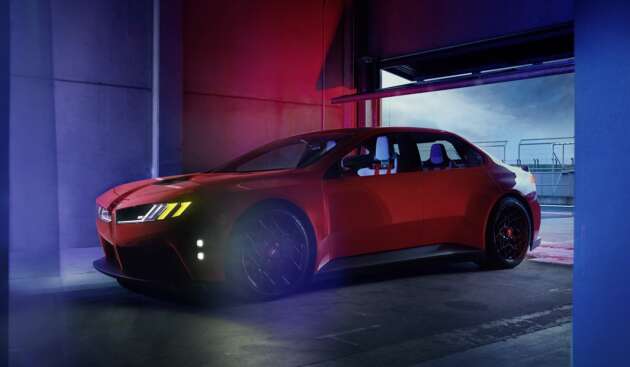
    Other details include a V-shaped front bonnet with an air outlet to vent heat from the electric drivetrain, a trimaran-style front apron that doubles as the mounting support for the front splitter, M Yellow Lights which are to be a new M signature referencing GT racing and the M Hybrid V8 Le Mans car. The headlights and kidney grille are fused into a single unit, with the closed grille reflecting the fact that an EV doesn’t need to breathe through its nose. A ducktail spoiler and floating rear diffuser do the aero work at the back, adding downforce over the rear axle.

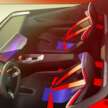
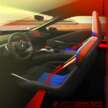
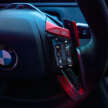
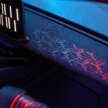
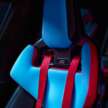
    The cabin of the concept features four bucket seats with natural-fibre structural elements, two-tone Bathurst Blue and Berry Red Merino leather, red five-point harnesses, black nubuck leather on the wheel, doors and roll bar, and a floating dashboard in black knit with hexagonal M backlighting. Production won’t get all of it, obviously, especially not the four bucket seat setup, but perhaps as an option?

    A non-electric M3 will still exist?

    Notice that in the title I specifically said “electric BMW M3 ZA0”. That’s because there will also be another M3 with an ICE engine codenamed the G84, which pairs the S58 six-cylinder engine with a 48V mild-hybrid system. Typically 48V systems feature a significantly simpler system than a PHEV, so this means less weight gains by the hybridisation.

    Yes, it looks like with a pure electric M3 existing, BMW won’t be needing to go full PHEV like it did with the G90 BMW M5. I think many M purists will be happy to hear that.

    It will be similiar in looks to the ZA0 but with some differences such as a longer nose, which honestly suits the classic sedan silhouette better.

    What do you think – if you were in the market for a next generation BMW M3, would you go for the pure electric ZA0? Or does a car like the M3 still firmly belong in the ICE world? Share your thoughts in the comments.

     
  • One in five Toyotas in Malaysia is a grey import: the recon Alphards and Vellfires behind the numbers

    One in five Toyotas in Malaysia is a grey import: the recon Alphards and Vellfires behind the numbers

    We looked at the gap between official industry sales and JPJ registrations across the whole market, an estimated 49,575 grey and recon imports in 2025.

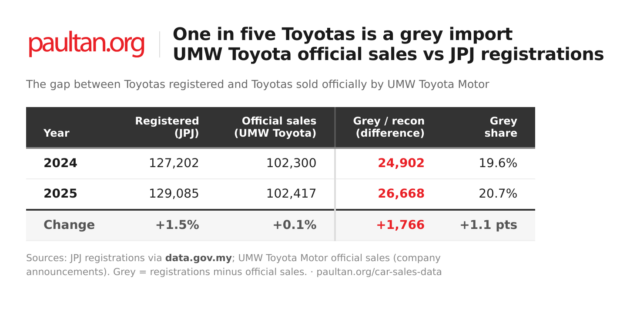
    UMW Toyota Motor (UMWT) sold 102,417 Toyotas in 2025, its fourth straight year above the 100,000 mark. Yet JPJ registered 129,085 Toyotas over the same period. That leaves a gap of 26,668 vehicles, or 20.7% of every Toyota registered, that did not come through an official UMWT showroom.

    In plain terms, better than one in five Toyotas on the road in 2025 was a recon or grey import. The figure is not a one-off either; the same calculation for 2024 gives 24,902 units, or 19.6%, so the grey share is not only large but growing.

    One in five Toyotas in Malaysia is a grey import: the recon Alphards and Vellfires behind the numbers

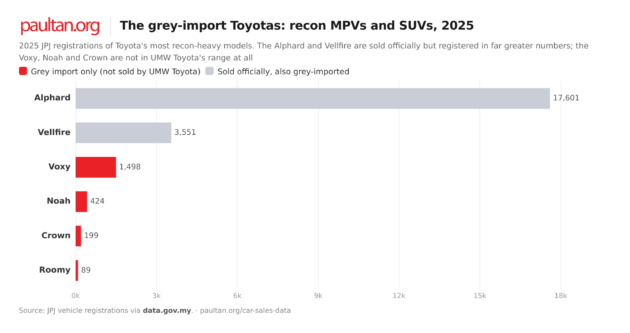
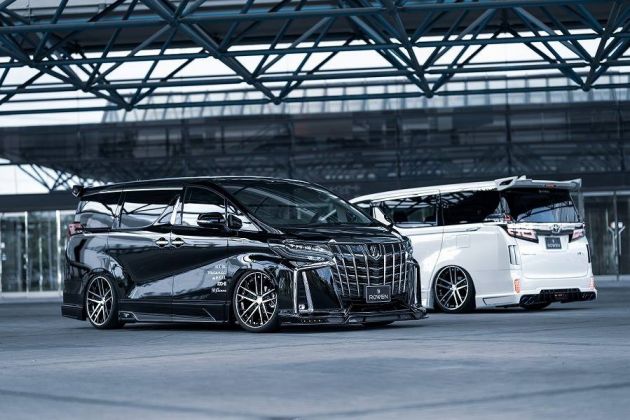
    Where does all of it come from? The poster children of the Malaysian recon scene are the big luxury MPVs. UMWT does sell the Alphard and Vellfire officially, but JPJ registered 17,601 Alphards and 3,551 Vellfires in 2025, 21,152 of the pair between them, far more than the official channel alone could account for. The difference is made up by reconditioned units brought in by independent importers.

    Then there are the models UMWT does not sell here at all. There are many JDM people-movers that never had an official price list, including 1,498 Voxy and 424 Noah, along with curiosities like 199 units of the Japanese-market Crown (a very good looking car that many consider the lower T20 man’s Purosangue) and 89 of the tiny Roomy. We even saw the flagship Toyota Century SUV here!

    Toyota is the most visible case, but it is far from alone. A quick scan of the data turns up plenty of other grey-only Japanese models that Malaysians clearly want: 851 Honda STEPWGN, 452 Honda N-Box, 92 Nissan Elgrand and even 86 Nissan GT-R were registered in 2025, none of them sold through official channels here.


    Add the occasional Daihatsu kei car and the odd Nissan Skyline or Fairlady, and the picture is of a thriving parallel market that quietly supplies the models the official distributors choose not to.

    A note on the method. The gap is an estimate that compares UMWT’s reported sales with total JPJ registrations, so it also captures any registration-timing differences. But the order of magnitude is clear, and the models behind it, are exactly the ones you would expect.

    What is your take on the scale of Toyota’s grey market? Let us know in the comments. You can explore more insights like this on our car sales data tool.

     
  • China takeover: how Chinese car brands went from 0.08% to 7.6% of the Malaysian market in 3 years

    China takeover: how Chinese car brands went from 0.08% to 7.6% of the Malaysian market in 3 years

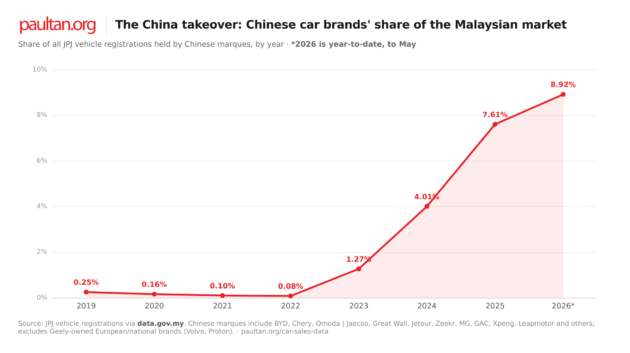
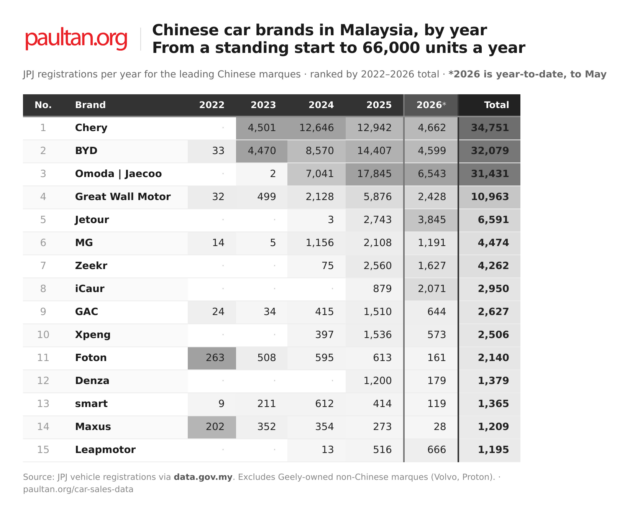
    Four years ago, Chinese cars were a rounding error on Malaysian roads. In 2022, brands from China accounted for just 578 of the 744,762 vehicles registered here, or 0.08% of the market. Last year they registered 66,198 units. JPJ registration data lays out just how quickly it happened.

    The trajectory is close to vertical. From 0.08% in 2022, the Chinese share of all registrations jumped to 1.27% in 2023, then 4.01% in 2024, and 7.61% in 2025. Through the first five months of 2026 it has climbed further still, to 8.92%, which means almost one in every 11 new vehicles registered this year wears a Chinese badge. No other group of brands has come close to that rate of growth. And this isn’t even counting the Geelys wearing a national badge.

    China takeover: how Chinese car brands went from 0.08% to 7.6% of the Malaysian market in 3 years

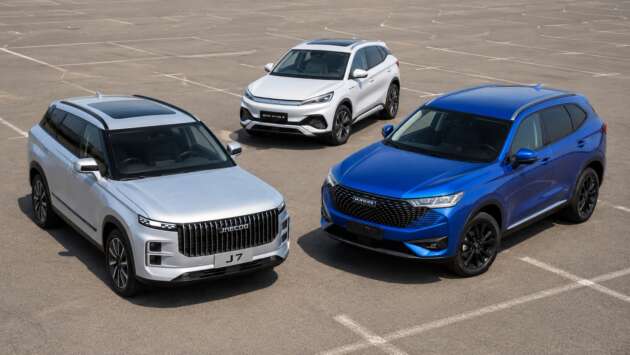
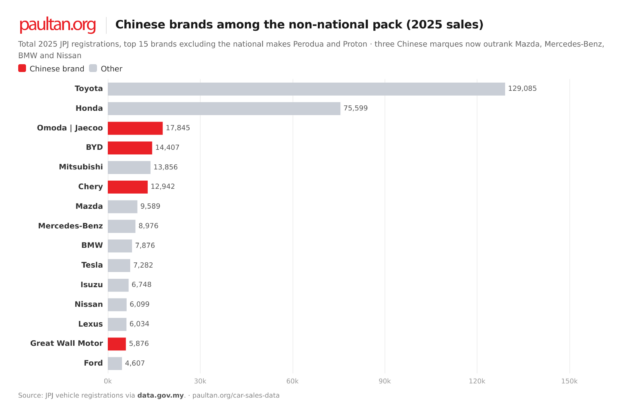
    What makes the numbers striking is not just the total but where these brands now sit. In 2025, Omoda | Jaecoo was the fifth best-selling brand in the country with 17,845 units, BYD was sixth with 14,407, and Chery was eighth with 12,942. All three outsold established names such as Mazda, Mercedes-Benz, BMW and Nissan. A decade ago, the idea of three Chinese marques in the national top 10 would have been unthinkable. Today only the two national brands plus Toyota and Honda stand ahead of them.

    China takeover: how Chinese car brands went from 0.08% to 7.6% of the Malaysian market in 3 years

    Look closer and you can see distinct waves. Chery and BYD led the first charge in 2023, each going from near zero to over 4,000 units in a single year. BYD pushed hardest in 2025 with 14,407 units, but the real breakout story is Omoda | Jaecoo, which went from a token two units in 2023 to 7,041 in 2024 and then 17,845 in 2025, making it the single biggest Chinese brand in the country.

    Great Wall Motor has built steadily to 5,876 units, while a second wave is now arriving, with Jetour, Zeekr, iCaur and Xpeng all scaling up fast in 2026.

    China takeover: how Chinese car brands went from 0.08% to 7.6% of the Malaysian market in 3 years

    The drivers are familiar enough. Aggressive pricing, generous equipment levels, and a head start in electric and hybrid models have all helped Chinese brands win over buyers who once defaulted to Japanese or European marques. The EV incentives that ran until the end of 2025 gave the likes of BYD, Zeekr and Xpeng an additional tailwind. The question now is whether this is a ceiling or a foothold. On the evidence of the first five months of 2026, with the share still climbing and new brands still arriving, it looks far more like the latter.

    How do you see the Chinese brands faring from here? Will there be further growth or will they hit a cap soon? Let us know in the comments. In the meantime you can explore more insights like this on our car sales data tool.
     
  • KLIMS 2026 – from debuts and concepts to previews, here’s an overview of what you can expect at the show

    KLIMS 2026 – from debuts and concepts to previews, here’s an overview of what you can expect at the show

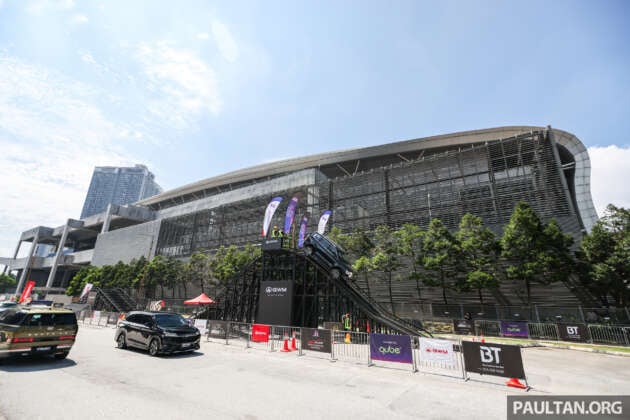
    The Kuala Lumpur International Mobility Show (KLIMS) 2026 has opened to the public, and the show runs from today until June 21 at the Malaysia International Trade and Exhibition Centre (MITEC).

    The 11th edition of the show, themed ‘Beyond Mobility,’ has plenty in the way of new metal, offering car enthusiasts quite a bit to peruse. Besides a number of new model debuts, there’s a slew of previews, providing visitors an early glimpse at what’s heading our way in the coming future.

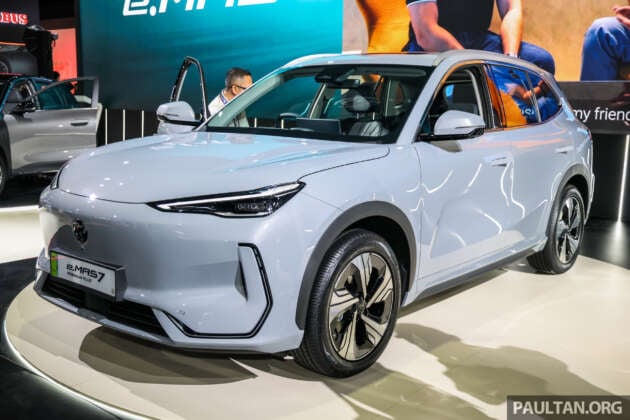
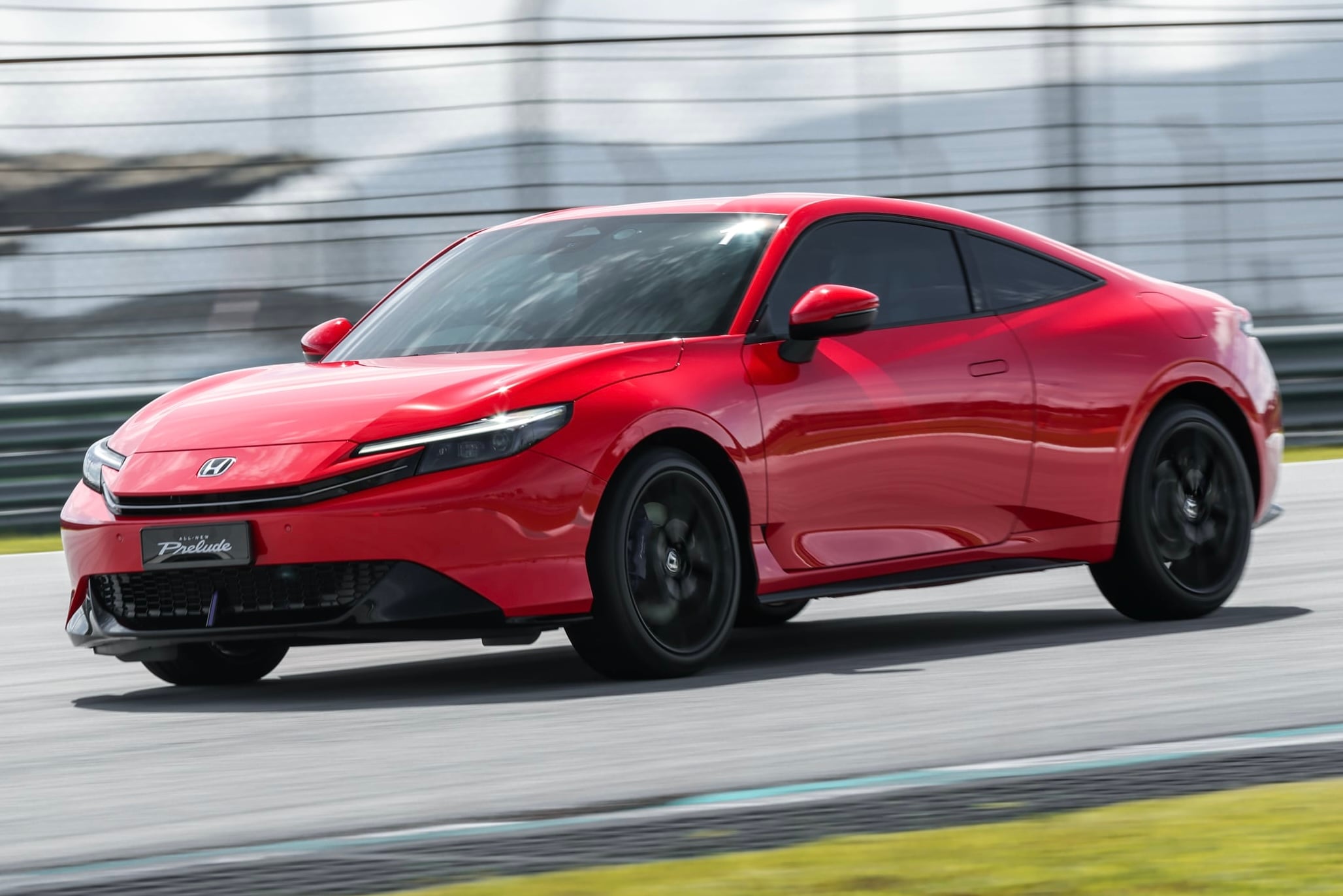
    Cars launched at KLIMS include the sixth-generation Honda Prelude, with the nameplate making its return here in its latest hybrid form. The coupe isn’t in showrooms yet, so the event is the perfect place to get up close and personal with the sleek 203 PS e:HEV. Another market debutant is the Proton eMas 7 Premium Plus, packing a larger 68.39 kWh battery as well as additional equipment.

    At the Hyundai booth, you’ll find another couple of new official entries, the Ioniq 5 N and Ioniq 6 N officially launching the automaker’s N brand in Malaysia. Lots to like with this duo if you’re into performance EVs and have a healthy wallet. Over at the Mazda display, Bermaz has the CX-60 3.3L MHEV, the CBU unit expanding the line-up for the model here.

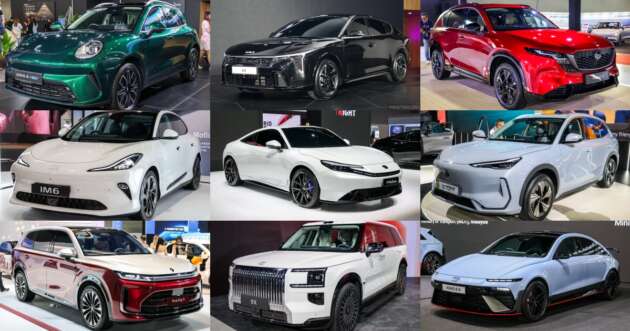
    No shortage of excitement on the preview front, and the plethora of first look vehicles include the imposing Zeekr 9X, the Chinese brand’s flagship SUV. There’s also the IM6 from SAIC’s IM brand – the EV is heading our way, and will be parked under the MG umbrella here. Elsewhere, fans of the Mazda CX-5 will be able to catch the handsome third-gen SUV at the show, and if you’re sold on it, you can make a booking for one at KLIMS.

    Big on GWM’s Ora design language? If you are, the Ora 5 HEV will definitely be the perfect item to feast your eyes on, and if you’re curious as to what a Huawei co-developed vehicle looks and feels like, the six-seater TQ Wuling Huajing S will answer that very nicely. There’s also the Kia K4, which should surely appeal to those looking for a modern interpretation of the Forte and Cerato.

    Concepts also get their moment at the show, with the futuristic Corolla Concept flying the flag for Toyota at the very neatly designed UMW Toyota booth. Closer to home, explore Perodua’s C2 Concept, a study previewing a future EV sedan. The national automaker also has the QV-E G+ Edition and Aruz Space concepts on call. Over at Proton, check out FutureMotion HEV display, highlighting the expected powertrain for the upcoming Saga Cross.

    There’s more on show, and the best way to explore them is to head on over to check them out. Admission is free on Monday the 15th, Tuesday the 16th and Thursday the 18th only. On all other days, tickets cost RM30 for adults and RM15 for students (with a valid student ID), OKU and senior citizens (above 60). Children under 12 enter for free.

    Planning to visit more than once? You can get an Unlimited Access Pass that covers all 10 days at just RM80. Travelling in a group? You can get a five-pax bundle pass at RM100. Find out all you need to know, including how to get to the event, here.

     
  • How many grey-import cars were sold in Malaysia in 2025? MAA sales and JPJ reg data compared

    How many grey-import cars were sold in Malaysia in 2025? MAA sales and JPJ reg data compared

    Recon and grey-import cars are big business in Malaysia, even if the official industry would rather not talk about them. These are the parallel-imported and reconditioned vehicles that reach our roads outside the authorised distributor network, and while nobody publishes a neat figure for how many there are, we can get a good estimate by putting two official datasets side by side. We did this for 2024 last year, and now let’s have a look at 2025.

    The method is simple. The Malaysian Automotive Association (MAA) reports Total Industry Volume (TIV), which is the number of vehicles sold by its members, the authorised distributors and franchise holders. Separately, the road transport department (JPJ) records every vehicle registered in the country, no matter how it got here. Since every car sold officially must also be registered, JPJ’s total should always be equal to or higher than MAA’s. The gap between the two is, broadly, the cars that entered the market outside official channels, in other words recon and grey imports.

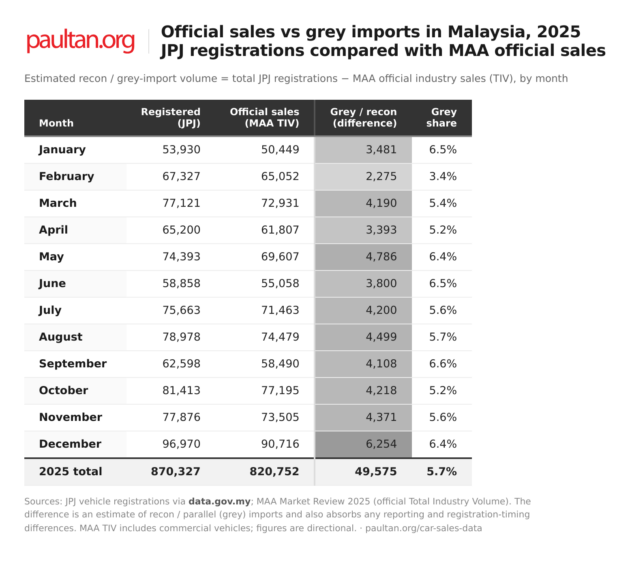
    For 2025, the figures are as follows. JPJ registered 870,327 vehicles over the year, while MAA reported official sales of 820,752 units, itself a record TIV. The difference is 49,575 units, which works out to 5.7% of everything registered in 2025. Put another way, roughly one in every 18 cars that hit Malaysian roads last year did not come through an official showroom.

    How many grey-import cars were sold in Malaysia in 2025? MAA sales and JPJ reg data compared

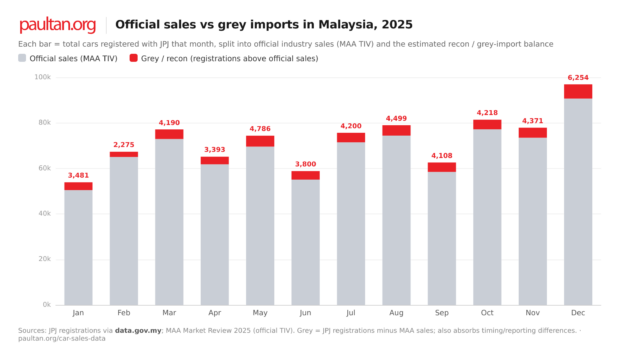
    Breaking it down by month, the pattern is remarkably consistent. JPJ registrations exceeded MAA sales in every single month of 2025, with the grey share sitting in a tight band between 3.4% in February and 6.6% in September. The single largest gap came in December, when 96,970 registrations against 90,716 official sales left 6,254 units unaccounted for, fitting given that December was also the biggest sales month on record.

    How many grey-import cars were sold in Malaysia in 2025? MAA sales and JPJ reg data compared

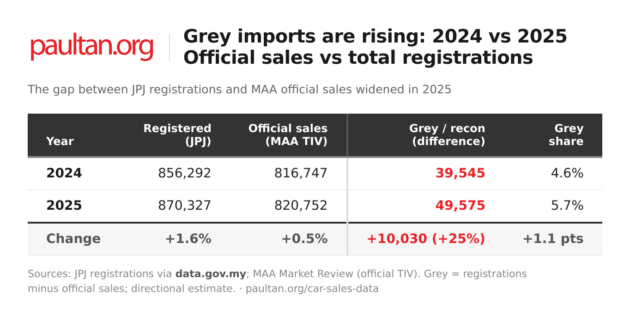
    What is more telling is the trend. In 2024, the gap between registrations and official sales was 39,545 units, or 4.6% of the market. In 2025 it grew to 49,575 units, or 5.7%. That is a 25% jump in estimated grey volume in a single year, and the share rose by 1.1 percentage points, even as the official market itself was virtually flat, up just 0.5%. In short, the grey channel grew far faster than the showrooms last year.

    How many grey-import cars were sold in Malaysia in 2025? MAA sales and JPJ reg data compared

    A few caveats are worth stating plainly. The gap is an estimate, not an exact recon count. It also absorbs registration-timing differences (a car sold in December but registered in January, say) and any brands that do not report to the MAA.

    The two datasets also classify vehicles differently, most notably with pickup trucks, which the MAA counts as commercial vehicles, and the MAA TIV figure includes commercial vehicles such as trucks and buses that are not in JPJ’s car data.

    For those reasons we are looking at the total market here rather than going brand by brand, since the MAA does not publish marque-level sales figures publicly. Still, as a directional read on how much of the market sits outside official channels, the picture is clear enough, and it is growing.

    How many grey-import cars were sold in Malaysia in 2025? MAA sales and JPJ reg data compared

    The recon trade is nowhere more visible than with Toyota. UMW Toyota Motor reported official 2025 sales of 102,417 units, its fourth straight year above the 100,000 mark, but JPJ registered 129,085 Toyotas over the same period.

    That leaves a gap of 26,668 vehicles, or 20.7% of all Toyotas registered, that did not come through UMWT’s official channels. In other words, better than one in five Toyotas that hit Malaysian roads in 2025 was a recon or grey import, and the figure is remarkably steady, almost identical to the roughly 26,500-unit gap we found for 2024.

    It is not hard to see where the bulk of it sits. The Alphard and Vellfire are the poster children of the Malaysian recon scene, and JPJ registered 17,601 Alphards and 3,551 Vellfires last year, 21,152 of the big luxury MPVs between them, far more than UMWT sells officially. Add the models the distributor does not sell here at all, such as the 1,498 Voxy people-movers that were registered in 2025, and the scale of the grey market becomes clear.

    What do you make of the numbers? Let us know in the comments below.

     
  • Maxus eTerron 9 EV pick-up debuts – 442 PS, AWD, 430 km WLTP, RM224k; Terron 9 2.5L diesel, RM141k

    Maxus eTerron 9 EV pick-up debuts – 442 PS, AWD, 430 km WLTP, RM224k; Terron 9 2.5L diesel, RM141k

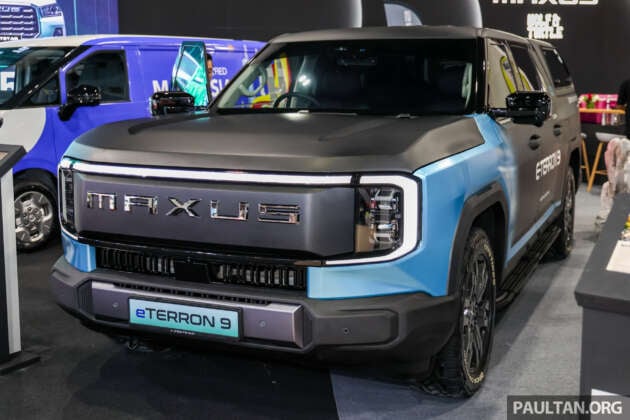
    Spied a couple of months ago, the SAIC Maxus eTerron 9 has now been officially unveiled for the Malaysian market, with Weststar Maxus officially taking the wraps off the fully-electric pickup at the Kuala Lumpur International Motor Show (KLIMS) 2026, the model being announced with a price of RM223,888.

    The eTerron 9, which is known as the Interstellar X in China, was announced for Europe back in September 2024. Measuring in at 5,500 mm long, 2,005 mm wide, 1,860 mm tall and with a wheelbase of 3,300 mm, it’s a sizable offering, longer than a Ford Ranger and Toyota Hilux.

    Design-wise, it adopts what the automaker calls a ‘New Electrified Mecha’ aesthetic, led by a clean front end featuring C-shaped daytime running lights, wrapping around the main headlamps, with the array linked to each other by a light bar. Underpinned by the brand’s Starlight Architecture chassis, the eTerron 9 was billed by the automaker as being “the first 4×4 electric pick-up truck built on a dedicated electric platform” when it first appeared on the scene.

    The show example is essentially the same global offering that debuted in Europe. While there’s a single motor version, the one being pitched is a dual-motor AWD version with 442 PS (436 hp, or 325 kW), which is good enough to get the pick-up from zero to 100 km/h in 5.8 seconds. An ATS (All-Terrain System) feature and six preset driving modes, including a personalised option, offers versatile driving options.

    A 102 kWh ‘Tetris’ LFP battery pack provides up to 430 km of WLTP range, and the unit can be juiced up from a 20% to 80% state of charge in about 40 minutes via DC fast charging at a max capacity of 115 kW. The truck can also supply V2L power at 2.2 kW or 6.6 kW.

    From an utility viewpoint, the eTerron 9 has some novel bits. These include a midgate that opens to allow items up to 2,400 mm in length to fit into the truck’s cabin, while the frunk has a powered lid, and holds 236 litres. Within the cabin of the Terron 9, the front seats can fold down to create a nearly flat sleeping area measuring 1,700 mm long, and there are some 20 storage compartments around the cabin.

    The kit count on this one includes two-tone leather upholstery and a pair of 12.3-inch digital displays for the instrument cluster and touchscreen infotainment system, a floating centre console, and a two-spoke steering wheel, while the powered driver’s seat gets ventilation and massage functions.

    Those looking for the more conventional oil burner route have the Maxus Terron 9, which is priced at RM140,888. It bears the same general exterior shape as the EV but wears a different face, with a bolder looking grille and headlight arrangement making for the biggest visual change. Like on the EV version, there’s no missing the identity of the brand, what with sizable ‘Maxus’ lettering pasted on the front and rear.

    The diesel-powered version is equipped with a 2.5 litre SAIC SC25T 2.5 litre turbodiesel producing 224 PS (221 hp) at 3,800 rpm and 520 Nm of twist, which is paired with an eight-speed ZF 8HP50 automatic transmission.

    Featuring a full-time four-wheel-drive system with selectable locking differentials, the Terron 9 is a proper off-road vehicle, with operating modes such as wade, rock crawl and custom low-range in the repertoire list. It’s not spartan in terms of kit, with the same dual displays and powered driver’s seat to be found. There’s also a 3D surround camera and wired and wireless Apple CarPlay/Android Auto support.

    GALLERY: SAIC Maxus eTerron 9 EV pick-up at KLIMS 2026

    GALLERY: SAIC Maxus Terron 9 diesel pick-up at KLIMS 2026

     
  • Kia EV4, EV5, PV5 at KLIMS 2026 – EV sedan, SUV and MPV evaluated for Malaysia; which would you buy?

    Kia EV4, EV5, PV5 at KLIMS 2026 – EV sedan, SUV and MPV evaluated for Malaysia; which would you buy?

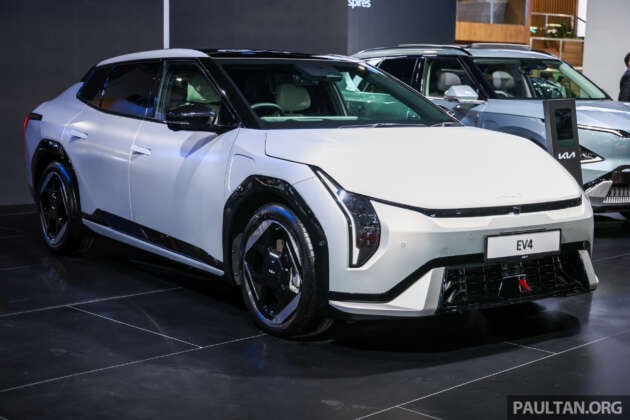
    Kia EV4

    Aside from the K4, Kia Sales Malaysia (KSM) is also displaying several new EVs at the Kuala Lumpur International Mobility Show (KLIMS), these being the EV4, EV5 and PV5. The company is using the event to test public demand for the trio – as well as the K4 – which are built on the same electric Global Modular Platform (e-GMP) as the EV6 and EV9.

    The EV4 is the most “boring” of the trio, being a C-segment sedan (there is also a hatch version to take on the Volkswagen ID.3). Of course, there’s nothing milquetoast about the design, which features Kia’s polarising Opposites United design language.

    Looking more like a sci-fi space shuttle than a car, the EV4’s sharp exterior features a short front end and an extremely long rear, with a fastback roofline that slopes gently towards the rear. There’s a hint of the TF Optima in the way the rear windscreen intersects with the C-pillars, and it terminates in a curiously-shaped clamshell boot lid with a built-in ducktail spoiler.

    Kia EV4

    The front end continues the futuristic theme with vertical headlights incorporating Kia’s Star Map signature daytime running lights and the low-set Tiger Face with a large centre air intake. The taillights continue the Star Map graphic and are pushed to the far corners. Angular gloss black wheel arch trims add yet more intrigue to the K4’s design, with the 19-inch two-tone alloys seen here filling them just so.

    Inside, the clean-cut aesthetic continues with a horizontal dashboard and a widescreen display panel up top, just like in the EV9. You get large toggles for the air con as well as an open centre console with a Qi wireless charger, plus an optional slide-out table for placing a laptop while the car is stationary (not fitted here). An eight-speaker Harman Kardon sound system is available as an option.

    The tech on board includes the usual 12.3-inch instrument and infotainment displays, split by a five-inch air-con touchscreen. Meanwhile, the seats feature a slim profile to improve over-the-shoulder visibility and come with sustainable mesh headrests that are more breathable compared to the usual foam ones. They also get a one-touch recline feature that works with a Rest Mode with dedicated lighting and display settings. That wide boot lid opens up to a decent 490 litre boot (435 litres in the hatch).

    Kia EV4, EV5, PV5 at KLIMS 2026 – EV sedan, SUV and MPV evaluated for Malaysia; which would you buy?

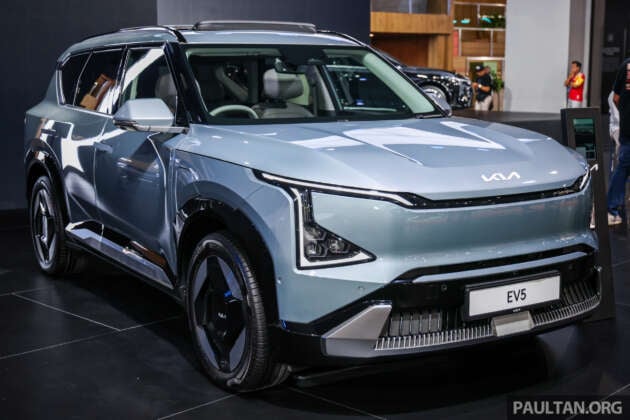
    Kia EV5

    The EV4 is powered by a single front motor producing 204 PS (150 kW) and 283 Nm of torque. Those aren’t exactly punchy numbers (there is a 292 PS AWD GT model available), but the benefit is efficiency – with a choice of either a 58.3 kWh or an 81.4 kWh battery (both NMC, I’m afraid), the sedan is able to deliver WLTP range figures of 430 km and 630 km respectively. Unlike the EV6 and EV9, this doesn’t get an 800-volt electrical architecture, so DC fast charging from 10 to 80% takes around 30 minutes for both battery sizes.

    Next up is the EV5, a C-segment SUV with a boxier design to increase practicality. Despite the more conventional body shape, the styling continues to stand out, with C-shaped front and rear light signatures, triangular headlights mounted low down, a wraparound windscreen design and a window line that rises past the C-pillars. Strong front and rear haunches provide a more solid stance.

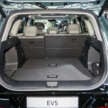
    Inside, the EV5 carries over many of the elements of the EV4 – the same screens, a similar open centre console and physical air-con controls. There are a few new additions, however, such as a new Pet Mode, triple-zone auto air con with an odour-reducing “after blow” function and even a built-in ottoman for the driver. Luggage space is a particular strong point at 566 litres, and even though there’s a front motor Kia has still found room to fit a 44.4 litre front boot.

    Kia EV5

    Speaking of which, the EV5’s motor is slightly more powerful at 218 PS (160 kW) and 310 Nm for the FWD model, with the dual-motor AWD version being boosted to 313 PS (230 kW) and 480 Nm. Battery options vary depending on the market, with Europe getting the EV4’s 81.4 kWh NMC battery and only FWD, for a range of 530 km.

    Australia, meanwhile, gets the EV5 solely with LFP batteries, with the standard range 64.2 kWh pack delivering a round 400 km with FWD. There’s also a larger 88.1 kWh unit that enables the car to travel up to 555 km for the FWD model and 500 km with AWD. The LFP models charge slightly slower, taking 36 minutes for the smaller battery and 38 minutes for the larger one to be topped up from 10 to 80%.

    Last but not least is the PV5, a big mobile box built on the e-GMP.S (S for “Service”) van architecture. This standardises the batteries, motors, suspension and underbody structures, allowing Kia to build up to 16 variants, including five- and seven-seater Passenger MPVs, Cargo vans, high-roof versions and even a chassis cab to be converted to a pick-up, a box van or a motorhome.

    Kia EV4, EV5, PV5 at KLIMS 2026 – EV sedan, SUV and MPV evaluated for Malaysia; which would you buy?

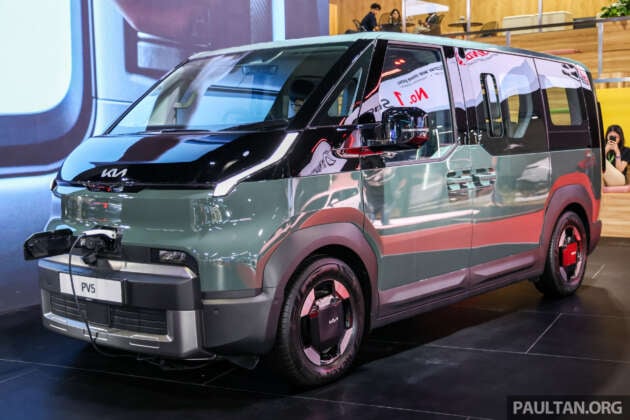
    Kia PV5

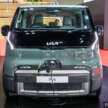
    The PV5 is being shown at KLIMS in five-seater Passenger form, looking pretty slick for a commercial-type vehicle. The wraparound black band that incorporates the glasshouse dips downwards at the windows, affording a low window sill for the front occupants and improving outward visibility. There are also S-shaped daytime running lights, split from the main headlights integrated into the lower grille. The charging port is mounted at the front to ease conversions.

    At the back, the vertical taillights frame the large tailgate, which is a single piece on the Passenger version and split on the Cargo. Lower down, the black plastic body cladding provides added protection, and the wheels are fairly small at 16 inches in diameter. The whole car is actually fairly small for its type, measuring 4,695 mm long, 1,895 mm wide and 1,905 mm tall, with a generous 2,995 mm wheelbase.

    Inside, the PV5 is practical rather than posh, with the space being mostly made from sturdy hard plastic. The upright centre console opens up floor space and offers plenty of storage space, plus a Qi wireless charger. There’s also a floor console and a driver’s armrest above it.

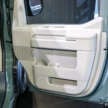
    The screens are smaller here, with a seven-inch instrument display and a 12.9-inch infotainment touchscreen that runs on a different Android-based OS, allowing business-specific applications to be installed (no physical air-con controls here, unfortunately). More storage can be found atop the dashboard, the doors and even below the floor.

    Kia PV5

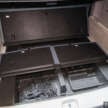
    Step in through the rear sliding doors (available with or without power operation) and you’ll find a cavernous occupant compartment with footrests and numerous USB-C ports, and even heated seats. The five-seater offers yet more storage under the boot floor which, by the way, measures a whopping 1,330 litres.

    The PV5 Passenger is available in Standard and Long Range variants, with power outputs of 122 PS (89 kW) and 163 PS (120 kW), as well as 250 Nm. A choice of 51.5 kWh and 71.2 kWh batteries provide a range of 295 km and 412 km respectively, with DC fast charging from 10 to 80% taking under 30 minutes for both using a 150 kW charger. The EV4, EV5 and PV5 all come with Level 2 semi-autonomous driving functionality, with the EV4 and EV5 additionally gaining curve speed reduction and auto lane change.

    With KSM evaluating public reception for these models here, which one would you buy? We’d imagine that the PV5 in particular would be of great interest to those who would like to get the Carnival but balk at the high price of diesel. In any case, let us know which you’d pick in the comments.

    GALLERY: Kia EV4 at KLIMS 2026


    GALLERY: Kia EV5 at KLIMS 2026
    GALLERY: Kia PV5 at KLIMS 2026

     
  • The use of ‘albino lights’ not approved by JPJ, authorities looking closely into their use – Loke

    The use of ‘albino lights’ not approved by JPJ, authorities looking closely into their use – Loke

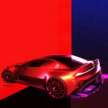
    The modification of light assemblies on cars usually go through trend cycles, and when it comes to tail lamps, the latest modding craze for these are with “albino lights” (lampu albino). As the descriptor suggests, this involves the installation of aftermarket vehicle lights featuring clear or colourless housings and LED lighting elements, offering not just brighter lighting elements, but usually sequencing options (strobe, blinking etc) as well.

    The growing number of vehicles utilising such non-regulation lighting arrays has become evident to authorities, enough for the ministry of transport to caution vehicle owners over their use, as the New Straits Times reports.

    According to transport minister, such lighting elements have not received any technical approval from the road transport department (JPJ). As such, the government is looking into the matter, and authorities could take action if it is found that such lights are found to endanger other road users. “The government takes seriously the trend of installing these lights and is studying their impact before making any further decision on their use,” he said.

    “Currently, no technical approval has been given for such lighting systems. They are installed voluntarily by vehicle owners. Action will be taken if they are found to be disruptive or affect the safety of other road users,” he said.

    What do you think of the latest vehicle lighting trend? Do you think that the use of such arrays should be banned? Sound off in the comments section.

     
  • KLIMS 2026 visitor guide – ticket prices, free days, where to park, free shuttle buses, opening hours

    KLIMS 2026 visitor guide – ticket prices, free days, where to park, free shuttle buses, opening hours

    The Kuala Lumpur International Mobility Show (KLIMS) 2026 opens its doors to the public today at the Malaysia International Trade and Exhibition Centre (MITEC), and it runs for 10 days until June 21. Themed ‘Beyond Mobility’, the 11th edition promises something for everyone; not just car enthusiasts and/or buyers.

    You can read about all the show’s attractions here and headline debuts/previews/launches from each carmaker here. Why not bring your family and friends along for a great day out? Here’s some useful information before you go there.

    KLIMS 2026 ticket prices and where to buy

    KLIMS 2026 visitor guide – ticket prices, free days, where to park, free shuttle buses, opening hoursKLIMS 2026 visitor guide – ticket prices, free days, where to park, free shuttle buses, opening hours

    Admission is free on Monday the 15th, Tuesday the 16th and Thursday the 18th only. On all other days, tickets cost RM30 for adults and RM15 for students (with a valid student ID), OKU and senior citizens (above 60). Children under 12 enter for free. If you took part in the first-ever KLIMS Run on May 17, you would have a complimentary ticket to the show.

    Planning to visit more than once? You can get an Unlimited Access Pass that covers all 10 days at just RM80. Travelling in a group? You can get a five-pax bundle pass at RM100.

    Tickets can be purchased on the official KLIMS website or on-site – you’ll find the ticket counter on Level 2 of MITEC.

    KLIMS 2026 opening hours

    KLIMS 2026 runs for 10 days from June 12-21. The show is open 10am-8pm on Monday the 15th, Tuesday the 16th and Thursday the 18th; 10am-10pm on all other days.

    KLIMS 2026 – getting there by car and where to park

    KLIMS 2026 visitor guide – ticket prices, free days, where to park, free shuttle buses, opening hours

    MITEC is located in the KL Metropolis/Dutamas area off Kuala Lumpur’s Jalan Duta – just type ‘MITEC’ into Waze or Google Maps and you’re good to go!

    You may park at MITEC itself (RM10 first hour/RM15 max per day), MITI basement parking (RM5 first three hours/RM2 subsequent hour/RM20 12 hours), Matrade open car park (RM5 first two hours/RM2 subsequent hour/RM15 max per day) or the MET Corporate Towers basement parking (weekdays: free first hour/RM4 subsequent hour/RM15 max per day, weekends and public holidays: RM5 per entry).

    Depending on when you go, the MITEC car park may be full, so if you do choose to park elsewhere, you’ll be pleased to know that shuttle vans are available from the Matrade open car park and the National Hockey Stadium. The KLIMS organiser is also providing a van whose loop includes stops at Masjid Wilayah Persekutuan, the Syariah court, MITI, Matrade, Publika, Hyatt Midtown and LHDN Jalan Duta.

    KLIMS 2026 – getting there by public transport

    KLIMS 2026 visitor guide – ticket prices, free days, where to park, free shuttle buses, opening hours

    There will be free shuttle buses from Titiwangsa MRT and Pasar Seni LRT stations. The former is part of the MRT Putrajaya Line and Titiwangsa is a rail hub that also connects to the LRT Ampang Line and KL Monorail, so it’s accessible to many. Pasar Seni is also an interchange with the MRT Kajang Line.

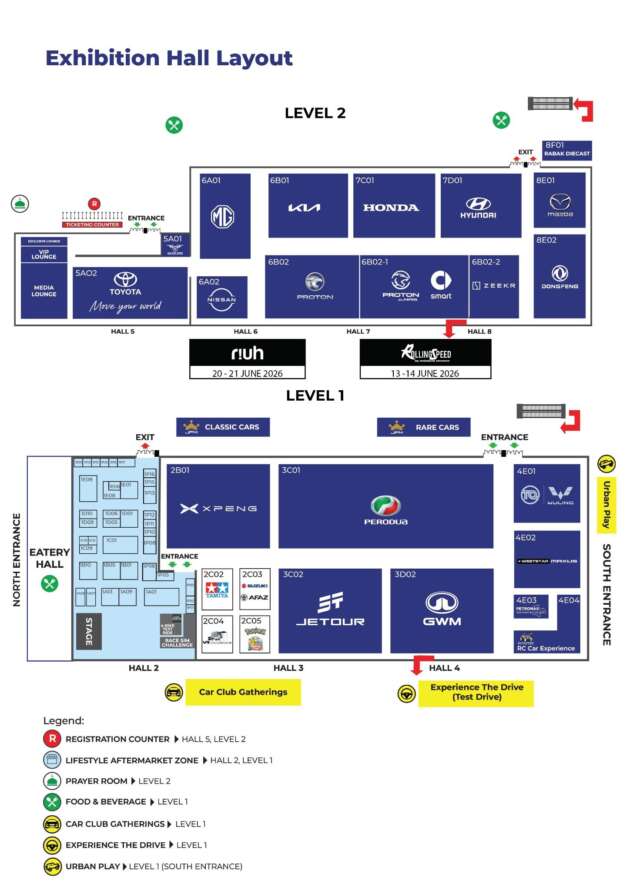
    KLIMS 2026 hall layout and exhibitors

    KLIMS 2026 visitor guide – ticket prices, free days, where to park, free shuttle buses, opening hours

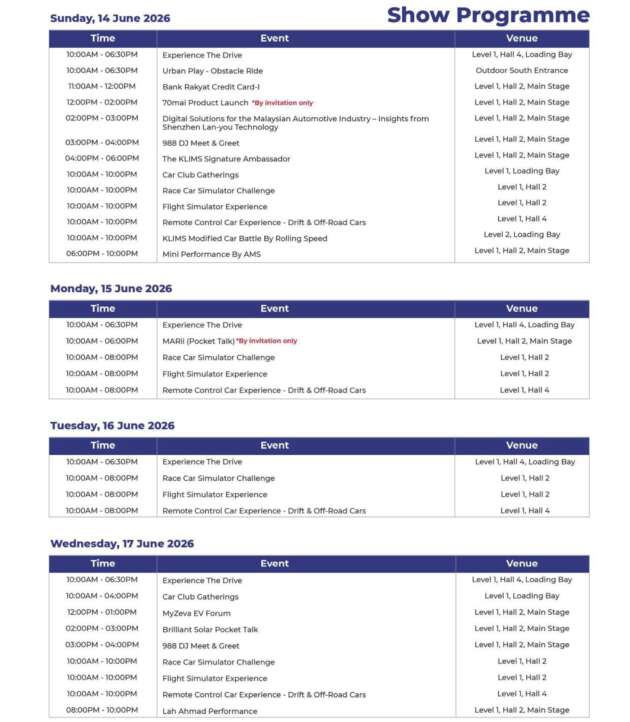
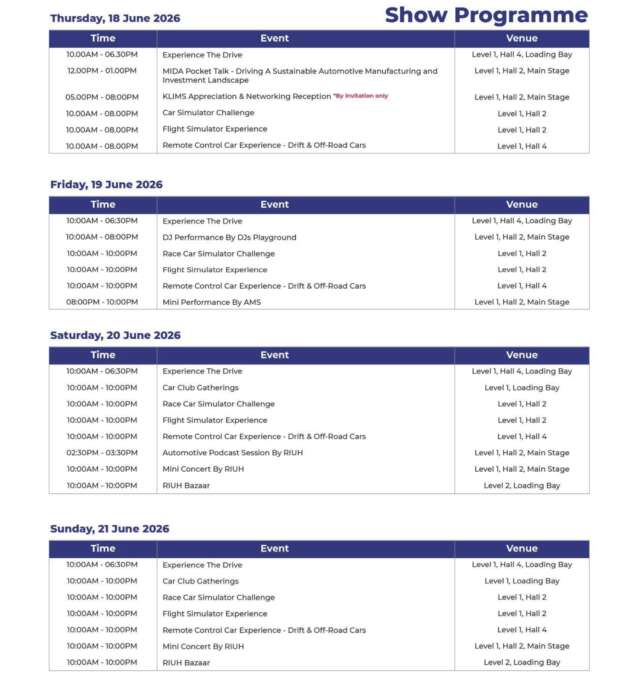
    KLIMS 2026’s main exhibition is sprawled over two floors of MITEC – Level 1 (which is the ground floor) and Level 2. Car club gatherings, test drives and other outdoor activities will take place outside the building on Level 1.

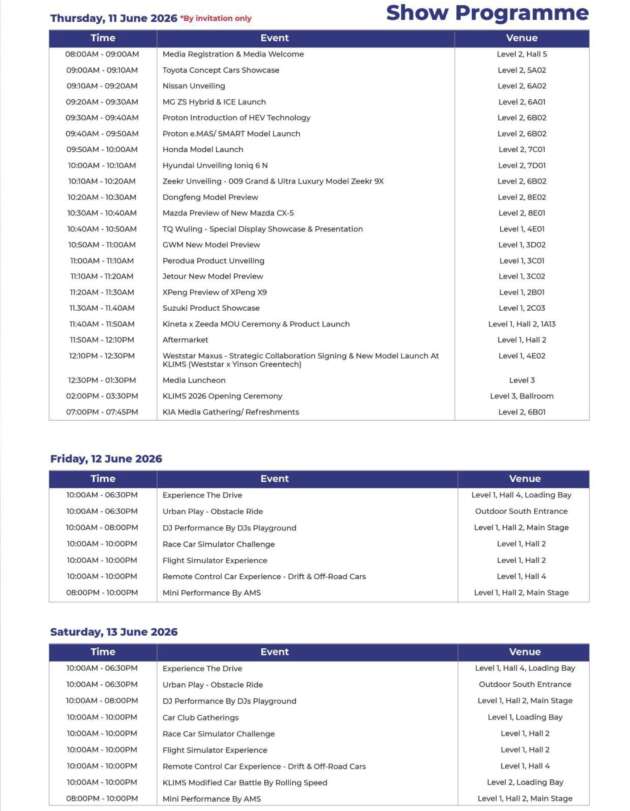
    KLIMS 2026 programme

    KLIMS 2026 visitor guide – ticket prices, free days, where to park, free shuttle buses, opening hoursKLIMS 2026 visitor guide – ticket prices, free days, where to park, free shuttle buses, opening hoursKLIMS 2026 visitor guide – ticket prices, free days, where to park, free shuttle buses, opening hours

    As you can see, there are a lot of activities and performances lined up throughout the 10 days. Note that these are subject to change.

     
  • Perodua Aruz Space concept shown at KLIMS 2026 – SUV built to transport goods instead of passengers

    Perodua Aruz Space concept shown at KLIMS 2026 – SUV built to transport goods instead of passengers

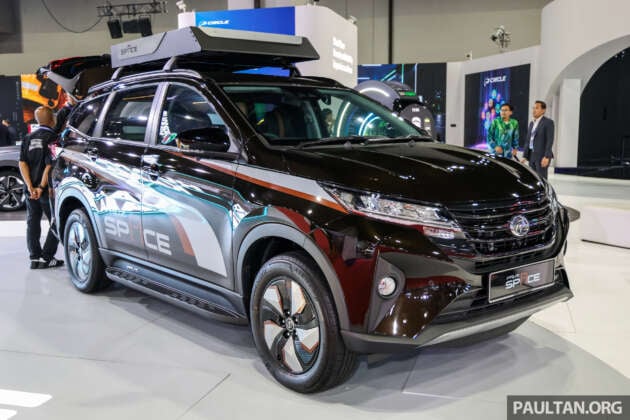
    If you’ve wanted make use of the space within the Perodua Aruz for goods instead of passengers, the national carmaker has shown the Aruz Space concept at the ongoing 2026 Kuala Lumpur International Mobility Show (KLIMS 2026) to show what might be possible.

    While the production Aruz is a seven-seater, the Aruz Space dispenses with all seating behind the front row, and instead makes use of the space from the B-pillars rearwards for ferrying luggage. Convenience comes in the form of what appears to be a drawer on full-length runners to aid loading and unloading of goods, especially for items placed towards the the front end of the drawer.

    The luggage area of the Aruz Space concept is rather more ornate than a two-seater panel van such as the Nissan NV200, as the interior of the Aruz Space retains much of the trim and upholstery expected in a regular passenger vehicle on either side of the goods drawer.

    The sides of what usually is the third row of seating are each fitted with a trio of cubby spaces for smaller items, while the ambience is enlivened by trim panels in a copper/metallic orange type of hue, with warm white LED strips along the roof lining and on the sides of the partition. The air-conditioning vents and blower fan control from the production car have been retained, so transporting temperature-sensitive goods aren’t necessarily ruled out here.

    In the front, trim pieces are finished in the same copper/metallic orange as those in the goods-carrying part of the Aruz Space, used on the dashboard, centre console surround, door cards as well as on the steering wheel spokes, matched by seat upholstery with contrasting sections.

    On its exterior, the wheels get aero covers, and the side sills gain a pair of steps. A roof-mounted box offers yet more storage. Elsewhere, the bodywork and lights appear identical to those of the production model, and this show car appear to be finished in the Vintage Brown paint colour introduced in August 2025.

    The regular Perodua Aruz continues to be on sale in Malaysia in two variants; the 1.5X from RM72,900, and the 1.5AV from RM77,900. As for this Perodua Aruz Space, what do you think of its interpretation of a goods-carrying vehicle?

     
  • 2026 Yamaha 135LC celebrates 20th anniversary in Malaysia, priced at RM8,298, limited edition at RM8,798

    2026 Yamaha 135LC celebrates 20th anniversary in Malaysia, priced at RM8,298, limited edition at RM8,798

    Celebrating 20 years in the Malaysia kapchai market is the 2026 Yamaha 135LC, with four new colours. These are the
    135LC in Matador Red, Tank White and Samba Green, priced at RM8,298 with two-year or 20,000 km warranty against manufacturing defects, as well as a complimentary disc lock worth RM100.

    There is also 20th Anniversary 135 LC Limited Edition in Celeste, priced at RM8,798 in a 5,000 unit limited production run. The 135LC Limited Edition also comes with an 20th Anniversary basket with edition number celebrating the 135LC’s introduction in 2006.

    No changes otherwise in the mechanical specifications, with a Euro 4 compliant 135 cc single-cylinder, liquid-cooled mill fed by EFI. Power is claimed to be 12.4 hp at 8,000 pm while 12.2 Nm of torque is available at 6,000 rpm, going through a four-speed gearbox and chain final drive.

    2026 Yamaha 135LC celebrates 20th anniversary in Malaysia, priced at RM8,298, limited edition at RM8,798

    Braking is done with hydraulic discs front and rear, with tyre sizing 70/90-17 in front and 80/90-17 at the back. Suspension uses non-adjustable telescopic forks in front with a preload-adjustable monoshock in the rear.

    4.6-litres of fuel is carried in the tank and seat height is set at 775 mm while weight is listed at 109 kg. Dimensions for the 135LC Fi are a wheelbase of 1,255 mm with a ground clearance of 135 mm.

     
  • Honda HR-V facelift – e:HEV RS and V variants gain 360° view camera, no change in price, RM138k-RM144k

    Honda HR-V facelift – e:HEV RS and V variants gain 360° view camera, no change in price, RM138k-RM144k

    A couple of variants of the Honda HR-V facelift, which was launched in July last year, now come with a 360-degree view camera. The petrol 1.5L T V grade and 1.5L e:HEV RS are the variants that gain the item at no added cost, which means the V continues on at RM137,900 and the e:HEV RS at RM143,900, both on-the-road without insurance.

    Presently, both are available with significant rebates under a June promotion, with RM10,000 off for the V and RM13,000 for the e:HEV RS. The e:HEV RS with the 360° view camera is on display at the Kuala Lumpur International Motor Show (KLIMS) 2026.

    Aside from the camera inclusion, there are no mechanical or functional changes, and so the output from the 1.5 litre VTEC Turbo mill in the V remains at 181 PS at 6,000 rpm and 240 Nm from 1,700 and 4,500 rpm, the unit paired with a CVT.

    As for the e:HEV hybrid powertrain in the RS, output remains unchanged, with a 131 PS/253 Nm electric motor working in combination with a 107 PS and 131 Nm 1.5 litre DOHC i-VTEC Atkinson-cycle NA engine. The engine acts primarily as a generator but can also drive the front wheels at higher speeds.

    The facelift doesn’t alter the third-gen RV’s exterior formula by much. There’s a new, wider front grille (in three varying presentations for the base S, turbo and hybrid) and a reprofiled front bumper, with matrix projector LED headlights (with active cornering lamps) finding their way on to the RS. At the back, the refresh introduced a new, sleeker LED tail light design, and the entire HR-V range now rides on a single 18-inch design, wrapped with 225/50 profile tyres.

    Inside, the facelift introduced at new, more streamlined centre console, which adds on an additional storage compartment beneath the air-conditioner controls, and it also upgraded the eight-inch infotainment to a ‘floating’ unit, which supports wireless Apple CarPlay and Android Auto. Standard equipment on the V and RS include a hands-free powered tailgate and auto retractable side mirrors.

    Honda Sensing is standard across the HR-V range, and the suite of ADAS features is comprehensive, with the list being made up of Forward Collision Warning, Collision Mitigation Braking System (or AEB), Lane Departure Warning, Lane Keep Assist System, Road Departure Mitigation System, Adaptive Cruise Control with Low Speed Follow, Auto High Beam and Lead Car Departure Notification.

    As it was at point of launch, the HR-V is available in five exterior colours, two of which are new to the SUV, these being Phoenix Orange Pearl and Crystal Black Pearl, with Platinum White Pearl, Stellar Diamond Pearl and Meteoroid Gray Metallic the other colour choices. Both Phoeniz Orange Pearl and Platinum White Pearl remain RM800 options.

     
  • 2026 Hyundai Stargazer facelift to be previewed in Malaysia at KLIMS from June 15 – 1.5L NA B-MPV

    2026 Hyundai Stargazer facelift to be previewed in Malaysia at KLIMS from June 15 – 1.5L NA B-MPV

    Hyundai Motor Malaysia (HMY) will reveal the Hyundai Stargazer at this year’s Kuala Lumpur International Mobility Show (KLIMS) on June 15, 2026. This comes a few days after the company originally teased the MPV prior to the event, which opens its doors to the public today.

    As we reported previously, KLIMS attendees will get to see the facelifted version of the Stargazer, which first surfaced in Indonesia last July. This is more evident with the new teaser’s side-by-side shot of the MPV’s front and rear, which clearly shows the H-style lighting signature that is different from the original. The latter previously had a light bar running across its face and its H-style taillights were narrower than they are on the facelift.

    Should the Stargazer go on sale here, it will face competition from the Toyota Veloz and Mitsubishi Xpander, with the Perodua Alza also part of the discussion as a more affordable alternative. Measuring 4,575 mm long and 1,780 mm wide, the Stargazer has a larger footprint than those cars while also having the longest wheelbase at 2,780 mm. There’s also a crossover-inspired X version of the model in Indonesia that sports chunkier front and rear bumpers, a larger spoiler, more robust roof rails and black wheel arch surrounds, but our guess is that’s not part of the KLIMS preview.

    In markets like Indonesia and Thailand where the Stargazer has been offered for some time, the facelifted model is powered by a Smartstream 1.5 litre naturally-aspirated inline-four MPI petrol engine developing 115 (113 hp or 84.4 kW) and 144 Nm of torque. This is paired with Hyundai’s IVT, which is a continuously variable transmission (CVT) that uses a chain belt rather than a push belt, or a six-speed manual.

    When the Stargazer makes its Malaysian debut on Monday at KLIMS, it joins the Ioniq 5 N and Ioniq 6 N on the showfloor, both of which were launched yesterday. We were previously told the Stargazer would only arrive in Malaysia in Q4 this year, so there’s still some to go before a launch takes place.

    GALLERY: 2026 Hyundai Stargazer facelift at the 2026 Bangkok International Motor Show

    GALLERY: 2025 Hyundai Stargazer Cartenz at the 2025 Gaikindo Indonesia International Auto Show

    GALLERY: 2025 Hyundai Stargazer Cartenz X at the 2025 Gaikindo Indonesia International Auto Show

     
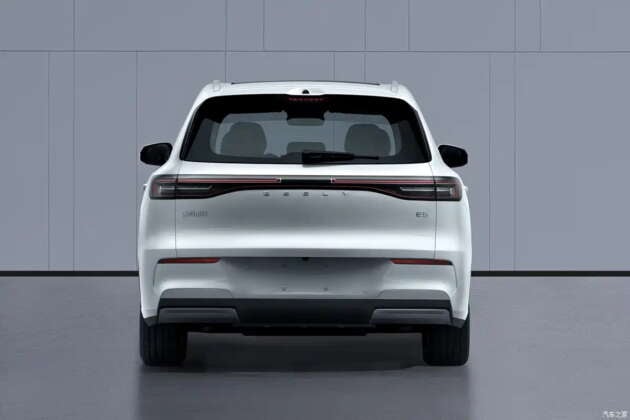
  • 2027 Geely Galaxy E5/EX5 facelift leaked: Proton eMas 7 twin gains Atto 3 Evo-style RWD revamp, 333 PS

    2027 Geely Galaxy E5/EX5 facelift leaked: Proton eMas 7 twin gains Atto 3 Evo-style RWD revamp, 333 PS

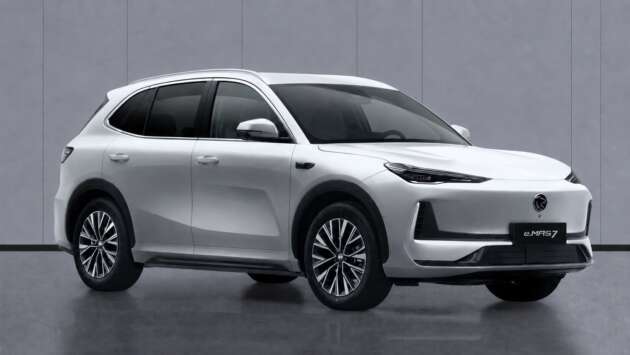
    Just as Proton has finally caught up with Geely – introducing the eMas 7 Premium Plus with a bigger battery that its Galaxy E5/EX5 twin has had for nearly a year – its partner is moving the goalposts once again. The facelifted version of the popular electric SUV has made its way to a filing with China’s ministry of industry and information technology (MIIT), and there’s quite a lot to unpack here.

    Not much has changed when it comes to the design. You still get a fairly featureless SUV body with slim headlights and a full-width taillights, along with black wheel arch trims and a diffuser-like rear valance. The front bumper, however, is new, sporting a full-width black strip that curves upwards at the corners to integrate the air curtain inlets, making the car look like it’s grinning widely.

    Underlining it is a sizeable silver “chin” that also incorporates the centre air intake. Finishing off the look are a range of new 18- and 19-inch alloy wheel options, including a multi-spoke design seen in the main photo, typical of Geely’s latest Galaxy models. Measuring 4,636 mm long, 1,920 mm wide and 1,670 mm tall, the facelifted E5 is 21 mm longer and 19 mm wider than before, while its 2,750 mm wheelbase is unchanged.

    2027 Geely Galaxy E5/EX5 facelift leaked: Proton eMas 7 twin gains Atto 3 Evo-style RWD revamp, 333 PS

    While the exterior has been mostly carried over, the specification hint at a significant rework under the skin. For a start, the power output has increased from 218 PS (160 kW) to a heady 333 PS (245 kW), which will have a big effect on the car’s acceleration. As a refresher, the eMas 7 is able to get from zero to 100 km/h in as little as 6.9 seconds; expect the new car to complete the century sprint in the fives.

    Not much else has been revealed, but as CarNewsChina has pointed out, the lack of a charging port where it usually is on the front right fender suggests that it has moved to the rear – and with it comes a switch to a rear-wheel-drive layout. Yes, just like the BYD Atto 3, the E5 looks set to undergo an Evo-style reengineering to make it better to drive.

    We’d be remiss in our duties not to mention that the Atto 3 Evo’s updates go far beyond just moving the motor. It also got a much larger battery for a WLTP-rated range of more than 500 km, as well as an 800-volt electrical architecture for DC fast charging speeds in excess of 200 kW. Expect Geely to apply the same changes to the E5 if it’s to keep the car competitive.

    2027 Geely Galaxy E5/EX5 facelift leaked: Proton eMas 7 twin gains Atto 3 Evo-style RWD revamp, 333 PS

    Proton eMas 7 Premium Plus

    That’s just as well, because even the new Premium Plus version of the eMas 7 with its 68.39 kWh LFP battery – up from 60.22 kWh on the Premium – is only able to travel up to 450 km on a single charge which, by the way, only goes up to 115 kW for a DC fast charge from 30 to 80% in 20 minutes. As a comparison, the Atto 3 Evo takes 25 minutes to charge from 10 to 80%.

    In China, the E5 is also set to receive Geely’s mid-range G-Pilot H5 driver assist system, as evidenced by the lidar sensor at the top of the windscreen and cameras on the front fenders and atop the rear spoiler. This enables highly-autonomous city and highway driving as well as remote park assist, but don’t expect this to be offered outside the Middle Kingdom, as is always the case.

    2027 Geely Galaxy E5/EX5 facelift leaked: Proton eMas 7 twin gains Atto 3 Evo-style RWD revamp, 333 PS

    Could this be what the Proton eMas 7 facelift looks like?

    Don’t expect this facelift to be applied to the eMas 7 anytime soon, given that it was only just updated with the Premium Plus model – and that CKD local assembly only began late last year. Maybe next year?

    GALLERY: Proton eMas 7 Premium Plus at KLIMS 2026

     
  • Motorcyclists running red lights, this habit must stop

    Malaysian motorcyclists seem to behave like traffic lights are merely suggestions. In a video submitted to paultan.org from social media user who prefers to remain anonymous, several motorcyclists are seen running the red light at a three-way intersection.

    At one point, a motorcyclist grows impatient of waiting and seeing there is no traffic, decides to run the light. This is when a car turns right in front of him and he has to take evasive action to avoid a collision.

    Successfully avoiding the car, the motorcyclist quickly goes off to the left of the intersection, followed by the car the narrowly hit him as he ran the red light. While nothing unfortunate happened in this incident, it serves as a reminder that running the red light, regardless if you are driving a car or riding a motorcycle, is against the law and dqngerous.

     
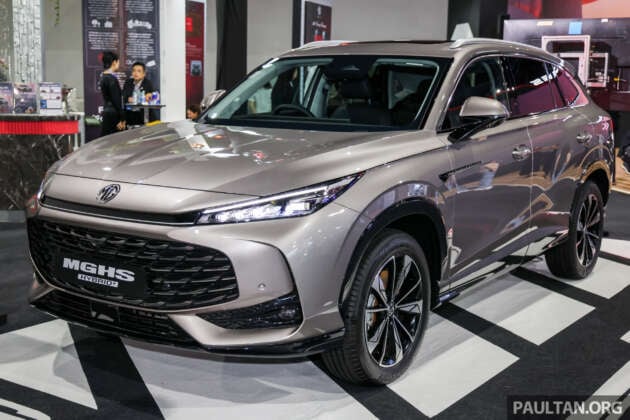
  • Second-gen MG HS C-SUV previewed at KLIMS 2026

    Second-gen MG HS C-SUV previewed at KLIMS 2026

    MG’s booth at the KL International Mobility Show (KLIMS) 2026, which opens to the public today at MITEC, is full of SUVs of different sizes. The big news is the MG ZS Hybrid+, a B-segment SUV that’s now open for booking. We also showed you the QS, a large seven-seater, and then there’s the IM6 from the premium IM sub-brand.

    This is the MG HS, which sits between the B-segment ZS and the big QS. If HS sounds familiar, it’s because SAIC Motor Malaysia does sell the first-generation HS, and this is the second-generation. Introduced in 2024, the second-gen MG HS is based on the China-market Roewe RX5 and looks significantly more modern and interesting than its predecessor, which was launched here in late 2024.

    The face features slim headlamps, a gaping ‘mouth’ and the MG badge sitting on the bonnet. It’s clear that there’s a family look going on if you see this HS and the ZS facelift side-by-side. The QS also has this grille-logo relationship. In contrast, the previous-gen HS had its MG logo smack in the middle of the grille, like the MG5. That’s how you tell the generations apart.

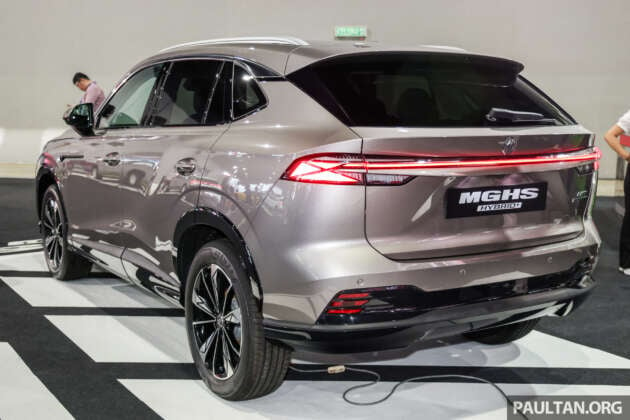
    Second-gen MG HS C-SUV previewed at KLIMS 2026

    At the back, the new HS has a full-width LED tail lamp design with a geometric pattern within, a more contemporary look compared to the previous model’s traditional clusters. There’s also a rather neat ‘integrated spoiler’ design above the lights. Overall, it’s a sharper-looking SUV than the curvy old HS.

    It’s a bigger car too. At 4,655 mm long and 1,890 mm wide, the second-gen HS is 81 mm longer and 14 mm wider than before, while its 2,765 mm wheelbase is 45 mm longer. For a more familiar context, the Honda CR-V is 4,691 mm long, 1,866 mm wide and has a wheelbase of 2,700 mm.

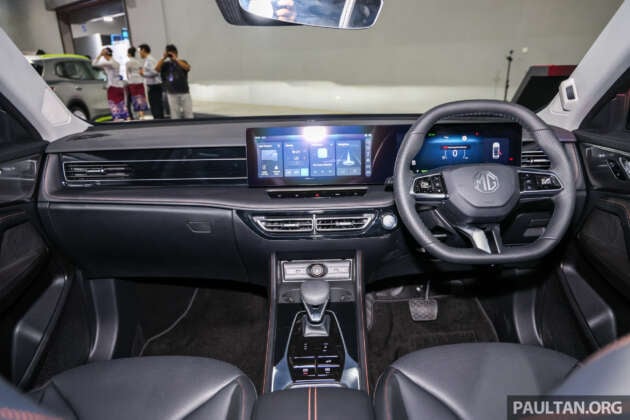
    The non-plug-in Hybrid+ powertrain in this HS combines a 143 PS/230 Nm 1.5-litre turbo engine with a 199 PS/340 Nm electric motor, resulting in combined output of 224 PS and 340 Nm. The motor is supported by a 1.83 kWh battery and a water cooling system.

    Second-gen MG HS C-SUV previewed at KLIMS 2026

    Hybrid aside, there’s also a pure-petrol 1.5L turbo variant with 170 PS and 275 Nm, paired to a seven-speed dual-clutch automatic transmission. These figures are higher than the previous HS 1.5T’s 162 PS/250 Nm. By the way, this new HS is sold in Australia and boasts a five-star ANCAP rating.

    Is the HS coming to rival the Honda CR-V, Mazda CX-5 and Chery’s multi-brand range of C-segment SUVs? Perhaps, but MG’s current priority is the ZS Hybrid+, which is now open for booking, and the ZS Turbo after that. The company uses EPMB’s plant in Melaka for contract assembly, and to CKD multiple models at one go could be a big ask for all parties involved. EPMB also assembles for GWM and Xpeng.

    Anyway, what do you think of the new MG HS’ looks and package?

    GALLERY: Second-generation MG HS at KLIMS 2026

     
  • 2026 Harley-Davidson Pan America Limited comes in three new colours, SW-Motech luggage

    2026 Harley-Davidson Pan America Limited comes in three new colours, SW-Motech luggage

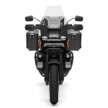
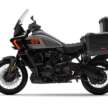
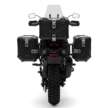
    A colour refresh for the 2026 Harley-Davidson (H-D) Pan America Limited adventure-tourer, with SW-Motech aluminium luggage fitted as standard equipment. New colours are Dark Billiard Grey, with White Onyx Pearl and Olive Steel Metallic being extra cost options, all complemented by H-D graphics and striping.

    The SW-Motech luggage comprises of a top box and side panniers, giving a total of 120-litres of storage space, and are lockable and removable. All finished in black, the top box is large enough to hold a full-face helmet.

    Mechanical specifications remain unchanged, with power coming from a liquid-cooled Revolution Max 1250 V-twin. Power is rated at 150 hp and 127 Nm of torque from the 1,250 cc mill which revs to a peak of 9,500 rpm, with four-valves and two spark plugs per cylinder with variable valve timing.

    A six-speed, Screaming Eagle quick shifter-equipped gearbox sends power to the rear wheel with chain final drive. For the Pan America Limited, a full suite of riding electronics comes as standard equipment.

    This include nine ride modes, five standard modes – Sport, Road, Rain, Off-Road, and Off-Road Plus – and four user customisable modes. Also standard is Adaptive Ride Height and electronically controlled semi-active suspension, electronically linked braking, traction control, Drag Torque Slip Control (DSCS), vehicle hold control for hill starts, tyre pressure monitoring, wheelie control, and cornering ABS.


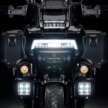
    Riding information is displayed on a 6.8-inch TFT-LCD colour touchscreen display with Bluetooth connectivity and management of calls, music and navigation. Crash guards, skid plate and auxiliary driving lights are also fitted as standard.

     
  • Toyota Corolla Concept turns up at KLIMS 2026

    Toyota Corolla Concept turns up at KLIMS 2026

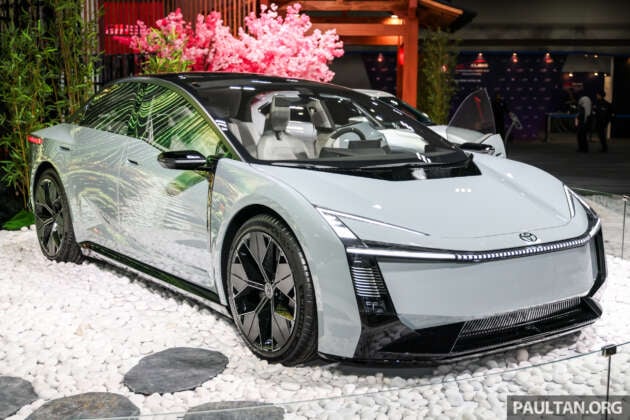
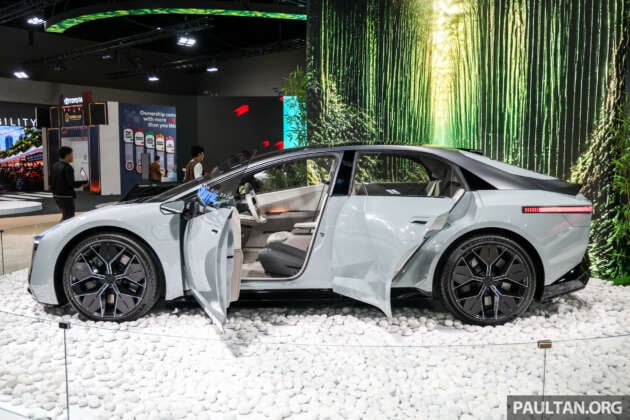
    The Toyota Corolla Concept from last year’s Japan Mobility Show takes pride of place at Toyota’s Kuala Lumpur International Mobility Show (KLIMS) 2026 stand. Yes, not new, but it’s still refreshing to clap eyes on the svelte sedan again.

    Think ‘Toyota Corolla’ and you think practical, humdrum, middle-of-the-road, inoffensive, safe, conservative, conventional… you get the drift. But the big T obviously wants to change that with this concept – it’s certainly been designed to shock and wow.

    Toyota Corolla Concept turns up at KLIMS 2026

    With clearly-demarcated top and bottom portions, the roof features huge glass panels (see how far back the windscreen stretches) and visibility is further enhanced with the bottom line of the daylight opening dropping dramatically to go under the wing mirrors. It’s going to feel very spaceship-like from inside.

    That prominent feature joints a vertical strip with some lighting, which reminds us of JMS 2023’s FT-3e Concept, which also visited Malaysia for KLIMS 2024. In fact, this Corolla proposal is sort of like a lowered sedan version of the FT-3e SUV.

    Up front, Toyota’s current ‘hammerhead’ face first seen on the fifth-gen Prius in 2022 gets an LED light strip to bridge the lights. There’s a square ‘jaw’ to frame the face, but no grille, and the front wing houses a charging flap, so is it an EV? Toyota is leaving that open at the moment – cue the ‘multiple pathways to carbon neutrality‘ trope.

    Out back, the dark glasshouse is ‘pinched’ into a narrow middle section highlighted by a spoiler, and flanked by broad shoulders. A wrap-around LED strip sits above central ‘Corolla’ branding, and there’s as much empty space as the front end.

    Inside you’ll find a super minimalist cockpit. There’s no centre screen (shock horror!) – the driver gets an instrument display while the front passenger gets his/her own screen. Bisecting these is a centre console that looks like a fancy nightstand. The big windscreen we mentioned earlier? The floating rear-view mirror illustrates how far it recedes.

    How would you like a Toyota Corolla to look like this? I know my headmaster uncle, who daily-drove his AE80 LE – unmodified and unmolested – for over three decades, most probably wouldn’t.

    Toyota Corolla Concept at KLIMS 2026

    Toyota Corolla Concept at the 2025 Japan Mobility Show

    Toyota Corolla Concept official images

     
  • 2026 Zeekr X shown at KLIMS – RWD, AWD variants, more features, up to 230 kW DC; from RM160k-180k est

    2026 Zeekr X shown at KLIMS – RWD, AWD variants, more features, up to 230 kW DC; from RM160k-180k est

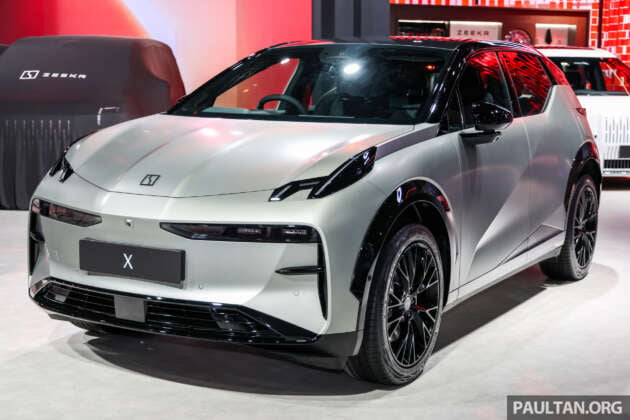
    The 2026 Zeekr X that was updated earlier this week is on display at the ongoing 2026 Kuala Lumpur International Mobility Show (KLIMS), among the brand’s exhibits which also include the 9X SUV and the 009 Grand MPV for which the order books opened yesterday.

    The brand’s most compact model in Malaysia continues to be offered in two variants; the Premium with a single-motor powertrain, and the Flagship that gets a dual-motor, all-wheel-drive configuration.

    As announced earlier this week, pricing is estimated to be from RM160,000 to RM180,000, which would make its pricing marginally higher than the current model, which is priced from RM155,800 for the Premium, to RM172,800 for the Flagship.

    Exterior revisions are minimal for the 2026 update of the Zeekr X, except for a new 19-inch wheel design on the Premium and a black paint finish for the existing multi-spoke wheel design on the Flagship. New colours are available for each variant, with Porcelain Pink for the Premium, along with Onyx Black and Matte Khaki Green for the Flagship.

    Here, the doors of the 2026 X are now operated by buttons on the B- and C-pillars to open them instead of flush door handles on the current car. The front doors get powered operation, and the B-pillars have an interactive screen that serves as a charging status indicator.

    2026 Zeekr X shown at KLIMS – RWD, AWD variants, more features, up to 230 kW DC; from RM160k-180k est

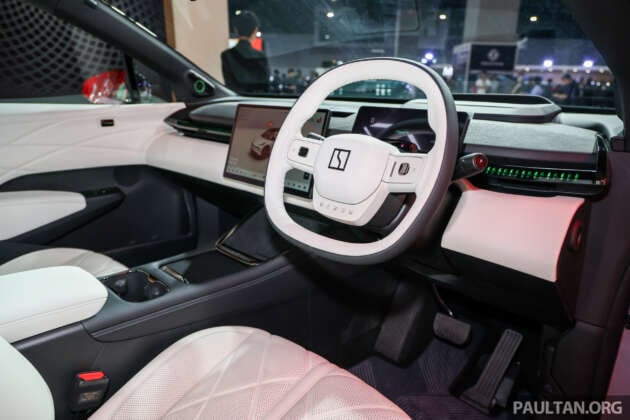
    Revisions to the cabin of the 2026 X include touch buttons below the steering wheel airbag housing, while the centre console now gets dual phone holders including a cooled Qi wireless device charger, twin cupholders as well as covered storage (previously open). The centre armrest houses a new heated and cooled storage compartment, while the rear luggage compartment has grown from 362 litres to 404 litres.

    Displays in the 2026 X are unchanged from before, and the model continues to sport a 14.6-inch infotainment touchscreen and an 8.8-inch driver’s instrument display. The ventilated front seats with massage are no longer standard across both variants, as the Premium now does without, leaving these reserved for the Flagship.

    Powertrains are upgraded too, with the Premium starting the range with a 340 PS/373 Nm single rear motor, up from the current base variant’s 272 PS. Its 0-100 km/h time however remains unchanged at 5.8 seconds. The Flagship gets uprated to 496 PS and 573 Nm, improving its 0-100 km/h time by 0.1 second to 3.7 seconds.

    Storing the energy in the Premium is a 61 kWh Energee LFP battery that offers up to 415 km of range on the WLTP standard, down from the previous base variants’ 440 km rating. The dual-motor Flagship has gained battery range, increasing to 445 km WLTP despite retaining the 66 kWh CATL NMC battery.

    The new base variant now supports up to 230 kW DC charging, enabling a 10-80% recharge in 18 minutes, and AC charging gets improved to 11 kW, which brings a full charge in 7.5 hours. The Flagship variant gains quicker AC charging too, at 22 kW, enabling a 0-100% charge in 4.5 hours. DC charging in the Flagship is up to 150 kW, which brings a 10-80% charge in 30 minutes.

    Safety and driving assistance features include seven airbags, AEB, ACC with stop-and-go, lane centring assist, auto lane change, evasive steering assist, blind spot monitoring, front and rear cross traffic alert, rear collision warning, parking AEB, driver attention monitor and a door opening warning.

     
  • Visit Jacar at KLIMS 2026 and enjoy RM388 member cash back and tint+coating+PPF combo from RM1.5k!

    Visit Jacar at KLIMS 2026 and enjoy RM388 member cash back and tint+coating+PPF combo from RM1.5k!

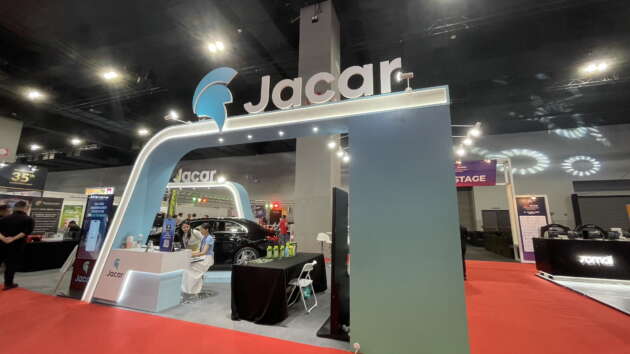
    The Kuala Lumpur International Mobility Show (KLIMS) is here, bringing plenty of new car launches from a variety of brands. But it’s not just the new metal on display, because if you are indeed eyeing to get a new ride, then you can get your car care needs taken care of through Jacar, also present at the show.

    Jacar offers a seamless and transparent way to get your car freshly detailed, without any surprise hidden fees or other sales tricks or scams. With no middleman taking a cut of what you’re paying for, all savings get passed down to you, the customer.

    You can book a service through the mobile app – available on iOS and Android devices – and select products from verified, reputable global brands. All you have to do then is show up at your preferred Jacar outlet, then watch as your car gets worked on and cared for through a live CCTV feed, right from the app.

    Click to enlarge

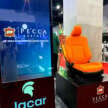
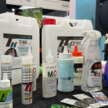
    The list of those international brands is not to be sniffed at and includes American window tint and PPF giant Llumar, Japanese precision coating expert KeePer, French car detailing specialist GS27 and Malaysia’s leading automotive leather upholstery manufacturer Pecca Leather. They offer top-quality products that are often seen as prohibitively expensive, now at prices within reach of the average consumer.

    Sounds enticing? At KLIMS, you’ll be able to sign up for a membership and enjoy a cash back in the form of RM388 in credits. You’ll also be able to choose from two of three welcome gifts, including a KeePer Mineral Off Wash worth RM190, window glass coating worth RM180 and interior sterilisation worth RM150. Plus, there’s a 20% discount on selected services, a five per cent cash back on completed paid services and more.

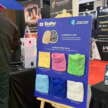
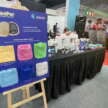
    You can also pick and choose from promotions from each brand, such as KeePer coatings starting from only RM988 (original price from RM1,500), Llumar window tint from only RM999 (original price from RM2,500) and PPF from only RM399 (original price from RM1,200), and Pecca TurboSeat covers from only RM399 (original price from RM699) and full Nappa leather reupholstery from only RM1,999 (original price from RM6,900).

    Click to enlarge

    There’s also a 35% discount on GS27 products, and there even bigger savings with 2-in-1 Llumar and KeePer packages starting from RM1,800 (original price from RM3,400). But for the ultimate new car starter pack, you can opt for Jacar’s tinting, coating and PPF combos for popular models, starting from only RM1,999 for the Proton eMas 5 (original price from RM4,449). All in all, you’re looking at savings of up to 70%!

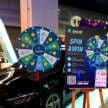
    And that’s not all – visitors will also be able to participate in a Spin & Win contest. All you have to do is follow the official Jacar account (lets.jacar) on Instagram, TikTok or Xiaohongshu, spin the wheel and secure your guaranteed reward. Download the Jacar app and register to instantly claim your reward or vouchers.

    Click to enlarge

    Every successful registration also automatically enters you into a lucky draw, giving you a chance to win a premium Llumar Pinnacle Series tinting package worth RM5,000. Lastly, share the Jacar booth on an Instagram story, TikTok or Xiaohongshu, tag Jacar and include the hashtags #EverythingCarOneApp and #JacarApp, and you’ll receive a free, limited-edition Jacar microfibre cloth.

    So, cut out the middleman and Jaga your Car with amazing savings with Jacar at KLIMS booth 1A01, from June 12 to 21 at the Malaysia International Trade and Exposition Centre (MITEC)! Can’t make it? You can head on over to your nearest Jacar outlet in Bandar Utama or Bandar Sunway and enjoy all the same deals. For more information, visit the official Jacar website or its socials on Facebook and Instagram.


Sell your car to Carro, get paid in 24 hours


Latest Fuel Prices

PETROL
BUDI 95 RM1.99
RON 95 RM3.72 (0.00)
RON 97 RM4.35 (0.00)
RON 100 RM6.45
VPR RM7.68
DIESEL
EURO 5 B10 RM4.67 (0.00)
EURO 5 B7 RM4.87 (0.00)
Last Updated Jun 11, 2026

Latest Videos


Tools