2026 Proton Saga review - all the good & bad in full detail


Sell your car to Carro, get paid in 24 hours

Latest Stories

  • Top 20 EV cars in May 2026 – eMas 7 tops eMas 5 by 13 units, iCaur V23 3rd, will Atto 3 comeback in June?

    Top 20 EV cars in May 2026 – eMas 7 tops eMas 5 by 13 units, iCaur V23 3rd, will Atto 3 comeback in June?

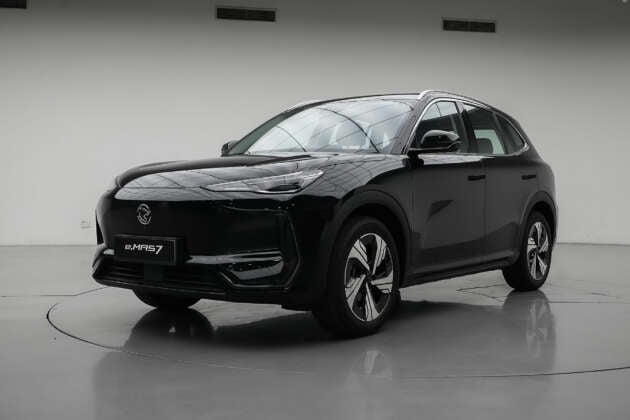
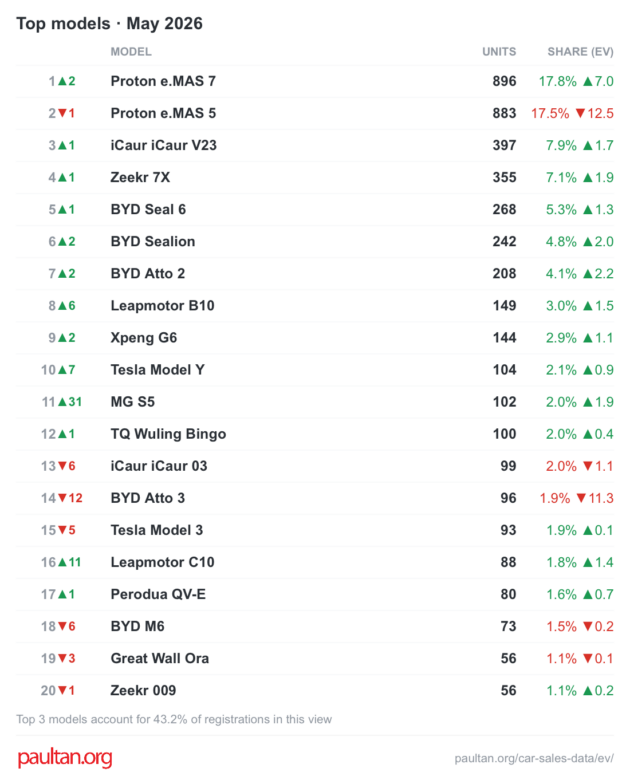
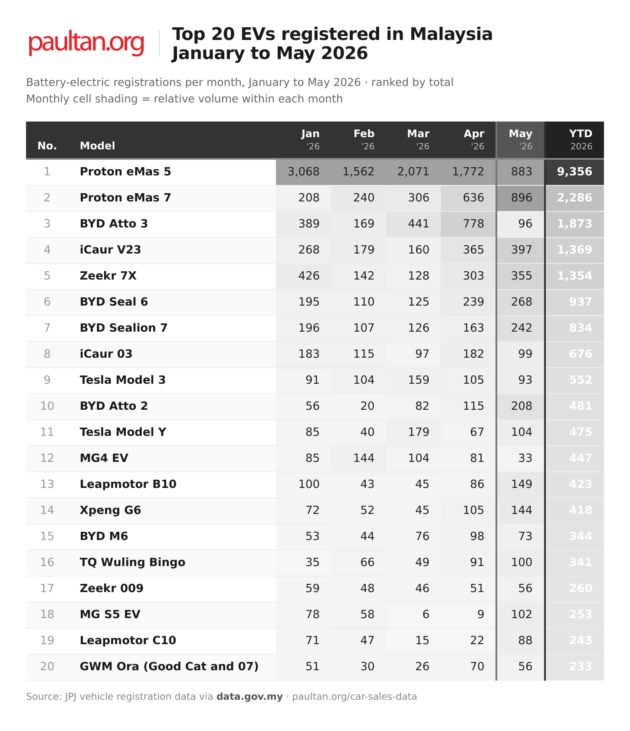
    After writing the same thing all year, May 2026 finally brings a changing of the guard at the top of Malaysia’s EV chart. The Proton eMas 7 has overtaken its smaller sibling, the eMas 5, to become the country’s best-selling fully electric model for the month, according to the latest EV registration data from the road transport department (JPJ).

    It was the narrowest of wins. The eMas 7 recorded 896 units to the eMas 5‘s 883, a margin of just 13 units. The eMas 7 had trailed in third place in April, so its move to the summit caps a steady climb. On a year-to-date basis, though, the eMas 5 remains streets ahead, with 9,356 units to the eMas 7’s 2,286, so this is very much a monthly result rather than a shift in the bigger picture.

    Top 20 EV cars in May 2026 – eMas 7 tops eMas 5 by 13 units, iCaur V23 3rd, will Atto 3 comeback in June?

    Third place goes to a relative newcomer, the iCaur V23 with 397 units (1,369 YTD), the Chery-derived marque now carving out its own space in the chart. It is followed by the Zeekr 7X (355 units, 1,354 YTD) and the BYD Seal 6 (268 units, 937 YTD), the best-placed of a cluster of BYD models.

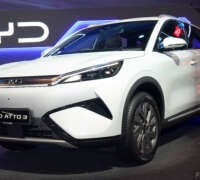
    BYD in fact fields five models in the top 20, but its volume is spread thinly: the Sealion takes sixth with 242 units, the Atto 2 seventh with 208, and further down, the once-dominant Atto 3 is in 14th place with just 96 units, which is expected as BYD geared up for the 2026 Atto 3 facelift to be launched.

    The mid-table sees the Leapmotor B10 in eighth (149 units), the Xpeng G6 ninth (144), and the Tesla Model Y rounding out the top 10 with 104 units. The newly locally-assembled MG S5 makes the biggest leap of all, vaulting from 42nd in April to 11th with 102 units as CKD deliveries get going.

    Top 20 EV cars in May 2026 – eMas 7 tops eMas 5 by 13 units, iCaur V23 3rd, will Atto 3 comeback in June?

    The rest of the 20 is filled out by the TQ Wuling Bingo in 12th (100 units), the iCaur 03 in 13th (99), the Atto 3 in 14th, the Tesla Model 3 in 15th (93), the Leapmotor C10 in 16th (88), the Perodua QV-E in 17th (80), the BYD M6 in 18th (73), the Great Wall Ora in 19th (56) and the Zeekr 009 in 20th, also on 56 units.

    By brand, Proton remains the dominant force in EVs, its e.MAS pair good for 1,779 units, or 35.3% of all EV registrations in May. BYD is a distant second on 925 units (18.4%), with the fast-rising iCaur third on 522 (10.4%), ahead of Zeekr (413) and Leapmotor (237).

    Overall, EV registrations totalled 5,038 units in May, down 14.5% from April’s 5,894, broadly tracking the wider market, which cooled around 15% on the month. The Perodua QV-E continues its slow climb, edging up to 17th from 18th with 80 units against April’s 52, a sign that the national brand’s first EV may at last be finding its feet. You can explore the full EV picture, by model, brand and month, on our car sales data tool.

     
  • V-MY special number plate series for Visit Malaysia 2026 launched – V 1 MY to V 9999 MY on JPJ eBid

    V-MY special number plate series for Visit Malaysia 2026 launched – V 1 MY to V 9999 MY on JPJ eBid

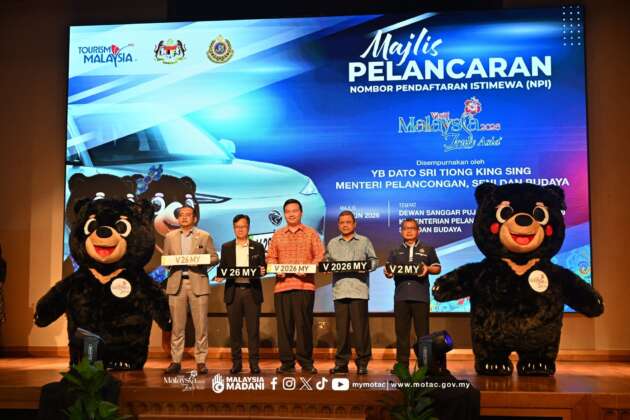
    The ministry of tourism, arts and culture (MOTAC) has launched the V-MY special number plate series in conjunction with the Visit Malaysia 2026 (VM2026) campaign, done in cooperation with JPJ.

    MOTAC minister Datuk Seri Tiong King Sing said that the plate series has the potential of appealing to those attracted to high-value number plates.

    “At the same time, this initiative helps us raise more funds to promote VM2026 as part of our efforts to attract more domestic and international tourists,” he said in a speech read out by deputy minister Chiew Choon Man in Putrajaya today.

    The V-MY series will be available for bidding on JPJ’s eBid portal, from June 13 to 17, with a starting price of RM300. Numbers in the popular category start from RM500, while ‘attractive’ ones start from RM2,500. Premium numbers start from RM5,000 and the top-tier ‘golden’ numbers have a minimum price of RM20,000.

    Can you think of anything interesting starting with V and ending with MY?

     
  • Top 20 cars in May 2026 – Saga retakes top spot from Bezza, Proton eMas 7 PHEV outsells the EV

    Top 20 cars in May 2026 – Saga retakes top spot from Bezza, Proton eMas  7 PHEV outsells the EV

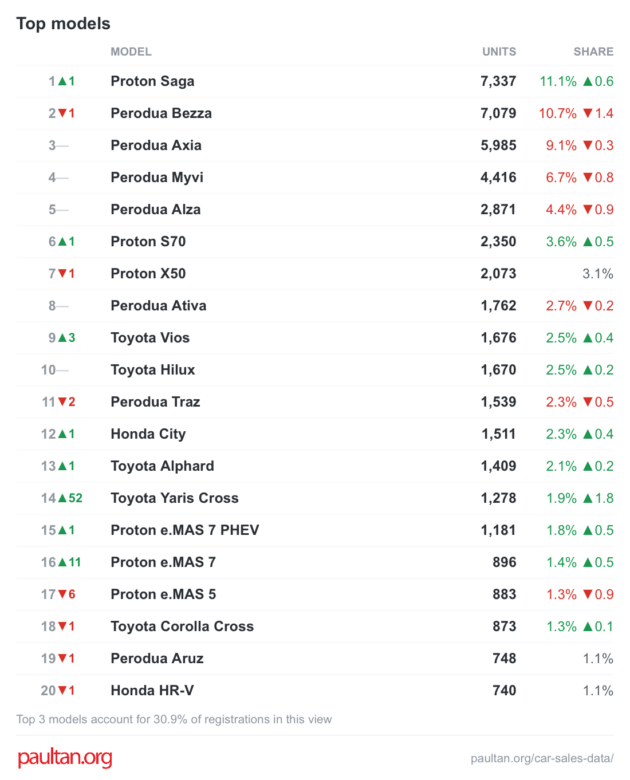
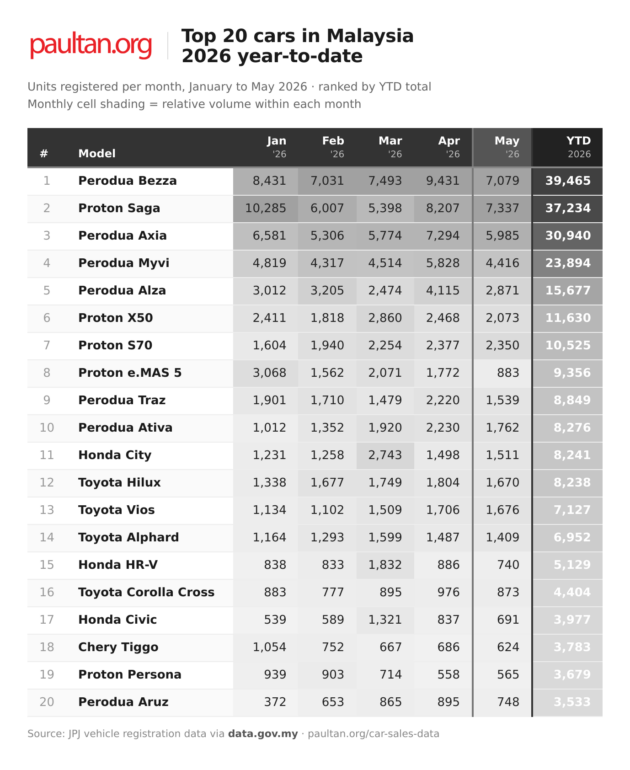
    New car registration data from the road transport department (JPJ) is out, showing the bestselling cars for the month of May 2026. After months of Perodua dominance at the very top, it is the Proton Saga that claims first place this time, with 7,337 units registered in May 2026, part of Proton’s monthly tally of 16,140 units.

    The Saga edged out the Perodua Bezza, which slips to second with 7,079 units after a long run at the top, a gap of just 258 units between the two national sedans. The top three is rounded up by the Perodua Axia with 5,985 units. Perodua remained the top brand overall with 24,480 units in May 2026.

    The monthly result does not change the year-to-date (YTD) picture at the top, however. The Bezza still leads on a YTD basis with 39,465 units, ahead of the Saga on 37,234 units, with the Axia third on 30,940 units. In other words, the Saga has won the month but not yet the year.

    Top 20 cars in May 2026 – Saga retakes top spot from Bezza, Proton eMas  7 PHEV outsells the EV

    These are followed by the Perodua Myvi with 4,416 units in May (23,894 YTD) and the Perodua Alza with 2,871 units (15,677 YTD), giving Perodua four of the top five places. The Proton S70 takes sixth with 2,350 units (10,525 YTD).

    The rest of the top 10 is a run of established names. The Proton X50 is seventh with 2,073 units (11,630 YTD), followed by the Perodua Ativa in eighth (1,762 units, 8,276 YTD). The Toyota Vios takes ninth with 1,676 units (7,127 YTD), leading the Japanese contingent, and the Toyota Hilux rounds out the top 10 with 1,670 units (8,238 YTD), the pick-up still selling in strong numbers.

    The Perodua Traz holds 11th with 1,539 units (8,849 YTD), ahead of the Honda City in 12th (1,511 units, 8,241 YTD) and the Toyota Alphard in 13th (1,409 units, 6,952 YTD).

    The standout new entrant is the Toyota Yaris Cross, which storms into 14th with 1,278 units (1,392 YTD) from just 114 units and 66th place in April, as deliveries of the B-segment SUV ramp up. It is the donor model for the Perodua Traz sitting three places above it.

    Proton’s electrified models cluster in the mid-teens, and the registry now lists the e.MAS 7 in two forms, split by powertrain. The plug-in hybrid e.MAS 7 PHEV takes 15th with 1,181 units, outselling the fully electric e.MAS 7 in 16th on 896 units. The Proton e.MAS 5 follows in 17th with 883 units (9,356 YTD).

    The Toyota Corolla Cross is 18th with 873 units (4,404 YTD), followed by the Perodua Aruz in 19th (748 units, 3,533 YTD) and the Honda HR-V in 20th with 740 units (5,129 YTD). The Honda Civic, in the top 20 a month ago, just misses out this time in 21st with 691 units.

    Top 20 cars in May 2026 – Saga retakes top spot from Bezza, Proton eMas  7 PHEV outsells the EV

    Overall, the market cooled in May, with total new-car registrations of 66,053 units, down 15.1% from April’s 77,819 units. Perodua led the decline in absolute terms, down 23.7% on the month, while Proton was off 10.2%, the smaller drop helping the Saga to the top of the table. You can explore the full month-by-month and YTD breakdowns, by brand, model, body type and fuel, on our car sales data tool.

     
  • Hycan Z03 SUV spied – Aion Y Plus twin for Malaysia?

    Hycan Z03 SUV spied – Aion Y Plus twin for Malaysia?

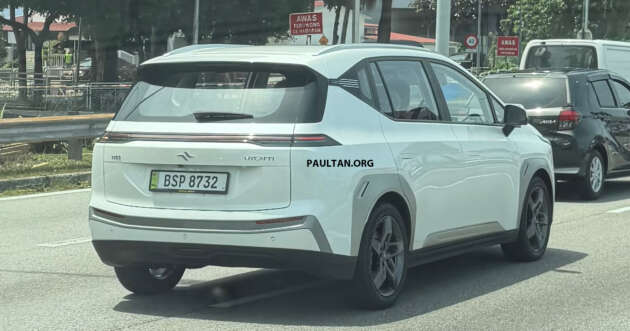
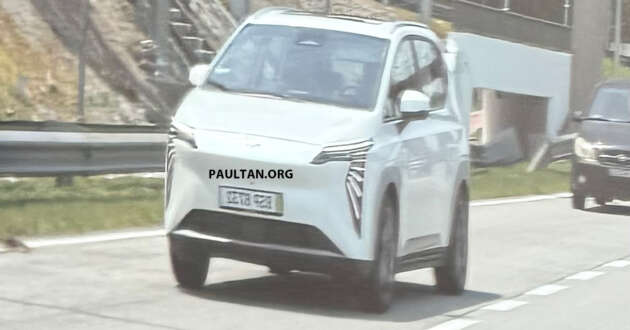
    The Hycan Z03 has been sighted in Malaysia in right-hand-drive form, following last year’s sighting of left-hand-drive units. The Z03 is essentially a reworked GAC Aion Y Plus, though this example seen on the move here appears simply to be an Aion Y Plus with Hycan badging on its tailgate.

    Measuring 4,602 mm long, 1,900 mm wide and 1,645 mm tall with a 2,750 mm wheelbase, the reworked Aion Y Plus gets a front-mounted electric motor, offering two power output levels; there are 183 PS and 217 PS versions, both quoted with an identical torque figure of 225 Nm.

    From prior details from the Hycan website, three battery specifications were offered for the Z03, which were 55.5 kWh, 63.98 kWh and 76.8 kWh units offering range figures of 430 km, 510 km and 620 km respectively on the lenient CLTC Chinese test cycle. DC charging from 30-80% SoC for the two smaller battery sizes would take 36 minutes, and the largest 76.8 kWh battery would require 45 minutes.

    Hycan Z03 SUV spied – Aion Y Plus twin for Malaysia?

    In China, the Z03 is offered with either 17- or 18-inch wheels, while interior equipment includes a 10.25-inch digital instrument panel, a 14.6-inch central screen, a panoramic sunroof, a V2L reverse power supply function, an electric tailgate, a mobile phone wireless charging panel and an in-car karaoke entertainment system.

    Established in 2018 by GAC and Nio as GAC-Nio New Energy Technology, a significant take up in the company by Pearl River Investment saw Nio scale down its stake in 2021 before the latter fully exited the joint venture a year later.

    In September 2024, the Hycan brand was said to be entering the Malaysian market under a Malaysian company called Concept Fields appointed as distributor for the brand in Malaysia, however it was then stated that Hycan will market its models under a different name for export markets outside China.

    GALLERY: Hycan Z03 SUV

     
  • paultan.org Car Sales Data is live – explore every new car registered in Malaysia, now with May 2026 figures

    paultan.org Car Sales Data is live – explore every new car registered in Malaysia, now with May 2026 figures

    We’ve just launched something: a free, interactive car sales data tool that lets anyone explore exactly which cars Malaysians are putting on the road: month by month, brand by brand, model by model, down to body type and fuel. And as of today, it’s been refreshed with the latest numbers, reflecting May 2026 registrations.

    You can dive in here: paultan.org/car-sales-data

    Numbers straight from the source

    Everything in the tool is built on official Road Transport Department (JPJ) vehicle registration data, published through the government’s open data portal, data.gov.my. That’s more than 15.6 million individual registration records stretching back to the year 2000, covering every new passenger car registered in the country, by make, model, body type, fuel and colour.

    A quick but important note on what this is: these are JPJ registration figures, not MAA wholesale sales numbers. The two won’t match to the unit (registration counts when a vehicle is formally registered with JPJ, which can lag a sale), but registrations have one big advantage: they’re broken down by model, something the headline MAA figures don’t give you publicly. So you can see, say, exactly how many Perodua Bezzas or Proton X50s were registered in a given month, and how that’s trending.

    What you can do with it

    The tool is designed to answer the questions we get asked all the time:

    • Top-selling models and brands: pick any month, year, custom range, or all-time, then filter by body type (SUV, MPV, pickup and so on) or by fuel (petrol, diesel, hybrid, EV). Rankings update live, complete with month-on-month movement and market-share trends.
    • Dedicated brand and model pages: every make and model has its own page with registration history, fuel and colour mix, and which years it was on sale. For example: Perodua or the Perodua Myvi.
    • A dedicated EV page tracking electric-vehicle registrations, top EV brands and models, and EV’s share of the overall market over time.
    • Body-segment pages: SUV, MPV, pickup, passenger cars and vans, plus a hybrid breakdown.
    • Yearly reviews: a recap page for each year (e.g. 2025) with the top performers and how the market shifted.
    • A comparison tool: pit up to 12 models head-to-head on one chart, monthly or yearly, over any range you like (Compare).

    Every chart and table can be exported as an image or CSV, and the whole thing is available in English, Bahasa Malaysia and Chinese.

    May 2026 at a glance

    With the latest data now loaded, here’s where the market stands:

    • Malaysians registered 66,053 new cars in May 2026, down 15.1% on April’s 77,819.
    • Perodua led the market with a 37.1% share (24,480 units), ahead of Proton (24.4%) and Toyota (14.6%).
    • The best-selling single model was the Proton Saga, with 7,337 units, narrowly ahead of the Perodua Bezza (7,079).
    • EVs held a 7.6% share of new registrations, little changed on the month.

    You can explore all of the above, and slice it however you want, on the main dashboard.

    Updated automatically, every month

    This isn’t a one-off. The tool now refreshes itself whenever JPJ publishes new monthly data, so the figures you see will always be the latest available. No manual updates, no stale numbers. May 2026 is the first month to land through this automated pipeline.

    And for the bigger picture: Market Pulse

    If you’d rather read the story than work the filters, our companion Market Pulse site distils the same data into a visual, scrollable narrative of how Malaysia’s car market has evolved over two decades: the rise and plateau of the national makes, the SUV takeover, and the early but unmistakable arrival of EVs.

    We built this for car buyers, industry watchers, journalists and the merely curious. It’s free, with no sign-up. Have a play, and tell us what you’d like to see next.

    Explore the data

    A note on the data: these figures reflect exactly what JPJ and data.gov.my publish, so the occasional quirk comes with the territory. You’ll spot the rare coding oddity, such as a lone petrol-powered Tesla Model S, or the fact that all the new cars from Geely era Smart are called “Smart Brabus” instead of #1, #3 or #5. We present the data as-is rather than second-guessing the source, or rather we can’t do anything to correct it!

     
  • Malaysian fuel prices June 11 to 17, 2026 – unchanged

    Malaysian fuel prices June 11 to 17, 2026 – unchanged

    Today is Wednesday, which means that it is once again time for the weekly fuel price update as announced by the ministry of finance, for the coming week of June 11 to 17, 2026.

    Prices of the main fuel types will be unchanged in the coming week. The retail price of diesel remains at RM4.67 per litre, unchanged from last week, and therefore the Euro 5 B7 blend of diesel, which is 20 sen per litre more than the B10/B15 blends, remains at RM4.87 per litre. As before, the retail price of diesel fuels in Sabah, Sarawak and Labuan stays unchanged at RM2.15 per litre.

    For petrol, subsidised RON 95 under the Budi Madani RON 95 (Budi95) scheme remains at RM1.99 per litre, with Malaysians holding a valid driving licence being eligible for the fuel at a monthly quota that is temporarily adjusted to 200 litres per month.

    The price of unsubsidised RON 95 continues at RM3.72 per litre, while RON 97 is priced at RM4.35 per litre, both unchange from their respective prices of last week.

    These prices take effect from midnight tonight until Wednesday, June 17, 2026. This is the 25th edition of the weekly fuel pricing format for 2026, and the 388th in total since the format was introduced at the start of 2019.

     
  • 2026 BMW X3 30 xDrive M Sport gallery in Malaysia – from RM359k, RM33k more than X3 20; more kit, power

    2026 BMW X3 30 xDrive M Sport gallery in Malaysia – from RM359k, RM33k more than X3 20; more kit, power

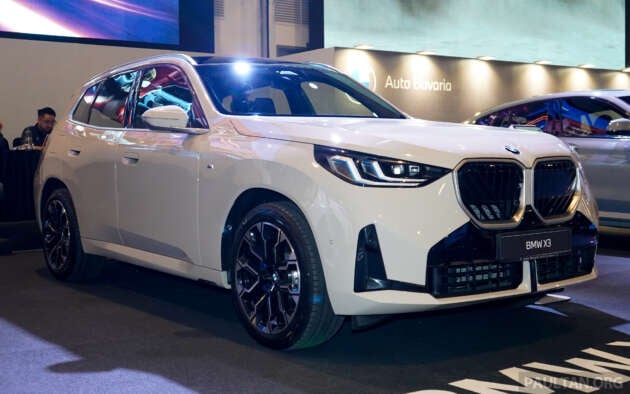
    Here’s a gallery of the BMW X3 30 xDrive M Sport which was launched in April this year as the new range-topper in the fourth-generation (G45) X5 line-up in Malaysia, sitting above the X3 20 xDrive M Sport that arrived earlier.

    The latter was originally priced at RM320,800 on-the-road without insurance, or RM348,700 with the optional five-year warranty and service package (known as BMW Service & Repair Inclusive). Since then, the base X3 has received a price revision to RM325,800 (RM353,700 with BSRI). As for the X3 30 xDrive M Sport, it launched at RM358,800 (RM386,700 with BSRI), making it RM33,000 more than the entry-level variant.

    For the premium, you’re getting a more powerful version of the B48 2.0 litre turbocharged inline-four petrol engine with 258 PS and 400 Nm of torque. Both X3 variants feature standard suspension and a 48-volt mild hybrid delivering a temporary boost of 18 PS and 200 Nm, with the B48 being mated to a ZF eight-speed automatic transmission and BMW’s xDrive all-wheel drive system.

    With more grunt, the X3 30 xDrive M Sport gets from 0-100 km/h in 6.3 seconds and has a top speed of 240 km/h. By comparison, the X3 20 xDrive Sport with its 190 PS and 310 Nm needs 7.8 seconds to complete century sprint and it maxes out at 215 km/h.

    In addition to more power, the top-spec X3 also gets larger 20-inch M light-alloy wheels in a double-spoke style 1036 M bicolour design (instead of 19-inch units), M Sport brakes with dark blue metallic-painted callipers, adaptive LED headlamps (no adaptive for the X3 20 xDrive M Sport), a panoramic glass roof. The M Sport styling package, satin aluminium trim and Iconic Glow grille are shared across the range.

    Inside, you get the same Veganza perforated and quilted synthetic leather upholstery in black, M leather steering wheel, an anthracite headliner and sport seats. For the X3 30, the trim is Magnolia printed fine wood from the BWM Individual catalogue whereas the X3 20 gets M fine-brushed aluminium trim décor.

    Another difference is the X3 30 comes with front seat ventilation as well as a 15-speaker Harman Kardon surround sound system with 765 watts of amplification. Shared with the X3 20 is three-zone climate control, ambient lighting, the BMW Interaction bar, a wireless charging pad, an interior camera, a 12.3-inch digital instrument cluster, a 14.9-inch infotainment touchscreen, a head-up display and Connected Package Professional.

    BMW X3 30 xDrive M Sport spec sheet (left), X3 20 xDrive M Sport (right)

    In terms of driving assistance systems, the X3 30 gets the same Driving Assistant Plus package, which includes lane change warning with active steering intervention, front collision warning with brake intervention (AEB), and the evasion assistant for vehicles, cyclists and pedestrians (including when turning and at intersections).

    Also on are the speed limit display with no-overtaking indicator and pre-warning, attentiveness assistant, rear cross traffic warning with brake intervention, exit warning, rear collision prevention, active cruise control with stop-and-go, and the steering and lane control assistant.

    Similarly, there’s Parking Assistant Plus included, with a surround view system, remote 3D view, a drive recorder, Park Assist and Reversing Assistant part of the package. The X3 30 is listed with an additional Active Park Distance Control with pedestrian detection when parking.

     
  • GWM Ora 5 HEV teased ahead of KLIMS 2026 debut

    It’s official from the above teaser that you’ll be seeing the Ora 5 at the upcoming Kuala Lumpur International Mobility Show (KLIMS) 2026. The little SUV is available in Thailand as a hybrid (HEV) or an EV, but we were earlier informed that Malaysia will get the former first.

    Measuring 4,471 mm long, 1,833 mm wide and 1,641 mm tall, with a 2,720-mm wheelbase, the Ora 5 is bigger than a BYD Atto 3 but smaller than a Proton eMas 7. Going by Thai specs, the HEV has a 150 PS/240 Nm 1.5 litre turbo engine, a 190 PS/236 Nm front-mounted electric motor, a 1.09-kWh battery and a 223 PS/476 Nm combined output.

    It’s also got a 55-litre tank, a 7.7-second 0-100 km/h time and a claimed fuel consumption of 23.3 km per litre. There are MacPherson struts and ventilated discs up front; multi-links and solid discs out back. The 18-inch alloys are wrapped in 225/60 rubber.

    Our northern neighbours get a 10.25-inch instrument panel, a 14.6-inch touch-screen, wireless Apple CarPlay/Android Auto, app functionality, OTA updates, six speakers (nine on the range-topping Ultra), 50-watt wireless charging, a six-way powered driver’s seat (Ultra adds ventilation and three memory settings), a four-way manual front passenger seat (Ultra adds power adjustment and ventilation) and leather seats.

    ADAS is standard, including AEB, ACC and various lane functions, but the Ultra adds lane change assist, blind spot detection, door open warning, emergency lane keeping, rear cross traffic alert, rear cross traffic braking, front cross traffic alert and front cross traffic braking.

    The starting price in Thailand is 729k baht (RM90k) but since our Ora Good Cat Ultra and Ora Good Cat GT are already RM110k and RM120k respectively, how much would you be willing to fork out for the Ora 5 HEV?

    GWM Ora 5 HEV at 2026 Bangkok International Motor Show

     
  • GWM Haval H7 teased for KLIMS – rebadged Raptor, hybrid and PHEV, up to 364 PS, 105 km NEDC EV range

    GWM Haval H7 teased for KLIMS – rebadged Raptor, hybrid and PHEV, up to 364 PS, 105 km NEDC EV range

    The pre-Kuala Lumpur International Mobility Show (KLIMS) teasers keep on rolling in, with GWM confirming it will show one of its boxy Haval models at the event. The shadowy video below makes it a bit hard to discern exactly which car it is, but its relatively compact size means it should be the Menglong (Raptor), the smaller, unibody sibling to the body-on-frame H9.

    Specifically, it’s the facelifted model introduced in China last year, which sports rectangular headlights and a new grille with a horizontal light bar to differentiate itself from that H9. At the rear, the quad square taillights have been ditched for a pair of vertical clusters, although an external spare tyre remains.

    Given that Ford likely owns the Raptor trademark, it’s unlikely that the car will be called that in Malaysia, so what moniker will it wear instead? Well, we can look to the Philippines, where the Raptor has already been confirmed for the market as the H7.

    The well-read among you will know that there’s a different H7 sold in countries like Australia, which is a rebadged Dargo (Big Dog). This is a more distinctively-styled SUV that is slightly smaller and also lower and more car-like. It’s clear, however, that GWM sees the more ruggedly-styled Raptor as more suitable for the Southeast Asian market and more fitting for the alphanumeric badge.

    Anyway, the H7 will be going to the Philippines in hybrid and plug-in hybrid forms, both featuring a 150 PS/230 Nm 1.5 litre turbo four-cylinder engine. The hybrid is front-wheel drive only and comes with a 177 PS/300 Nm electric motor and a two-speed dedicated hybrid transmission (DHT) for a total system output of 244 PS and 540 Nm of torque – exactly the same as the H6 Hybrid.

    Then there’s the PHEV, offered in both FWD and Hi4 all-wheel drive. The former retains the same motor but pushes out more power more of the time, for a total of 322 PS. With a 19.09 kWh LFP battery, this version delivers a claimed pure electric range of 105 km on the NEDC cycle and a total range of up to 1,000 km.

    GWM Haval H7 teased for KLIMS – rebadged Raptor, hybrid and PHEV, up to 364 PS, 105 km NEDC EV range

    The Hi4 gets a less powerful 109 PS/170 Nm front motor and a more powerful 204 PS/350 Nm rear motor for overall outputs of 364 PS and 760 Nm. It retains the same battery and thus offers a slightly shorter range of 91 km. Both support DC fast charging at up to 34 kW (30 to 80% in 28 minutes) and AC charging at up to 6.6 kW (15 to 100% in under three hours).

    Other features confirmed for the Philippines include a power-adjustable driver’s seat, cooled centre console storage, a head-up display, a panoramic sunroof and rear air-con vents. They dress up an angular cabin with a big passenger-side grab handle, chunky rectangular air vents, a 15.6-inch infotainment touchscreen running on GWM’s Coffee OS, a slightly cutesy two-spoke steering wheel, and a 12.3-inch digital instrument display with a distinctive “hood” that houses the P-R-N-D indicator.

    We should point out that the H7 will likely be offered as a strict five-seater. A longer version called the Raptor Plus is available in China with seven seats, but this has yet to make it to international markets.


    GALLERY: GWM Haval Raptor at Auto Shanghai 2025

     
  • GWM Malaysia appoints Stan Li Hao as MD of commercial operations, Cui Anqi MD of corp affairs

    GWM Malaysia appoints Stan Li Hao as MD of commercial operations, Cui Anqi MD of corp affairs

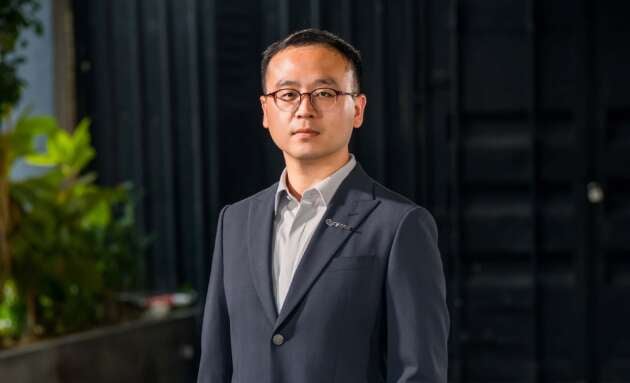
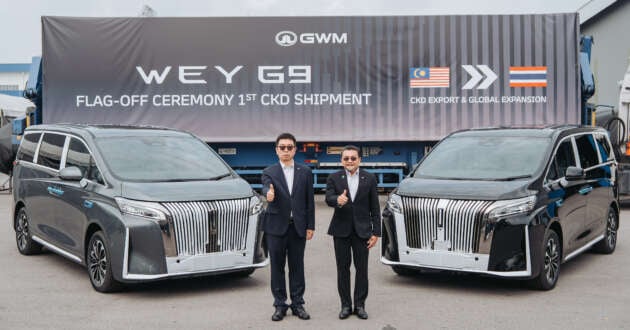
    GWM Malaysia has announced strategic leadership appointments as the company reinforces its long-term commitment to the Malaysian market, supporting the next phase of business expansion, localisation and manufacturing growth, the company says.

    The appointments include Stan Li Hao as MD for commercial operations (pictured above) and Cui Anqi as MD of corporate affairs. Before this, Cui was the sole MD of GWM Malaysia. The ‘strengthened leadership structure’ is supported by chief operating officer Roslan Abdullah.

    With more than 12 years of automotive experience across the ASEAN region, Stan brings extensive expertise in regional market development, strategic growth and brand expansion, the company says. Meanwhile, Cui has been part of GWM Malaysia’s journey since its establishment phase, contributing significantly to the company’s localisation efforts, manufacturing development and operational growth in our market.

    GWM Malaysia appoints Stan Li Hao as MD of commercial operations, Cui Anqi MD of corp affairs

    “Together, the strengthened management lineup reflects GWM Malaysia’s serious long-term commitment to Malaysia, reinforcing the company’s ambition to accelerate business expansion, deepen localisation initiatives, strengthen manufacturing capabilities, and further elevate the GWM brand in the market,” the company said in a statement.

    “The appointments also underscore GWM Malaysia’s continued focus on building a stronger local ecosystem while advancing its position as a technology-driven mobility brand for Malaysian consumers,” it added.

    GWM’s most recent launches were for the Tank 300 HEV last month and the Wey G9 MPV in January. The Baoding-based carmaker will be at KLIMS 2026 this week, and we’re expecting to see the Ora 5 and Haval Raptor a.k.a. H7 at MITEC.

     
  • Mazda Malaysia Vendors’ Association states support for MITI policy in electric vehicle localisation

    Mazda Malaysia Vendors’ Association states support for MITI policy in electric vehicle localisation

    The Mazda Malaysia Vendors’ Association (MMVA) has issued a statement in support of the direction taken by the ministry of trade and industry (MITI) that places emphasis on localisation, capability development and long-term industrial resilience.

    The association reaffirmed its commitment to supporting automakers, including Mazda Malaysia, which continue to expand localisation in alignment with Malaysia’s national policy, and expressed appreciation for MITI’s engagement with industry players, and its “dedication to building a competitive and future-ready automotive sector.”

    It stated that MITI’s latest policy framework for fully imported (CBU) electric vehicles reflects a clear commitment to strengthening the nation’s manufacturing ecosystem, by encouraging local participation, technology transfer and meaningful investment from foreign automakers.

    Mazda Malaysia Vendors’ Association states support for MITI policy in electric vehicle localisation

    The statement by MMVA continued to say that for vendors supporting Mazda’s operations in Malaysia, the direction by MITI “aligns with long-standing efforts to build a capable and competitive local supply chain”, and that “MITI’s policy reinforces this shared belief that Malaysia’s automotive future is strongest when its local supply chain grows together.”

    “MITI’s direction provides a clear pathway for Malaysian vendors to grow alongside the nation’s transition into the EV era. We welcome policies that encourage foreign automakers to invest in local assembly, technology transfer, and meaningful industrial participation. These measures strengthen our capabilities, uplift our workforce, and ensure that Malaysian vendors remain competitive in a rapidly evolving global landscape,” the association stated.

    Last month, MITI stated that the new regulations were focused on developing the local automotive ecosystem by encouraging foreign brands to set up CKD local assembly operations and work with local suppliers, and not just to protect national carmakers Proton and Perodua.

     
  • 2027 Mitsubishi Eclipse Sportback EV revealed as a rebadged Nissan Leaf – US, Canada launch this year

    2027 Mitsubishi Eclipse Sportback EV revealed as a rebadged Nissan Leaf – US, Canada launch this year

    Several years ago, Mitsubishi brought back the ‘Eclipse’ name for a crossover called the Eclipse Cross, which got a facelift in 2020. More recently, a fully electric version called the Eclipse Cross EV made its debut last September as a rebadged Renault Scenic E-Tech.

    The Japanese automaker has once again called up the ‘Eclipse’ name for a new electric crossover that is set to go on sale in North America in the second half of 2026. Known as the Eclipse Sportback EV, it is another example of Alliance synergy because it is essentially third-generation Nissan Leaf with different bumpers and badging.

    The design changes from the Nissan base include a wider lower apron at the front with horizontal trim inserts. You’ll also spot the J-shaped lighting signature for the daytime running lights instead of the Leaf’s trapezoidal shapes, while the grille incorporates the Mitsubishi logo sandwiched between vertical dashes.

    At the rear, the Eclipse Sportback EV misses out on the taillight extensions going into the tailgate, which has Mitsubishi spelled out across it. Further down, the bumper mimics what you see at the front by also having horizontal trim inserts. Beyond these tweaks, the vehicle’s profile is identical to the Leaf but the wheels are of a different design.

    Mitsubishi did not provide any interior images with its release but we reckon it’s going to be a carbon copy of the Leaf, albeit with Mitsubishi badges. Expect a widescreen display panel with dual screens and a generally spacious cabin.

    Full technical specification will come later, although with the Eclipse Sportback EV riding on the same CMF-EV platform as the Leaf, it should get the same powertrains. The latter is offered with either a 52- or 75-kWh battery pack, paired with a front electric motor rated at either 177 PS (174 hp or 130 kW) and 345 Nm of torque or 218 PS (215 hp or 160 kW) and 355 Nm.

     
  • Xpeng Malaysia 2028 strategy – X9 CKD on schedule, local R&D, 30 3S outlets, megawatt hypercharging

    Xpeng Malaysia 2028 strategy – X9 CKD on schedule, local R&D, 30 3S outlets, megawatt hypercharging

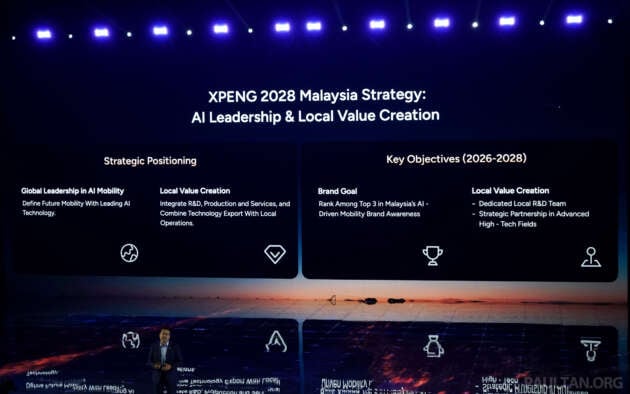
    At yesterday’s launch of the facelifted X9, Xpeng Malaysia senior country manager Chen Yinbin revealed the company’s future plans leading into 2028.

    On the matter of local assembly (CKD), Chen said the company is on schedule to introduce the new X9 as its second CKD model. At present, the refreshed electric MPV comes fully imported (CBU) from China, and while Chen did not provide a timeline on when the CKD version of the MPV will be introduced, we are expecting this to happen sometime this year.

    Just a few days ago, it was announced that the first G6 rolled off the line at EPMB’s plant in Melaka, making the facelifted SUV the brand’s first CKD model in Malaysia. EPMB was picked as Xpeng’s CKD partner in December last year, with the fully electric X9 and its PowerX range-extended electric vehicle (REEV) variant set to join the G6 at the Melaka plant.

    Chen also stated that Xpeng will set up a dedicated local R&D team in Malaysia as well as establish strategic partnerships in advanced high-tech fields. He pointed out that cars sold here will have their ADAS calibrated with equipment identical to those used in its global smart factories.

    Additionally, Xpeng will collaborate with the Malaysian Investment Development Authority (MIDA) and ARM to invest in and support the establishment of an automotive semiconductor and chip centre.

    Shifting over to its dealership network, Xpeng Malaysia is aiming to have 18 3S outlets in key regions across the country, with the number going up to 30 by 2028 for 100% coverage of all states. Meanwhile, the company will continue to collaborate with JomCharge and other charge point operators (CPOs) to rapidly expand its charging network.

    By 2028, the target is over 80 Xpeng stations and over 1,800 integrated DC charging points across Malaysia. Chen also noted in his presentation that payment systems will be integrated into the Xpeng app this year, which will also see the introduction of megawatt (1,000 kW) hypercharging – this is a significant step up from the 350 kW DC charger launched last October.

    As for aftersales, Chen said there will be 30 service centres nationwide by 2028, which ties back to the 30 3S centres planned. By that time, there will also be three battery repair centres set up, which should be good news for vehicle longevity.

    Spare parts supply will also be further optimised for efficiency from 95% currently to 99% in 2028, with parts delivered within 24 hours to ensure timely repairs or maintenance. Lastly, there’s the Xpeng ASEAN borderless warranty which ensures Malaysian Xpeng owners are covered and still have in-vehicle data access should they travel to Thailand, Singapore and even Indonesia.

     
  • 2026 Zeekr X bookings open in Malaysia: all get power doors, fridge; 496 PS, 445 km WLTP, from RM160k est

    2026 Zeekr X bookings open in Malaysia: all get power doors, fridge; 496 PS, 445 km WLTP, from RM160k est

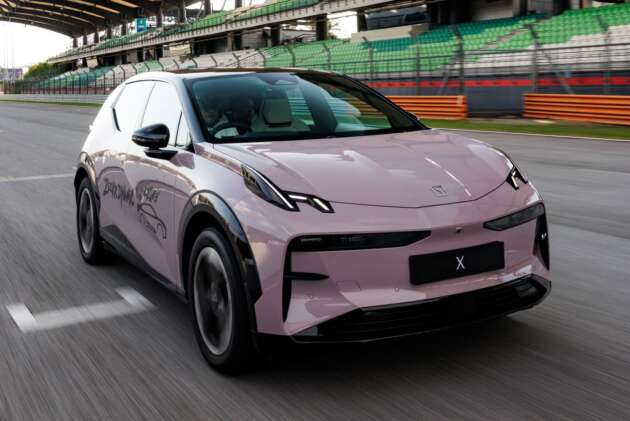
    Shown earlier this week, the 2026 Zeekr X is now open for booking in Malaysia ahead of its appearance at the Kuala Lumpur International Mobility Show (KLIMS) starting tomorrow, June 11. While we may have been a bit late with the model year update (Thailand, Europe and Australia got it first), we appear to have benefitted from the delay with a higher specification compared to those other markets.

    The X is still offered in single-motor Premium and dual-motor all-wheel-drive Flagship variants and comes with estimated pricing of between RM160,000 and RM180,000. This is only slightly higher than the current model that retails at RM155,800 for the Premium and RM172,800 for the Flagship, despite the extra kit and the implementation of import and excise duties for CBU EVs starting this year.

    Let’s run through the upgrades, shall we? Not much has been changed on the outside, save for new 19-inch “paddle” aero wheels for the Premium and a black finish for the 20-inch multi-spoke forged rollers on the Flagship. There are also new colours this year – the Premium can be dressed in Porcelain Pink, while the Flagship is now available in Onyx Black and Matte Khaki Green.

    2026 Zeekr X bookings open in Malaysia: all get power doors, fridge; 496 PS, 445 km WLTP, from RM160k est

    2026 Zeekr X in Thailand

    Getting inside, one will notice the first bit of “good news” for Malaysia – the new powered doors, fitted only on the AWD model in virtually all other markets, have been fitted as standard here. This is paired with a circular interactive screen on the B-pillar that also acts as a charging indicator.

    Once you finally get inside, you’ll be able to spot the myriad tweaks. There are new colour schemes – black and white for the Premium, full black with red stitching and seat belts for the Flagship – but the biggest change is to the centre console, which takes over from the open storage in the current car.

    Taking after so many Chinese cars these days, the X now sports dual phone holders with a cooled Qi wireless charger, covered storage and twin cupholders. The armrest covers a new heated and cooled refrigerator, which again is standard in Malaysia instead of being exclusive to the AWD model like in other markets. Touch-sensitive buttons for various vehicle functions have also sprouted below the steering wheel airbag boss, while the boot has been expanded from 362 litres to 404 litres.

    2026 Zeekr X bookings open in Malaysia: all get power doors, fridge; 496 PS, 445 km WLTP, from RM160k est

    2026 Zeekr X in Thailand

    No changes to the 8.8-inch instrument display or the 14.6-inch infotainment touchscreen – we don’t get the nifty sliding touchscreen offered in Europe – but the Premium now receives the 24.3-inch augmented reality head-up display as standard. It does unfortunately lose its ventilated front seats, which has been reserved for the Flagship alongside a new front-seat massage function.

    The mechanicals are another area where the X has been thoroughly revamped. Both variants receive uprated motors – the rear-wheel-drive Standard version now produces 340 PS (250 kW) and 373 Nm of torque, up from 272 PS (200 kW). Despite this, it still gets from zero to 100 km/h in 5.8 seconds.

    On the other hand, the Flagship gets boosted by 68 PS (50 kW) and 30 Nm to 496 PS (365 kW) and 573 Nm, shaving a tenth of a second off the century sprint, which it completes in just 3.7 seconds. More importantly, the base model gains a new battery that hopefully improves safety.

    The Standard is now juiced by a 61 kWh Energee LFP battery; strangely, Zeekr Malaysia claims only a small reduction in WLTP range to 415 km (previously 440 km), which is not in line with the 405 km quoted for other markets. Meanwhile, the Flagship’s actually went up significantly to 445 km (previously 420 km, other markets’ MY2026 415 km) despite an unchanged 66 kWh CATL NMC pack.

    The change in battery for the Standard means that it now supports up to 230 kW of DC fast charging, so topping it up from 10 to 80% takes 18 minutes. It also gets a bump in AC charging power to 11 kW (up from a meagre 7.2 kW) and takes 7.5 hours for a full charge. Oddly, the Flagship continues to be handicapped at 150 kW and takes a yawning 30 minutes to charge from 10 to 80%. It does, however, now support 22 kW of AC charging instead of the usual 11 kW, for a full charge in 4.5 hours.

    Safety kit is unchanged from before and includes seven airbags and a full list of driver assists. This includes autonomous emergency braking, adaptive cruise control with stop and go, lane centring assist, auto lane change, evasive steering assist, blind spot monitoring, front and rear cross traffic alert, rear collision warning, parking AEB, a driver attention monitor and a door opening warning.


    GALLERY: 2026 Zeekr X in Bangkok

     
  • Puspakom extends operations to Saturdays this month – June 13, 20 and 27; 27 branches nationwide involved

    Puspakom extends operations to Saturdays this month – June 13, 20 and 27; 27 branches nationwide involved

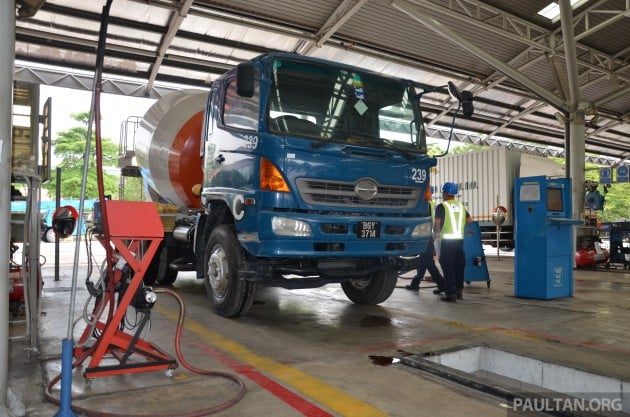
    It’s not that easy to send your vehicle for inspection on working days, so Puspakom has been extending operations to Saturdays of late, and there are three extra days this month.

    The extended operations – which is scheduled for June 13 (this week), 20 and 27 – is for selected branches across the country, which will be open from 8am to 5pm, like on previous extended Saturdays.

    This time, a total of 27 Puspakom branches will be involved. All customers have to make online appointments via GiCheck before showing up – no walk-ins are allowed. Below are the list of outlets involved.

    Central

    • Wangsa Maju
    • Cheras
    • Taman Bukit Maluri
    • Shah Alam
    • Padang Jawa
    • Glenmarie
    • Banting
    • Bangi
    • Pandan Mewah
    • Batu Caves
    • Sungai Besar

    North

    • Alor Setar
    • Sungai Petani
    • Mak Mandin (Penang)
    • Teluk Kumbar
    • Gopeng
    • Taiping

    South

    • Seremban
    • Alor Gajah
    • Johor Bahru
    • Senai
    • Pasir Gudang
    • Kluang

    East Coast

    • Kuantan
    • Kota Bharu

    East Malaysia

    • Kota Kinabalu
    • Kota Samarahan
     
  • 2026 Proton X50 Sport Edition to be shown at KLIMS – B-segment SUV gets bodykit with red highlights

    2026 Proton X50 Sport Edition to be shown at KLIMS – B-segment SUV gets bodykit with red highlights

    Proton will be showing the X50 Sport Edition at the upcoming 2026 Kuala Lumpur International Mobility Show (KLIMS 2026), a new special edition based on the facelift of the B-segment SUV that was launched last July.

    Alterations that distinguish the X50 Sport Edition from its rangemates, based on Proton’s social media post, feature a bodykit that includes a black paint finish on sections that were matte silver on the regular X50, as well as red highlights on selected parts of the bodykit.

    Judging by the X70 Sport Edition that was launched in April this year, the X50 Sport Edition could follow the same direction in also using black painted wheels. The X50 facelift already brought Quartz Black to its standard palette of exterior colours, which itself followed the X50 Black Edition that was a limited-run variant released in March.

    The X50 Sport Edition can be expected to build upon the specification of the facelifted X50, which received the 1.5 litre BHE15TD turbocharged, direct-injection petrol engine that outputs 181 PS and 290 Nm, driving the front wheels through a seven-speed dual-clutch automatic transmission.

    In addition to the X50 Sport Edition, Proton will be at KLIMS 2026 with its line-up of current and models, as well as a showcase of new technologies.

    GALLERY: 2025 Proton X50 1.5TD Flagship facelift

     
  • Middle East conflict pushed Malaysia’s monthly fuel subsidy bill to a peak RM7.5 bil in April – Amir Hamzah

    Middle East conflict pushed Malaysia’s monthly fuel subsidy bill to a peak RM7.5 bil in April – Amir Hamzah

    The surge in global oil prices brought about by the Middle East conflict pushed Malaysia’s monthly fuel subsidy bill to as high as RM7.5 billion at one point in April, said finance minister II Datuk Seri Amir Hamzah Azizan.

    He said the subsidy bill had spiked from about RM700 million a month in January and February to RM5 billion in March, before peaking in April, although the amount has since moderated following a decline in oil prices easing the subsidy spend, as Bernama reports.

    He said oil prices had declined from about US$120 per barrel from earlier to between US$90 and US$98 this month, which has helped ease pressure on subsidy spending. “Now, with prices coming down and moderating, we’re probably looking at about RM3.5 billion-RM4 billion of subsidies,” he said, adding that the government will maintain the subsidised fuel price and current 200 litre monthly quota for RON 95 under the Budi95 fuel assistance programme.

    Middle East conflict pushed Malaysia’s monthly fuel subsidy bill to a peak RM7.5 bil in April – Amir Hamzah

    Amir Hamzah said reforms implemented over the past few years had also helped strengthen the country’s ability to withstand external shocks and manage rising subsidy costs. Without the reforms, the government would be facing subsidy costs higher than RM10 billion, he explained.

    He said the government’s continued priority in the immediate term was to ensure that fuel supplies remain uninterrupted. “The economy cannot function if there’s no supply,” he said. He added that the country had thus far avoided supply disruptions partly because it is a net energy exporter, while national institutions and oil companies were able to secure supplies through their global networks.

     
  • Train operations at KTM JB Sentral station will be suspended tomorrow, June 11 for RTS Link works

    Train operations at KTM JB Sentral station will be suspended tomorrow, June 11 for RTS Link works

    KTM has announced that train operations at JB Sentral station will be temporarily suspended tomorrow, June 11, to facilitate truss structure launching works for the Johor Bahru-Singapore RTS Link project.

    During the temporary suspension, affected passengers for KTM’s ETS EP9535 and EG9449 trains will continue their journey with the shuttle bus service between Kempas Baru station and JB Sentral. Designated pickup and drop-off areas will be provided at both locations, and KTM staff will be on hand to guide passengers. Follow the signs and crew.

    Speaking of the JB-SG RTS Link, they successfully conducted a high-speed, multi-train trial in April. In January, the project was reported to be on track for completion in December, for operations to commence in January 2027. The 4km rail link connects JB’s Bukit Chagar to Singapore’s Woodlands North, and its driverless train sets have a maximum capacity of 10,000 passengers per hour per way.

     
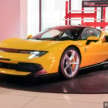
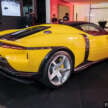
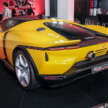
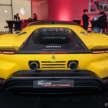
  • Ferrari 849 Testarossa launched in Malaysia – Coupe fr RM5.2 mil, Spider fr RM5.7 mil; V8 PHEV with 1,050 PS

    Ferrari 849 Testarossa launched in Malaysia – Coupe fr RM5.2 mil, Spider fr RM5.7 mil; V8 PHEV with 1,050 PS

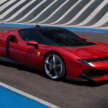
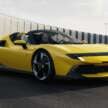
    Ital Auto has officially introduced the Ferrari 849 Testarossa in Malaysia, with the SF90 Stradale replacement making its way here seven months after its ASEAN debut in Thailand. Retail prices for both the Coupe and Spider were announced, and they are RM5.2 million for the Coupe and RM5.7 million for the Spider, both inclusive of import duties and taxes, but excluding options, registration and insurance.

    The new Testarossa measures in at 4,718 mm long, 1,999 mm wide (2,304 mm with side mirrors) and 1,225 mm tall, which makes it eight mm longer, 27 mm wider and 39 mm taller than the SF90 (4,710 mm long, 1,972 mm wide and 1,186 mm tall). Dry weight is 1,570 kg, which is identical to the SF90, with the Spider weighing 90 kg more.

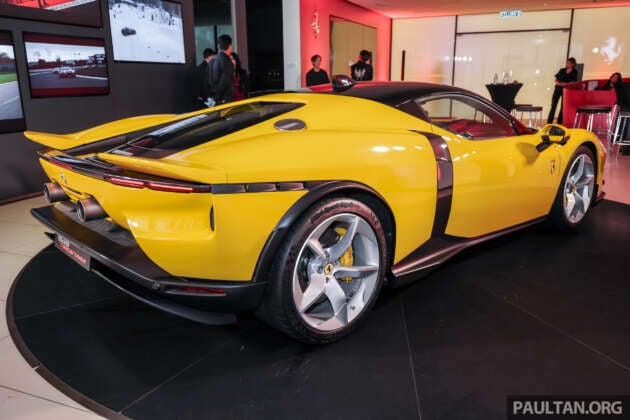
    The plug-in hybrid sits on the same platform as its predecessor, but wears a completely new skin. The front end has a full-width contrast strip running across it, as seen on the 12Cilindri and F80, and this is paired with a front bumper that is softer looking than the SF90’s but has an 18% larger front air intake to maximise air flow to the radiators, which have an increased surface area.

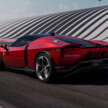
    The exterior styling veers away from the SF90 primarily at the back. It’s certainly prominent, with haunches that largely derive their look from the 512 sports prototypes from the 1970s. These help the car dissipate thermal energy better, given that the side intercooler, borrowed from the F80, has a 19% larger surface area, but the automaker says the shape also aids aerodynamics.
    Ferrari 849 Testarossa launched in Malaysia – Coupe fr RM5.2 mil, Spider fr RM5.7 mil; V8 PHEV with 1,050 PS

    The twin-tail architecture continues the design novelty, with two passive wing sections being utilised to exploit the high-energy flow running off the rear wheel arches that draw their inspiration from the Purosangue. These twin tails, which get a vertical contrast element at the front end of their layout, taper off at the rear with passive spoiler extensions.

    The passive units are joined by an active rear spoiler, which is derived from that on the SF90 Stradale and the 296 GTB. Integrated into the bodywork and actioned by a kinematic solution, the unit is capable of switching between low drag and high downforce configurations in less than a second, and can generate up to 100 kg of downforce at 250 km/h in its latter mode, working in synergy with the passive elements of the tail.

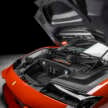
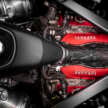
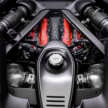
    About 50% of the SF90 has been carried over, but tweaks that have been made on these lends to what constitutes a high percentage of new within the old. One of these is the powertrain architecture, which continues to feature the same working combination of a dry-sumped 4.0 litre twin-turbo V8 augmented by three electric motors, with one for each front wheel and a MGU-K (Motor Generator Unit, Kinetic) sandwiched between the petrol engine and eight-speed dual-clutch gearbox at the rear.

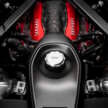
    Naturally, there are revisions. On its own, the updated F154FC mill makes 830 PS at 7,500 rpm and 842 Nm at 6,500 rpm, which is 50 PS and 42 Nm more than the V8 in the SF90. The bump in output has been accomplished by revising the components, including introducing an all-new, larger turbocharger (the largest ever fitted on a Ferrari), cylinder heads, engine block, exhaust manifolds, intake plenums, titanium fasteners, valve train system and fuel rail.

    The electrified portion of the system, is largely the same, with the three electric motors contributing a total of 220 PS. The 849 gets a smaller capacity battery, an 80-cell 7.45 kWh lithium-ion battery from the 296 (7.9 kWh in the SF90), but still manages to provide the same 25 km of all-electric range thanks to optimisation, with fully electric operation available at speeds of up to 130 km/h.

    The headlining figure is a 1,050 PS combined system output, which the automaker touts as an absolute record for a production Ferrari. It’s good to get the car to 100 km/h in 2.25 seconds and on to 200 km/h in 6.3 seconds, slightly faster that the 2.5 and 6.7 seconds on the SF90, while top speed is rated at above 330 km/h, which is a whisker away from the SF90’s 340 km/h.

    In any case, the increase translates to real world performance gains – according to the carmaker, the 849 Testarossa can lap Fiorano in one min 17.5 seconds, which is around 1.2 seconds quicker than the SF90 Stradale and just 0.2 seconds less than the limited-run SF90 XX Stradale.

    Elsewhere, the braking system has been upgraded from the SF90 with larger carbon-ceramic discs and redesigned calipers from Brembo. The regenerative braking calibration has also been revised to give more feedback and consistency, with the system utilising the electric motors to provide assistance to the brakes. Additionally, the introduction of ABS Evo improves braking efficiency as well as pedal feel and travel.

    The sonic signature of the car has also been reworked, with the sound level of the V8 being increased at all speeds under load with the help of a new engine calibration and a gear shift strategy borrowed from the SF90 XX Stradale, with particular attention being paid to the output in the low and mid ranges.

    As for vehicle dynamics, that on the 849 has been improved in its consistency and accessibility, with increased levels of handling and tyre grip, aided by the workings of the Ferrari Integrated Vehicle Estimator (FIVE), first seen on the F80. The system essentially creates a digital twin of the car to estimate the yaw angle and velocity of the car’s centre of mass, calculated with a precision of up to one degree and one kilometre per hour respectively.

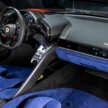
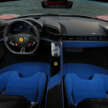
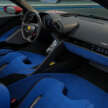
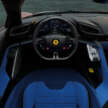
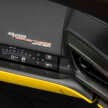
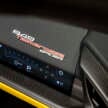
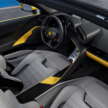
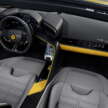
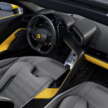
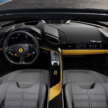
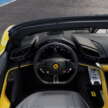
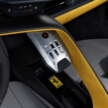
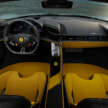
    Inside, the reworked cabin features a new steering wheel that brings back physical buttons, and the gear selector (styled to look like classic gated shifters) is positioned higher up on a central pillar, much like in the F80. The improved ergonomics is coupled with better accessibility thanks to the reduced width of the bottom of the door panel and adjacent areas, which frees up additional space for the rear bench and the passenger-side glove box. The front passenger now gets a dedicated touchscreen panel to fiddle with.

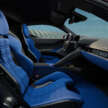
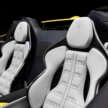
    Buyers can choose whether they want comfort-oriented seats, which come with a sculptural treatment of the upholstery and styling that matches the geometry of the cockpit, or carbon-fibre racing seats with sporty side bolsters for improved lateral support.

    Elsewhere, you’ll find Apple CarPlay and Android Auto connectivity, while wireless charging for smartphones is integrated into the central tunnel. The car is also equipped with the automaker’s MyFerrari Connect system, which allows the vehicle to be monitored remotely via a dedicated App.

    Two new colours have been introduced for the Testarossa. The first is Rosso Fiammante, an evolution of the historic pastel Rosso Corsa shade enriched by a metallic effect to provide warm and brilliant reflections under sunlight.

    The second is Giallo Ambra, an intense and warm shade with reddish hues, which takes its inspiration from natural amber. For the interior, there’s a new Alcantara trim called Giallo Siena, designed to harmonise with the Giallo Ambra exterior. The debut example seen here in the photos is finished in Giallo Modena.

    There’s an optional Assetto Fiorano specification for the 849, which like on the SF90 reduces weight by about 30 kg through extensive use of composite materials such as carbon fibre and titanium. Specific components include a new lightweight tubular seat upholstered in black Alcantara, which saves around 18 kg compared to the standard seats, and 20-inch carbon fibre wheels. Also finding its way on are aerodynamic enhancements, including two twin wings that replace the twin tails.

    GALLERY: Ferrari 849 Testarossa, in Rosso Fiammante

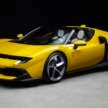
    GALLERY: Ferrari 849 Testarossa Spider, in Giallo Modena

    GALLERY: Ferrari 849 Testarossa, Assetto Fiorano package, in Grigio Titanio

     
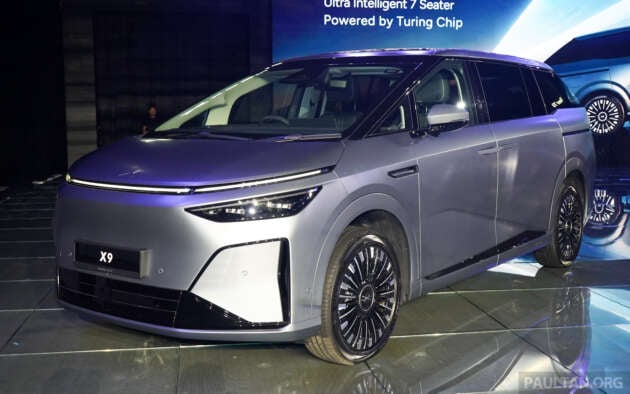
  • 2026 Xpeng X9 facelift seven-seater MPV launched in Malaysia – 2WD, AWD, three variants; RM281k-RM336k

    2026 Xpeng X9 facelift seven-seater MPV launched in Malaysia – 2WD, AWD, three variants; RM281k-RM336k

    The 2026 Xpeng X9 facelift has now been officially launched in Malaysia, and the battery-electric MPV arrives in three variants, fully imported (CBU) from China:

    2WD Standard Range – RM281,073
    2WD Long Range – RM299,073
    AWD Performance – RM335,573

    Prices for all three variants are on-the-road, without insurance. All three variants are offered with home charger options of a 7 kW AC charger (single-phase with installation) at RM4,300, and an 11 kW AC charger (three-phase with installation) at RM5,000.

    2026 Xpeng X9 facelift, specifications and price; click to enlarge

    The 2WD Standard Range is equipped with a 94.8 KWh lithium iron phosphate (LFP) battery that offers up to 535 km of range, while the 2WD Long Range and the AWD Performance are both equipped with a 110 kWh NCM battery, offering 615 km and 580 km of range, respectively; all range figures are based on the WLTP standard.

    Peak DC charging for the Standard Range variant is 537 kW while the Long Range and Performance are rated at 542 kW, which enables all variants to attain a 10-80% recharge in 12 minutes. At the 11 kW AC charging figure, a 5-100% charge for the base Standard Range is attained in 9.5 hours, while the Long Range and Performance will require 11 hours for the same measure.

    Powertrain for the 2WD Standard Range and Long Range variants is a 235 kW (346 PS) and 450 Nm single motor driving the front wheels, though the latter has a marginally quicker 0-100 km/h time at 7.75 seconds (the Standard Range does the benchmark run in a claimed 8.2 seconds). The AWD Performance, with its dual-motor, 370 kW (537 PS)/640 Nm powertrain, does the century sprint in 5.9 seconds.

    Powertrain and battery aside, equipment specifications are mostly uniform across the three variants of the Xpeng X9 facelift. For chassis systems, all three variants come standard with rear-wheel steering and dual-chamber air suspension; wheels are 20-inch alloys shod in 235/50R20 tyres.

    Exterior equipment automatic LED headlamps, hidden door handles, power-closing front doors, panoramic sunroof, privacy glass for the second and third rows as well as the rear windshield, powered sliding doors with anti-pinch, automatic windows with anti-pinch, a powered tailgate, and a powered charging port cover.

    In the front row, both the driver and front passenger get a 12-way power adjustable seat with four-way adjustable lumbar support; all seats are upholstered in Nappa full-grain leather.

    Also included here are seat back and cushion ventilation and heating, adjustable through three levels, along with a massage function. The driver’s seat headrest additionally gets a pair of audio speakers, while the front passenger seat has the “boss button” for the benefit of second-row legroom.

    2026 Xpeng X9 2WD Long Range (row above); 2026 Xpeng X9 AWD Performance (row below)

    Where the equipment levels differ between variants is in the second-row seating; the 2WD variants get “sofa seats”, while the AWD Performance gets the even more luxurious “Grand Sofa” specification. The 2WD variants get 14-way power-adjustable second-row seats, while the AWD Performance is equipped with 18-way units. Second-row occupants also get two 50-watt air-cooled wireless device chargers, along with seat cushion and backrest ventilation and heating (three-speed adjustable).

    The third row of seats in the 2026 X9 offer 60:40 split folding and seat heating, along with features such as one-click electric storage, electrically adjustable backrests and headrests, two cupholders, a concealed luggage compartment, and a suspension lift switch in the luggage compartment.

    Interior displays feature a 10.25-inch driver’s instrument display, a 17.3-inch central screen, a 21.4-inch roof-mounted passenger entertainment screen, a 21-inch head-up display, while device connectivity includes Apple CarPlay and Android Auto, along with five USB-C, one USB-A and two 12-volt power sockets. Audio is by a 27-speaker Xopera sound system.

    For driving assistance systems, the XPilot Assist ADAS suite is comprised of the XP5 Turing AI chip with three millimetre-wave radar units, 12 ultrasonic radar sensors, and 12 cameras including fatigue monitoring cameras.

    Assistance functions here include adaptive cruise control, lane centring control, adaptive turning cruise, intelligent speed limit assist, enhanced auto parking assist, auto exit parking assist, remote parking assist, remote vehicle summon, 360-degree camera view and transparent chassis view.

    These are joined by forward distance monitoring, forward collision warning, AEB, traffic sign recognition, speed assistant system, driver state monitoring, blind spot detection, door open warning, lane departure warning, lane keep assist, rear collision warning, rear cross-traffic alert, reverse car side warning, and narrow path assistance.

    According to Xpeng Malaysia senior country manager Chen Yinbin, the Xpeng X9 facelift will be a locally assembled model later this year.

    Exterior colours for the 2026 Xpeng X9 facelift are Arctic White, Midnight Black, Matte Grey and Lambent Cyan; Polar Violet is exclusive to the AWD Performance variant. Interior colour schemes are Meteorite Black (2WD Standard Range and 2WD Long Range), Coffee (2WD Long Range and AWD Performance), and Rose Brown (exlcusive to the AWD Performance with the Polar Violet exterior colour).

    In Malaysia, the 2026 Xpeng X9 facelift is sold with a five-year, 120,000 km warranty and an eight-year, 160,000 km warranty on the battery pack and drive motors. Also included is a complimentary service package for five years or 100,000 km.

    2026 Xpeng X9 AWD Performance

    2026 Xpeng X9 2WD Long Range

    2026 Xpeng X9 2WD Standard Range

    2026 Xpeng X9 facelift, brochure

    2026 Xpeng X9 facelift, official images


Sell your car to Carro, get paid in 24 hours


Latest Fuel Prices

PETROL
BUDI 95 RM1.99
RON 95 RM3.72 (-0.20)
RON 97 RM4.35 (-0.30)
RON 100 RM6.75
VPR RM7.98
DIESEL
EURO 5 B10 RM4.67 (-0.20)
EURO 5 B7 RM4.87 (-0.20)
Last Updated Jun 04, 2026

Latest Videos


Tools