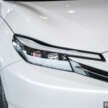
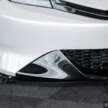
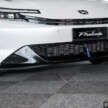
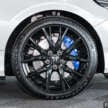
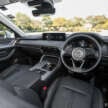
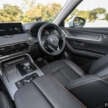
2026 Proton Saga review - all the good & bad in full detail


Sell your car to Carro, get paid in 24 hours

Latest Stories

  • Ferrari 849 Testarossa launched in Malaysia – Coupe fr RM5.2 mil, Spider fr RM5.7 mil; V8 PHEV with 1,050 PS

    Ferrari 849 Testarossa launched in Malaysia – Coupe fr RM5.2 mil, Spider fr RM5.7 mil; V8 PHEV with 1,050 PS

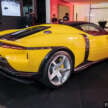
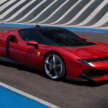
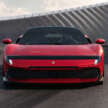
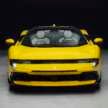
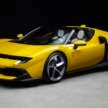
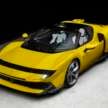
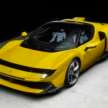
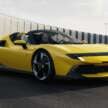
    Ital Auto has officially introduced the Ferrari 849 Testarossa in Malaysia, with the SF90 Stradale replacement making its way here seven months after its ASEAN debut in Thailand. Retail prices for both the Coupe and Spider were announced, and they are RM5.2 million for the Coupe and RM5.7 million for the Spider, both inclusive of import duties and taxes, but excluding options, registration and insurance.

    The new Testarossa measures in at 4,718 mm long, 1,999 mm wide (2,304 mm with side mirrors) and 1,225 mm tall, which makes it eight mm longer, 27 mm wider and 39 mm taller than the SF90 (4,710 mm long, 1,972 mm wide and 1,186 mm tall). Dry weight is 1,570 kg, which is identical to the SF90, with the Spider weighing 90 kg more.

    The plug-in hybrid sits on the same platform as its predecessor, but wears a completely new skin. The front end has a full-width contrast strip running across it, as seen on the 12Cilindri and F80, and this is paired with a front bumper that is softer looking than the SF90’s but has an 18% larger front air intake to maximise air flow to the radiators, which have an increased surface area.

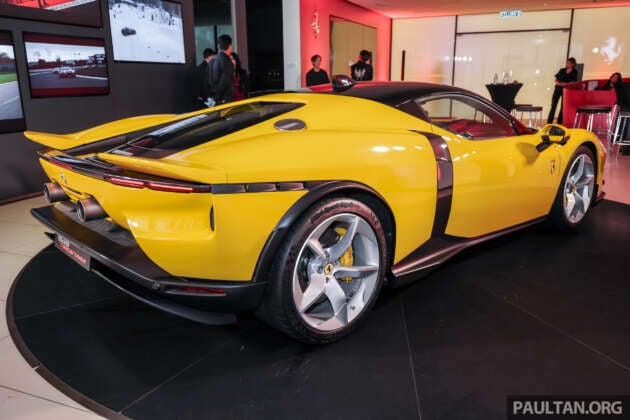
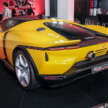
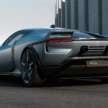
    The exterior styling veers away from the SF90 primarily at the back. It’s certainly prominent, with haunches that largely derive their look from the 512 sports prototypes from the 1970s. These help the car dissipate thermal energy better, given that the side intercooler, borrowed from the F80, has a 19% larger surface area, but the automaker says the shape also aids aerodynamics.

    Ferrari 849 Testarossa launched in Malaysia – Coupe fr RM5.2 mil, Spider fr RM5.7 mil; V8 PHEV with 1,050 PS

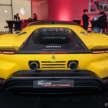
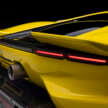
    The twin-tail architecture continues the design novelty, with two passive wing sections being utilised to exploit the high-energy flow running off the rear wheel arches that draw their inspiration from the Purosangue. These twin tails, which get a vertical contrast element at the front end of their layout, taper off at the rear with passive spoiler extensions.

    The passive units are joined by an active rear spoiler, which is derived from that on the SF90 Stradale and the 296 GTB. Integrated into the bodywork and actioned by a kinematic solution, the unit is capable of switching between low drag and high downforce configurations in less than a second, and can generate up to 100 kg of downforce at 250 km/h in its latter mode, working in synergy with the passive elements of the tail.

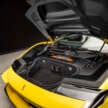
    About 50% of the SF90 has been carried over, but tweaks that have been made on these lends to what constitutes a high percentage of new within the old. One of these is the powertrain architecture, which continues to feature the same working combination of a dry-sumped 4.0 litre twin-turbo V8 augmented by three electric motors, with one for each front wheel and a MGU-K (Motor Generator Unit, Kinetic) sandwiched between the petrol engine and eight-speed dual-clutch gearbox at the rear.

    Naturally, there are revisions. On its own, the updated F154FC mill makes 830 PS at 7,500 rpm and 842 Nm at 6,500 rpm, which is 50 PS and 42 Nm more than the V8 in the SF90. The bump in output has been accomplished by revising the components, including introducing an all-new, larger turbocharger (the largest ever fitted on a Ferrari), cylinder heads, engine block, exhaust manifolds, intake plenums, titanium fasteners, valve train system and fuel rail.

    The electrified portion of the system, is largely the same, with the three electric motors contributing a total of 220 PS. The 849 gets a smaller capacity battery, an 80-cell 7.45 kWh lithium-ion battery from the 296 (7.9 kWh in the SF90), but still manages to provide the same 25 km of all-electric range thanks to optimisation, with fully electric operation available at speeds of up to 130 km/h.

    The headlining figure is a 1,050 PS combined system output, which the automaker touts as an absolute record for a production Ferrari. It’s good to get the car to 100 km/h in 2.25 seconds and on to 200 km/h in 6.3 seconds, slightly faster that the 2.5 and 6.7 seconds on the SF90, while top speed is rated at above 330 km/h, which is a whisker away from the SF90’s 340 km/h.

    In any case, the increase translates to real world performance gains – according to the carmaker, the 849 Testarossa can lap Fiorano in one min 17.5 seconds, which is around 1.2 seconds quicker than the SF90 Stradale and just 0.2 seconds less than the limited-run SF90 XX Stradale.

    Elsewhere, the braking system has been upgraded from the SF90 with larger carbon-ceramic discs and redesigned calipers from Brembo. The regenerative braking calibration has also been revised to give more feedback and consistency, with the system utilising the electric motors to provide assistance to the brakes. Additionally, the introduction of ABS Evo improves braking efficiency as well as pedal feel and travel.

    The sonic signature of the car has also been reworked, with the sound level of the V8 being increased at all speeds under load with the help of a new engine calibration and a gear shift strategy borrowed from the SF90 XX Stradale, with particular attention being paid to the output in the low and mid ranges.

    As for vehicle dynamics, that on the 849 has been improved in its consistency and accessibility, with increased levels of handling and tyre grip, aided by the workings of the Ferrari Integrated Vehicle Estimator (FIVE), first seen on the F80. The system essentially creates a digital twin of the car to estimate the yaw angle and velocity of the car’s centre of mass, calculated with a precision of up to one degree and one kilometre per hour respectively.

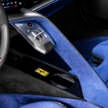
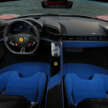
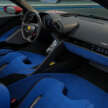
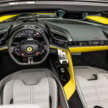
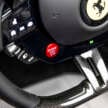
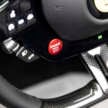
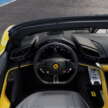
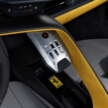
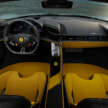
    Inside, the reworked cabin features a new steering wheel that brings back physical buttons, and the gear selector (styled to look like classic gated shifters) is positioned higher up on a central pillar, much like in the F80. The improved ergonomics is coupled with better accessibility thanks to the reduced width of the bottom of the door panel and adjacent areas, which frees up additional space for the rear bench and the passenger-side glove box. The front passenger now gets a dedicated touchscreen panel to fiddle with.

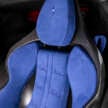
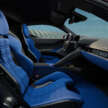
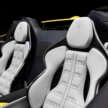
    Buyers can choose whether they want comfort-oriented seats, which come with a sculptural treatment of the upholstery and styling that matches the geometry of the cockpit, or carbon-fibre racing seats with sporty side bolsters for improved lateral support.

    Elsewhere, you’ll find Apple CarPlay and Android Auto connectivity, while wireless charging for smartphones is integrated into the central tunnel. The car is also equipped with the automaker’s MyFerrari Connect system, which allows the vehicle to be monitored remotely via a dedicated App.

    Two new colours have been introduced for the Testarossa. The first is Rosso Fiammante, an evolution of the historic pastel Rosso Corsa shade enriched by a metallic effect to provide warm and brilliant reflections under sunlight.

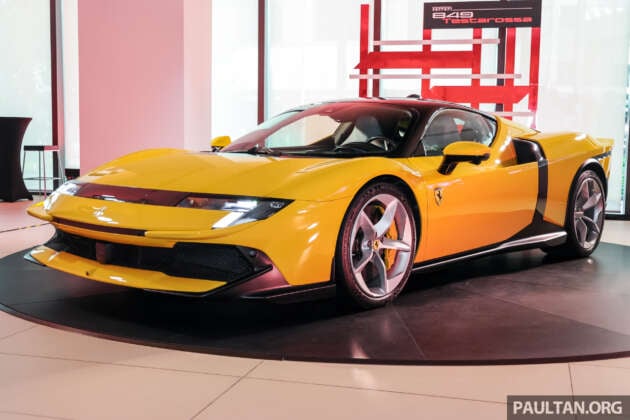
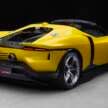
    The second is Giallo Ambra, an intense and warm shade with reddish hues, which takes its inspiration from natural amber. For the interior, there’s a new Alcantara trim called Giallo Siena, designed to harmonise with the Giallo Ambra exterior. The debut example seen here in the photos is finished in Giallo Modena.

    There’s an optional Assetto Fiorano specification for the 849, which like on the SF90 reduces weight by about 30 kg through extensive use of composite materials such as carbon fibre and titanium. Specific components include a new lightweight tubular seat upholstered in black Alcantara, which saves around 18 kg compared to the standard seats, and 20-inch carbon fibre wheels. Also finding its way on are aerodynamic enhancements, including two twin wings that replace the twin tails.

    GALLERY: Ferrari 849 Testarossa, in Rosso Fiammante

    GALLERY: Ferrari 849 Testarossa Spider, in Giallo Modena

    GALLERY: Ferrari 849 Testarossa, Assetto Fiorano package, in Grigio Titanio

     
  • 2026 Xpeng X9 facelift seven-seater MPV launched in Malaysia – 2WD, AWD, three variants; RM281k-RM336k

    2026 Xpeng X9 facelift seven-seater MPV launched in Malaysia – 2WD, AWD, three variants; RM281k-RM336k

    The 2026 Xpeng X9 facelift has now been officially launched in Malaysia, and the battery-electric MPV arrives in three variants, fully imported (CBU) from China:

    2WD Standard Range – RM281,073
    2WD Long Range – RM299,073
    AWD Performance – RM335,573

    Prices for all three variants are on-the-road, without insurance. All three variants are offered with home charger options of a 7 kW AC charger (single-phase with installation) at RM4,300, and an 11 kW AC charger (three-phase with installation) at RM5,000.

    2026 Xpeng X9 facelift, specifications and price; click to enlarge

    The 2WD Standard Range is equipped with a 94.8 KWh lithium iron phosphate (LFP) battery that offers up to 535 km of range, while the 2WD Long Range and the AWD Performance are both equipped with a 110 kWh NCM battery, offering 615 km and 580 km of range, respectively; all range figures are based on the WLTP standard.

    Peak DC charging for the Standard Range variant is 537 kW while the Long Range and Performance are rated at 542 kW, which enables all variants to attain a 10-80% recharge in 12 minutes. At the 11 kW AC charging figure, a 5-100% charge for the base Standard Range is attained in 9.5 hours, while the Long Range and Performance will require 11 hours for the same measure.

    Powertrain for the 2WD Standard Range and Long Range variants is a 235 kW (346 PS) and 450 Nm single motor driving the front wheels, though the latter has a marginally quicker 0-100 km/h time at 7.75 seconds (the Standard Range does the benchmark run in a claimed 8.2 seconds). The AWD Performance, with its dual-motor, 370 kW (537 PS)/640 Nm powertrain, does the century sprint in 5.9 seconds.

    Powertrain and battery aside, equipment specifications are mostly uniform across the three variants of the Xpeng X9 facelift. For chassis systems, all three variants come standard with rear-wheel steering and dual-chamber air suspension; wheels are 20-inch alloys shod in 235/50R20 tyres.

    Exterior equipment automatic LED headlamps, hidden door handles, power-closing front doors, panoramic sunroof, privacy glass for the second and third rows as well as the rear windshield, powered sliding doors with anti-pinch, automatic windows with anti-pinch, a powered tailgate, and a powered charging port cover.

    In the front row, both the driver and front passenger get a 12-way power adjustable seat with four-way adjustable lumbar support; all seats are upholstered in Nappa full-grain leather.

    Also included here are seat back and cushion ventilation and heating, adjustable through three levels, along with a massage function. The driver’s seat headrest additionally gets a pair of audio speakers, while the front passenger seat has the “boss button” for the benefit of second-row legroom.

    2026 Xpeng X9 facelift seven-seater MPV launched in Malaysia – 2WD, AWD, three variants; RM281k-RM336k

    Where the equipment levels differ between variants is in the second-row seating; the 2WD variants get “sofa seats” with a 180 mm channel, while the AWD Performance gets the “Grand Sofa” specification. The 2WD variants get 14-way power-adjustable second-row seats, while the AWD Performance is equipped with 18-way units. Second-row occupants also get two 50-watt air-cooled wireless device chargers, along with seat cushion and backrest ventilation and heating (three-speed adjustable).

    The third row of seats in the 2026 X9 offer 60:40 split folding and seat heating, along with features such as one-click electric storage, electrically adjustable backrests and headrests, two cupholders, a concealed luggage compartment, and a suspension lift switch in the luggage compartment.

    Interior displays feature a 10.25-inch driver’s instrument display, a 17.3-inch central screen, a 21.4-inch roof-mounted passenger entertainment screen, a 21-inch head-up display, while device connectivity includes Apple CarPlay and Android Auto, along with five USB-C, one USB-A and two 12-volt power sockets. Audio is by a 27-speaker Xopera sound system.

    For driving assistance systems, the XPilot Assist ADAS suite is comprised of the XP5 Turing AI chip with three millimetre-wave radar units, 12 ultrasonic radar sensors, and 12 cameras including fatigue monitoring cameras.

    Assistance functions here include adaptive cruise control, lane centring control, adaptive turning cruise, intelligent speed limit assist, enhanced auto parking assist, auto exit parking assist, remote parking assist, remote vehicle summon, 360-degree camera view and transparent chassis view.

    These are joined by forward distance monitoring, forward collision warning, AEB, traffic sign recognition, speed assistant system, driver state monitoring, blind spot detection, door open warning, lane departure warning, lane keep assist, rear collision warning, rear cross-traffic alert, reverse car side warning, and narrow path assistance.

    According to Xpeng Malaysia senior country manager Chen Yinbin, the Xpeng X9 facelift will be a locally assembled model later this year.

    Exterior colours for the 2026 Xpeng X9 facelift are Arctic White, Midnight Black, Matte Grey and Lambent Cyan; Polar Violet is exclusive to the AWD Performance variant. Interior colour schemes are Meteorite Black (2WD Standard Range and 2WD Long Range), Coffee (2WD Long Range and AWD Performance), and Rose Brown (exlcusive to the AWD Performance with the Polar Violet exterior colour).

    In Malaysia, the 2026 Xpeng X9 facelift is sold with a five-year, 120,000 km warranty and an eight-year, 160,000 km warranty on the battery pack and drive motors. Also included is a complimentary service package for five years or 100,000 km.

    2026 Xpeng X9 facelift, brochure

    2026 Xpeng X9 facelift, official images

     
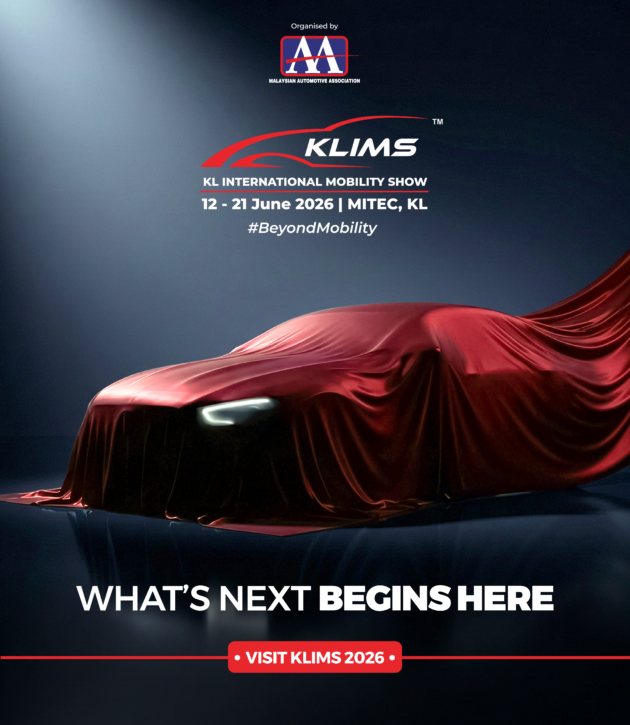
  • Experience the best of mobility in Malaysia with new cars, test drives and more at KLIMS 2026, June 12-21!

    Experience the best of mobility in Malaysia with new cars, test drives and more at KLIMS 2026, June 12-21!

    Just days to go before the Kuala Lumpur International Mobility Show (KLIMS) races back to the Malaysia International Trade and Exhibition Centre (MITEC) from June 12 to 21. The country’s premier mobility showcase has plenty to offer visitor from all walks of life, from families looking for a fun day out to serious motoring enthusiasts.

    At the event, you can expect to witness the latest in automotive innovation, design and technology. Of course, there will be plenty of new cars that will be launched from a large roster of brands, both local and foreign, and you’ll be one of the first people in Malaysia to see them in the metal.

    But don’t just see them – test drives are also on offer, with over 70 cars available at the event. So, if you’re looking to buy a new car, this is the best place to try your options back-to-back. This even includes off-road vehicles, as an Urban Play obstacle course – available from June 12 to 14 – will let you ride in your prospective purchase as it gets tested to the limit in a safe environment.

    Experience the best of mobility in Malaysia with new cars, test drives and more at KLIMS 2026, June 12-21!

    Beyond the vehicles you can actually buy, KLIMS will be a showcase of advancements that are just on the horizon, including concepts that point to future design directions and technologies. You can also enter yourself into a racing simulator challenge to win some exciting prizes, as well as trying your hand at a flight simulator – after all, mobility isn’t just about land transport.

    And that’s not all. There are a variety of activities catering to young petrolheads and the young at heart, such as a remote control track to test your latest and greatest toys, a hobby market and even a live automotive podcast recording. You can also check out some awesome cars as part of a car club gathering featuring more than 200 vehicles, plus a KLIMS Modified Car Battle on June 13 and 14 that will see the best tuned machines in Malaysia go head-to-head.

    Motorsports fans have something to look forward to as well, because KLIMS has collaborated with Sepang International Circuit to bring its collection of race cars (yes, including Formula cars) and bikes, and you will even get a chance to meet with teams and drivers. And as for the young ones, a Pokémon Pokopia truck will let you play the latest entry into the highly successful video game franchise on the Nintendo Switch 2.

    Experience the best of mobility in Malaysia with new cars, test drives and more at KLIMS 2026, June 12-21!

    So whether you are a dyed-in-the-wool car enthusiast or not, there’s plenty for you to do at the 2026 Kuala Lumpur International Mobility Show (KLIMS), held from June 12 to 21 at the Malaysia International Trade and Exhibition Centre (MITEC). Entrance is free on Monday (15th), Tuesday (16th) and Thursday (18th), with tickets costing RM30 on all other days.

    Groups of visitors (i.e. families) will be able to take advantage of a 5-Pax Bundle pass that costs RM100, saving you RM10 on each ticket. And hardcore fans can score an Unlimited Access pass for just RM80 across all ten days, costing just RM11.40 per day. Registrations are open here.

    Here’s the best part – visitors will be entered into a lucky draw* with a chance to win prizes worth up to RM125,000, including the grand prize of a brand new Perodua Bezza! For more information, visit the official KLIMS 2026 website or its socials on Facebook, Instagram and TikTok.

    *Open to all ticket holders aged 18 and above

     
  • TQ Wuling Huajing S teased for KLIMS – 6-seat PHEV co-developed with Huawei, 255 km CLTC EV range

    TQ Wuling Huajing S teased for KLIMS – 6-seat PHEV co-developed with Huawei, 255 km CLTC EV range

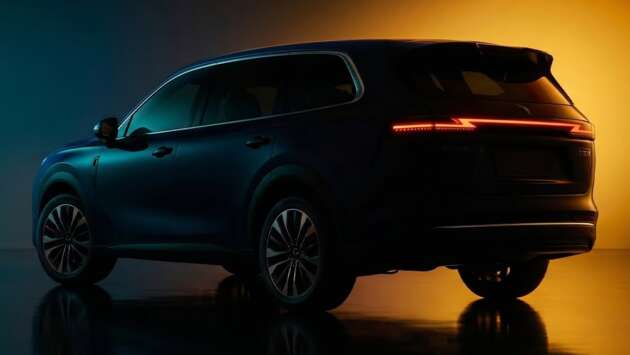
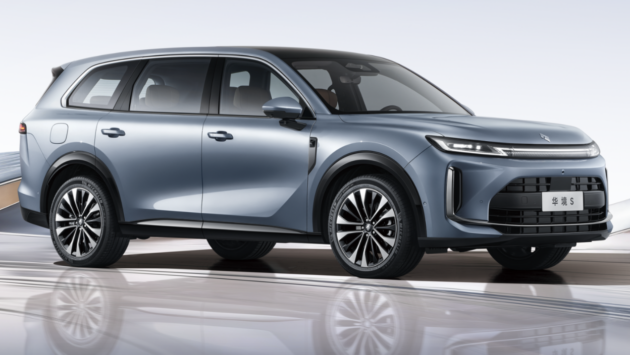
    Having entered the electric city car segment with the Bingo, TQ Wuling is set to go in completely the opposite direction with the Huajing S, sold under the (slightly) more upmarket Baojun marque in China. The company teased a Kuala Lumpur International Mobility Show (KLIMS) appearance for the flagship three-row premium SUV, which will almost certainly use a different name when it eventually gets launched here.

    Revealed at the Auto China show in Beijing in April, the Huajing S is a joint development between SAIC-GM-Wuling and Huawei – hence the “Hua” in the name. The tech giant has played a significant role in the car’s design as part of the Huawei Inside (HI) Plus model, so it’s no surprise that it bears a slight resemblance to the original Aito M7, developed under the even more involved Harmony Intelligent Mobility Alliance (HIMA).

    That much is visible through the visor-like front end, which on the Huajing S incorporates the headlights and a striking lightning-shaped full-width light bar. This sits above a large hexagonal lower grille and vertical corner air inlets, joined together by a large U-shaped chrome bar.

    TQ Wuling Huajing S teased for KLIMS – 6-seat PHEV co-developed with Huawei, 255 km CLTC EV range

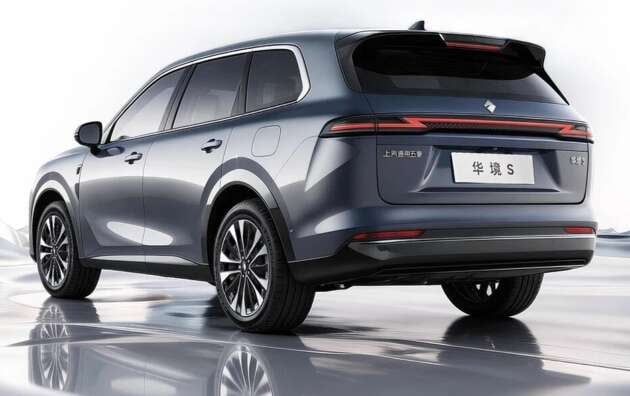
    Meanwhile, the side profile is dominated by a hockey stick-like swage line that incorporates the front fender appliqués. The D-pillars are fairly upright, befitting the car’s status as a posher model, while the full-width taillights mirror the front’s lightning graphic.

    Standing in contrast to the bijou Bingo, the Huajing S is a massive SUV, measuring 5,235 mm long, 1,999 mm wide and 1,800 mm tall with a 3,105 mm wheelbase. That makes it a whopping 415 mm longer than the already sizeable Jaecoo J8 and even the new Denza B8.

    Inside, the Huajing S features a cookie-cutter Chinese car interior, with a minimalist dashboard, big screens and twin smartphone holders. As befits a Huawei-developed model, there’s plenty of tech on board, with the 8.8-inch instrument display and 15.6-inch infotainment touchscreen both running on HarmonySpace 5, the automotive version of the firm’s in-house HarmonyOS 5 software.

    TQ Wuling Huajing S teased for KLIMS – 6-seat PHEV co-developed with Huawei, 255 km CLTC EV range

    Also fitted as standard is Huawei Qiankun ADS Pro, a suite of driver assists that uses the Limera (lidar and camera) array at the top of the windscreen to deliver highly-automated highway and city driving and remote park assist with an automated valet function. Don’t expect this to make it to Malaysia, however.

    Other features include a 50-watt Qi wireless charger, a 15-speaker Infinity sound system and dual sunroofs. The Huajing S is a strict five-seater with power-adjustable second-row captain’s chairs and is available with heating, ventilation and massage functions on the first two rows, a built-in second-row ottoman, a heated and cooled refrigerator and a 15.6-inch rear roof monitor. Thanks to the generous length, the car offers 423 litres of boot space even with all six seats up.

    Power comes from a single front electric motor producing 272 PS (200 kW) and 310 Nm of torque, with an available dual-motor all-wheel-drive version pushing out a sum total of 525 PS (386 kW) and 620 Nm. This is paired with a 143 PS/220 Nm 1.5 litre turbo four-cylinder engine and a single-speed dedicated hybrid transmission (DHT).

    TQ Wuling Huajing S teased for KLIMS – 6-seat PHEV co-developed with Huawei, 255 km CLTC EV range

    The motors are juiced by a choice of two LFP batteries – a 31 kWh unit in the base FWD model delivers a claimed CLTC range of 200 km, while a 41.9 kWh CATL pack boosts this figure to 255 km, or 235 km with AWD. Expect WLTP numbers closer to 160 km, 200 km and 190 km respectively. The car also supports up to “3.5C” DC fast charging (around 145 kW) and can be charged from 10 to 70% in as little as 14.5 minutes.

    If the Huajing S does go on sale here, it will likely be the second Huawei-influenced model offered in Malaysia, with the Avatr 07 from Changan – another HI Plus car – also being considered. Will TQ Wuling be able to justify this huge gap to the Bingo? Let us know what you think in the comments.

     
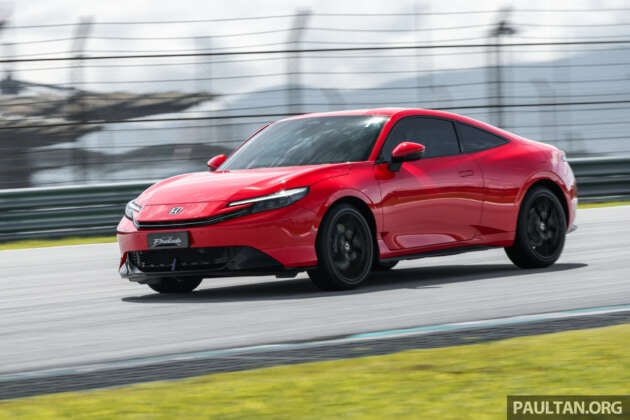
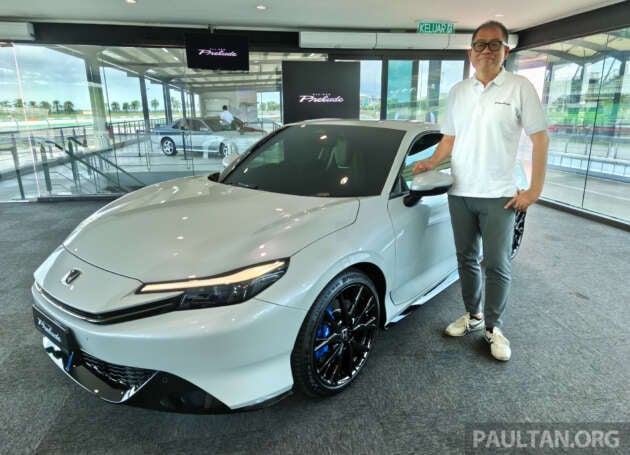
  • 2026 Honda Prelude Malaysian first drive – putting the 203 PS 2.0L hybrid coupe through its paces at Sepang

    2026 Honda Prelude Malaysian first drive – putting the 203 PS 2.0L hybrid coupe through its paces at Sepang

    Such is the age in which we live in that any two-door coupe appearing on the scene these days has to be a fire-breather, or at least have some cojones worth shouting about. The new Honda Prelude is not the first, but it does clatter a pair, although not quite how you’d imagine it. Or, in the case of those obsessed with straight line speed, would appreciate.

    Context to the application is important. Part of the problem is the resurrection of a legacy name, which is a tricky affair, especially when it’s left by the side for a lengthy period, because there is no continuity to thread things. However, understanding what was before is a good way to comprehend the direction chosen. If the idea of keeping the latest iteration true to the ethos of the past is the intent, then the Prelude hits the nail on the head. Stay with me for a moment on this.

    Across 23 years and five generations, having driven all but the final one, the Prelude was never about pure speed, but rather about agility and drivability. Granted, late examples had quite a bit of power, but by that time the car itself had also turned into bloatware. Somewhere in between, sat the third-gen, the apex descriptor for the entire first series of outings.

    For those old enough to remember, that one was fondly known as a playboy’s car. It was also very much the elevated choice for the procuring crowd. The pimps’ pick, so to speak, almost always in white. I knew someone whose brother was in the trade, and his example did cut the fine figure in that shade, although truthfully there was less intent to admire the car than the swarm of talent housed in it the couple of times the flashy transporter swung by my friend’s house to drop off packed meals (dutiful lad, he).

    Jagged mental images aside, that pretty much encapsulated what the car was all about, not speed, even if it could manage decent pace once you got going, but style, although maybe not exactly in the sense the designers intended. Whatever the case, more cruiser than bruiser best sums that – and its ilk – up. Just as this one is. And that’s no bad thing, for the target market at least.

    Would the view of it be softer if the present one was called a Civic coupe? To car enthusiasts, very much so, but the automaker is gambling on the association with heritage appealing to a niche audience living in nostalgia and with the dosh to obtain one. That audience is primarily in their late-40s and 50s, folk who were in the formative years when the first set came out, and for which the modern Prelude is a means to partake in the realm (by that, not as a talent transporter).

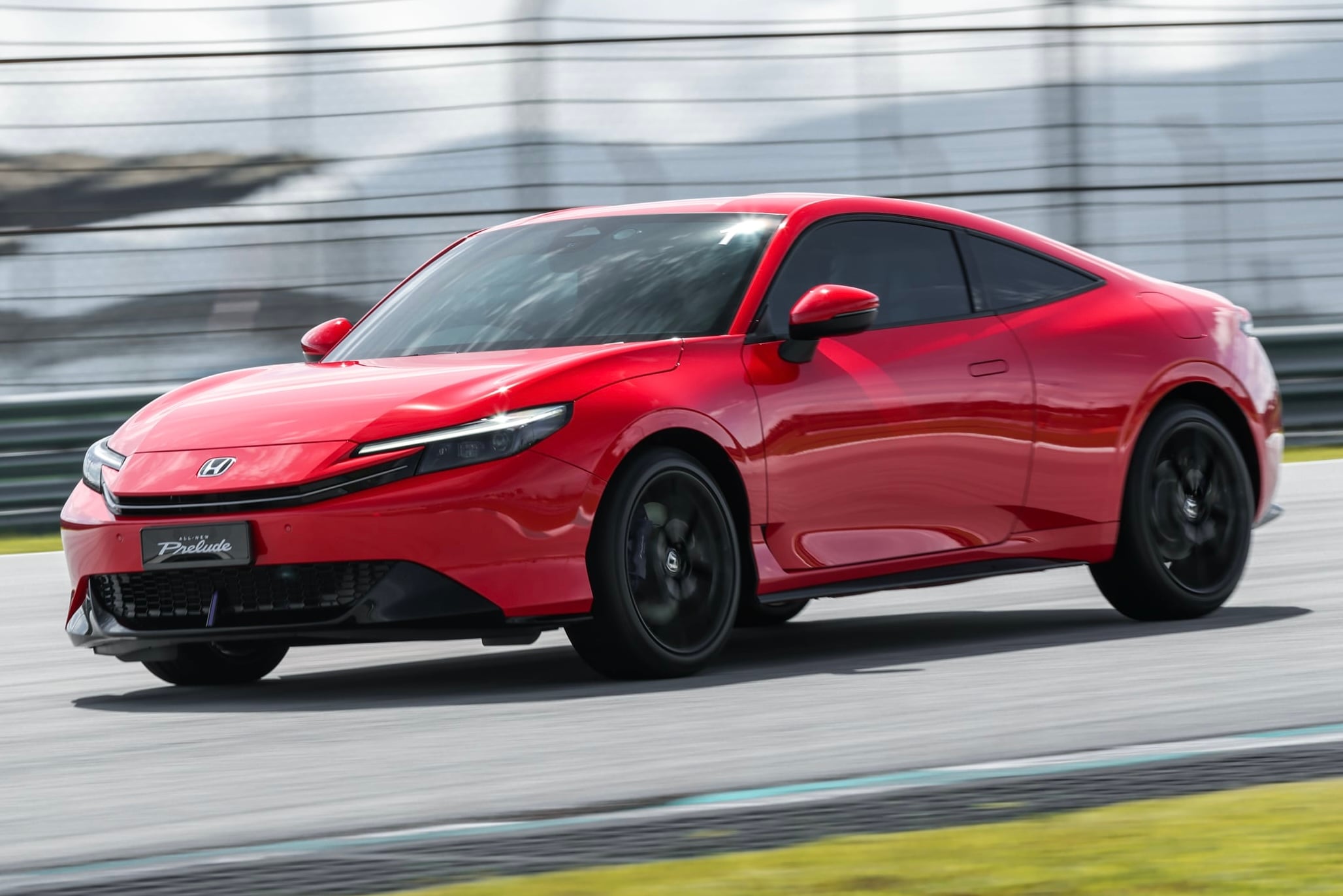
    What’s in store for them then? Before we get to how the BF1 shapes up as a performer, as sampled during a preview session at Sepang, a recap of the bits that make it up. Measuring in at 4,522 mm long, 1,880 mm wide and 1,355 mm tall, with a 2,605 mm wheelbase, the Prelude is quite the looker in the metal. The cab forward profile is unmistakably Civic from the nose to the A-pillar, but the subsequent lines have good flow through, enough to provide the car with its own organic character.

    Colours do determine the pitch on this one – the Crystal Black Pearl hides the textures of the profile, while Rallye Red lends it good visual palpability. The pick of the trio of exterior shades available here however is Winter Frost Pearl, which lends the car a more complete visual presence. Wheels are twin five-spoke 19-inch alloy units, wrapped with 235/40 profile tyres, and only available in black.

    Inside, the cabin has a distinct Civic ring to it, although the dashboard configuration has been altered with the use of hexagonal air vents minus the full-width mesh, and there’s also a unique flat-bottomed three-spoke steering wheel with a 12 o’clock marker. You’ll also find a reworked centre console, which is home to a push-button gear selector instead of a gear lever, and this is flanked by a switch for the electronic parking brake as well as the drive mode selector (Comfort, GT, Sport and Individual) and a large S+ Shift button on the left.

    The Prelude also gets unique front seats, which feature distinctive high shoulders and plenty of bolstering support, and more importantly, dedicated ergonomics and profiling specific to driver and front passenger. Ingress and egress aspects are good and comfort levels are high, suggesting that long runs in them won’t be a tiring affair. The same can’t be said about the rear bench, which although not attempted look like they are meant for kids or adults without legs. Getting in to the rear also looks an absolute pinch, and that roofline probably won’t help matters.

    Interestingly, you’ll find Easter egg elements if you look hard enough. Tomoyuki Yamagami, the large project leader (or chief engineer) of the Prelude project points them out. The first is a nod to the past, a series of numbers found on the inside of the seatbelt guide/retainer of the driver’s seat, uncovered when you unbutton the unit. It lists the date when the first-gen Prelude went on sale in Japan.

    The other pays homage to the music-themed nature of the nameplate, embedded as part of the windscreen markings. Accompanying a silhouette of the car is a sequence of dots arranged on top – these represent the backdrop cadence in Ravel’s Bolero.

    2026 Honda Prelude Malaysian first drive – putting the 203 PS 2.0L hybrid coupe through its paces at Sepang

    Away from those playful subtleties, the rest of the car is straight-laced. It shares much of the FL5 Civic Type R’s underpinnings and chassis components, such as the dual-axis strut front suspension and adaptive dampers, but the turbo petrol and manual gearbox route has been ditched for a hybrid system similar to the one found in the Civic e:HEV and CR-V e:HEV, in this case an Intelligent Multi-Mode Drive (i-MMD) powertrain.

    The system combines the workings of an electric motor and petrol engine, with the latter being a LFC-H4 2.0 litre naturally-aspirated inline-four petrol engine running on an Atkinson cycle. Output from the mill is identical to the unit on the Civic e:HEV, which is 141 PS (139 hp or 104 kW) at 6,000 rpm and 182 Nm of torque at 4,500 rpm.

    The mill acts primarily as a generator for a 72-cell, 1.05 kWh capacity unit battery, which provides juice for a front traction motor offering 184 PS (181 hp or 135 kW) and 315 Nm. When needed, the engine can be clutched in to directly drive the wheels, bringing the total system output to 203 PS (200 hp or 149 kW).

    The party piece is the brand’s new S+ Shift, which simulates gear shifts of an eight-speed transmission unit and integrates with Active Sound Control to offer an elevated aural experience. At Sepang, this was demonstrated first by an acceleration test, meant to highlight the difference in feel with and without S+ Shift engaged.

    While it probably didn’t show off the Prelude in its best light, with the official 8.2 seconds 0-100 km/h sprint time feeling just about that, the test suitably demonstrated the workings of the system, the experience mirroring that provided by the first sampling of it on both the Prelude and the automaker’s next-gen mid-sized platform at Tochigi last year.

    While artificially induced due to the absence of a gearbox, shifts notch in progression up the speed register, and downshifts are manipulated in the same vein, accompanied by throttle blips and rev-matching. Granted, it doesn’t make the car faster, but it does make it feel more engaging.

    The slalom test leaned more into the car’s strengths, which had first been uncovered over a short, tight test track at Tochigi. There, the Prelude covered a series of rapid switchbacks at pace impeccably, the car placing cleanly to input with precision. At Sepang, it made short work of the slalom. While the rack does feel somewhat lifeless, there’s no doubting its speed and accuracy in steering the car about.

    Actual track work highlighted both the car’s forte and limitations. The chassis it sits on is proven, and that solidity was again evident during the few laps on the half track run. There’s that bit more body roll, but the softer suspension setting still feels firm enough to manage wrangling without fuss. The absence of any real power – and over-capacity braking – did however make things less seamless in threading an even, consistent pace across the circuit, but it’s worth remembering that such terrain is not the Prelude’s primary playground.

    Out on more casual drives on winding B-roads, it should really come into its element. The argument is that, like its predecessors, this is a tourer, and should really be viewed as that. The thing is, there was never any intention to make the Prelude any sportier, or faster, than what it is now. That no manual transmission was considered tells most of the story. Are 203 metric horses enough? For the targeted buying crowd, it likely will be. Likewise, the ease of use with its drivetrain.

    As for the idea of underpinning what is essentially a Civic Type R platform, complete with its braking system and elements of its suspension, with a mill from a civilian Civic – and CR-V – sounding like a disconnect of sorts, given that pairing does inescapably feel the odd couple especially under full whack, there is likely a larger future canvas being mapped here, with a latent suggestion that it really is a muted test bed of sorts for the next CTR, which will be a hybrid.

    The Prelude is an intriguing car for this era we are in, where everything is predominantly about numbers, speed or show. Many will undoubtedly disparage it on the first two counts, but as Yamagami points out, performance in this case was never meant to be defined by numbers alone. Those willing to look beyond that will find a car that handles adeptly and drives proper, with a high level of poise and refinement at that.

    As to how many will adopt one, that will be answered by its price, which at first shout indicated a higher price threshold than a CTR, based on its domestic pricing. Subsequent North American pricing, where it is cheaper than its performance sibling, allayed some of those reservations, and the positive bit is that word through the grapevine implies it will likely not be as expensive as initially thought, with the ask for one reasonably cheaper than a CTR, expected to slip well under the RM300k mark. As to exactly how much, we’ll find out very soon.

     
  • Audi Nuvolari debuts – 1,001 PS 4.0L biturbo V8 hybrid with three electric motors; limited to 499 units

    Audi Nuvolari debuts – 1,001 PS 4.0L biturbo V8 hybrid with three electric motors; limited to 499 units

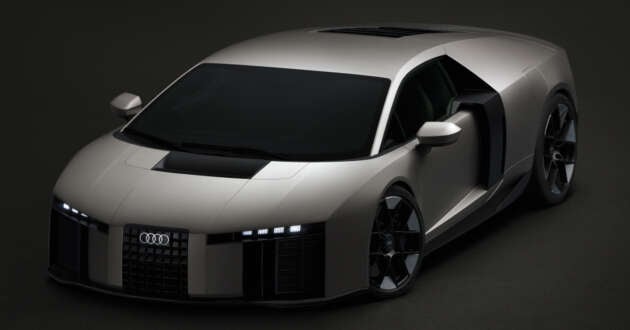
    The Audi Nuvolari has been revealed as Audi’s latest flagship supercar model, drawing upon design cues of the battery-electric Concept C. This will be limited-run hybrid supercar limited to 499 units, featuring active aerodynamics and powered by a twin-turbo V8 engine and three electric drive motors in the vein of Volkswagen Group stablemate, the Lamborghini Temerario.

    Like in the Temerario, the 4.0 litre twin-turbo V8 engine in the Nuvolari outputs 800 PS and 730 Nm on its own, with a rev limit of 10,000 rpm. This is complemented by a trio of axial flux motors, each producing 110 kW (150 PS), two of which are oil-cooled units on the front axle producing up to 2,150 Nm. The electric motors draw energy from a 7.3 kWh lithium-ion battery.

    Combined, the hybrid powertrain outputs 1,001 PS, propelling the Nuvolari from 0-100 km/h in 2.6 seconds, 200 km/h in 6.8 seconds and a top speed of over 350 km/h. The peak power figure of the Nuvolari exceeds that of the Temerario (920 PS), and this makes the Audi marginally quicker than the Lamborghini (0-100 km/h in 2.7 seconds, 343 km/h maximum).

    Harnessing these outputs is Audi’s next-generation all-wheel driveline dubbed quattro predictive ride, which relies on sensor data for parameters including steering angle, acceleration, yaw rate, and current grip level, which then employs the electric drive units to distribute torque precisely front to rear, and side to side. Braking and aero elements are also used to stabilise the car.

    The driver of the Nuvolari can also select from several driving modes, chosen through rotary controls on the steering wheel. The four modes are E-Hybrid, Balanced, Dynamic and Dynamic Plus, while a further Track mode enables more adjustment of traction control, ranging from Wet, Dry, Race to TC Off.

    For its construction, the Nuvolari employs a spaceframe combined with carbon-fibre exterior bodywork; an Audi-first, according to the brand. Using pre-preg autoclave technology, the pre-impregnated carbon fibres are shaped then cured under high pressure and temperature to ensure maximum structural performance with minimal weight.

    Active aerodynamics feature on the Audi Nuvolari, working to balance downforce and drag. The front end features an S-duct to improve aero efficiency at the front axle, for increased downforce and greater cooling of the electric powertrain.

    This is accompanied by the adaptive rear wing, which operates across three modes – closed, low downforce and high downforce. The closed position has the rear wing retracted to reduce drag and improve efficiency, while low and high downforce modes vary depending on driving dynamic and the selected driving mode.

    Dynamic, Dynamic Plus and Track modes have the wing operating fully automatically, where the wing shifts to low downforce on the straights, and shifts to high downforce under braking and in corners. The high downforce configuration can offer up to 400 kg of downforce, says Audi.

    This can be manually operated through a drag reduction system via a dedicated steering wheel button to further lower the rear wing and thus reduce drag. The rear wing position can be controlled via a rotary control in all modes save for E-Hybrid.

    Energy recuperation systems in the Nuvolari sees the front axle employ electric deceleration for “a significant portion” of braking, while the rear axle does the same for coasting, partial braking load and traction control phases for energy recuperation.

    For conventional friction braking hardware, the Nuvolari gets a ceramic braking system comprised of 10-piston calipers on 420 mm x 40 mm front discs, and four-piston calipers on 410 mm x 32 mm rear discs. Construction of these discs use a long-fibre carbon structure designed to withstand extreme thermal loads without compromising structural integrity or consistent friction braking characteristics, says Audi.

    In aid of braking heat management, a specially designed internal cooling system improves airflow and increases dissipation of heat by up to 21% compared to conventional carbon-ceramic brake systems.

    The cabin on the Nuvolari uses a “reduced architecture” to place all controls for essential functions directly within the driver’s field of view, says Audi. Relevant information is prioritised, and secondary information stays in the background, while its digital displays and physical controls aim to enable natural interaction by following a consistent logic.

    A two-tone interior colour scheme uses a dark tone for the front section to support concentration, and surfaces, materials, and accents are used to support the dark theme. Aft of this, a lighter tone, Shadow Dune, is used. The lightweight seats use a carbon-fibre structure in its base and backrest to reduce weight, while providing rigidity and lateral support.

    Limited to 499 units, the first units of the production Audi Nuvolari will reach customers in the first half of 2027.

     
  • KTM adds ETS train services this weekend, Jun 12-14

    Click to enlarge

    KTM has announced extra ETS train services for this weekend, June 12-14. It’s applicable to both northern and southern sectors.

    For the north, train EG 9251 will depart Padang Besar for KL Sentral at 3pm, while EG 9256 will head from KL Sentral to Padang Besar at 9.15 pm. For the exact time the train will reach each stop along the way, see the graphic above.

    For those heading south, EX 9572 and EX 9578 will head to KL Sentral from JB Sentral at 7am and 5.30 pm respectively, while EX 9575 and EX 9573 will make the opposite journey south at 11.55 am and 9.05 am respectively. Again, check the graphic below for the exact timing at your stop.

    Click to enlarge

    As usual, one can buy tickets from the KITS Style app, KTM’s website or physically in person. Doors will close five minutes before the train departs so it’s best to reach the station early.

    Note that there’s a 30% discount for the ETS and ERT if one uses the MADANI30 promo code, but that’s for weekdays only and not applicable to these extra weekend trains, so if your schedule is flexible, travel on weekdays for extra savings. The MADANI30 promo code is valid till October 14, 2026.

     
  • 2026 Porsche Cayenne Electric previewed in Malaysia: 1,156 PS, 669 km WLTP, Active Ride, wireless charging

    2026 Porsche Cayenne Electric previewed in Malaysia: 1,156 PS, 669 km WLTP, Active Ride, wireless charging

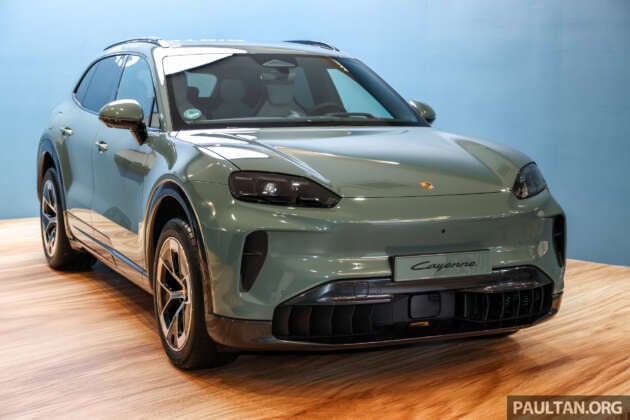
    The new Porsche Cayenne Electric has made an appearance in Malaysia as part of a regional test drive event, some six months after its global debut in November. The fourth generation of Zuffenhausen’s seminal SUV – now a full EV as per the Taycan and Macan – will eventually be launched here at some point, although no timeline for its local introduction has been revealed just yet.

    Built on the same Premium Platform Electric (PPE) – co-developed with Audi – as the Macan, the Cayenne was shown in both standard and Coupé guises, the latter fresh from its unveiling in Beijing in April. The need to fit a large battery means the wheelbase has been stretched by some 128 mm over the petrol model (which, by the way, will remain on sale for the foreseeable future) to 3,023 mm.

    This has resulted in a 55 mm increase in overall length to 4,985 mm; the car is also three millimetres narrower at 1,980 mm and five millimetres lower at 1,674 mm. The Coupé is an additional 24 mm lower at 1,650 mm, thanks to its lower-slung roofline.

    2026 Porsche Cayenne Electric previewed in Malaysia: 1,156 PS, 669 km WLTP, Active Ride, wireless charging

    The Cayenne is currently offered in three variants, all with dual-motor all-wheel drive but without the Taycan’s two-speed rear transmission. Even the base model churns out 408 PS (300 kW) and 835 Nm, or 442 PS (325 kW) in launch control. Activate it and the car is able to sprint from zero to 100 km/h in 4.8 seconds on its way to a top speed of 230 km/h.

    One rung up is the Cayenne S, introduced in March. This produces 544 PS (400 kW) and a whopping 1,080 Nm, rising up to a devilish 666 PS (490 kW) with launch control activated. Zero to 100 km/h is demolished in 3.8 seconds, while top whack rises slightly to 250 km/h.

    But the one you’ll really want is the Cayenne Turbo, which raises performance to a whole new level. In standard mode it already makes 857 PS (650 kW) and a startling 1,500 Nm, but put it into launch control and it pushes out 1,156 PS (850 kW), flinging it to 100 km/h in just 2.5 seconds and to 200 km/h in 7.4 seconds. Top speed is capped to 260 km/h, which you’ll reach in no time.

    2026 Porsche Cayenne Electric previewed in Malaysia: 1,156 PS, 669 km WLTP, Active Ride, wireless charging

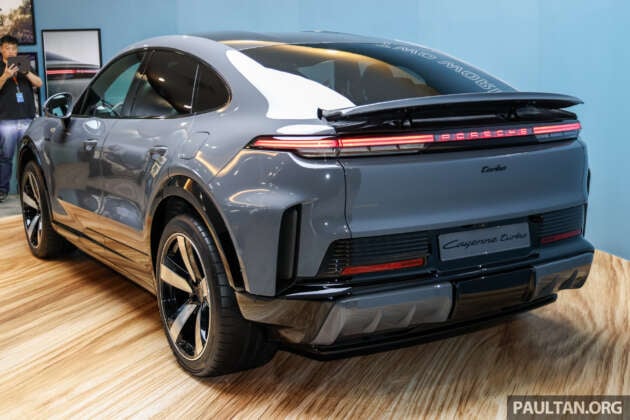
    Porsche Cayenne Turbo Coupé

    To keep the 2.6 tonne kerb weight in check, the Cayenne comes as standard with air suspension with Porsche Active Suspension Management (PASM) adaptive dampers, as well as regenerative braking at up to 600 kW – as much as a Formula E car. A Porsche Torque Vectoring (PTV) Plus limited-slip rear differential, rear-wheel steering at up to five degrees and carbon ceramic brakes are available on the options list.

    Also optional is Porsche Active Ride that made its debut on the third-generation Panamera. Offered for the first time on an SUV, it replaces conventional anti-roll bars with hydraulic dampers to virtually eliminate body roll and even lean in the corners like a motorcycle, without sacrificing ride comfort.

    Even though owners will rarely take the Cayenne off-road, it has nevertheless been developed to be capable off the beaten track. To that end, its air suspension is able to raise the ground clearance to 245 mm, and there’s also an off-road package with a different front bumper to increase approach angle. One slight disappointment is a maximum water-wading depth of only 550 mm, which is lower than some hardier rivals.

    2026 Porsche Cayenne Electric previewed in Malaysia: 1,156 PS, 669 km WLTP, Active Ride, wireless charging

    Despite its towering performance, the massive 113 kWh NMC battery means the Cayenne still offers a decent amount of WLTP-rated range – 642 km for the base model, 652 km for the S and 624 km for the all-singing, all-dancing Turbo. Thanks to its sleeker, more aerodynamic shape, the Coupé offers more range at 661 km for the Cayenne, 669 km for the Cayenne S and 637 km for the Cayenne Turbo.

    As with other Porsche EVs, the Cayenne features an 800-volt electrical architecture, enabling DC fast charging at up to 390 kW (up to 400 kW in ideal conditions) and topping up the huge battery from 10 to 80% in under 16 minutes. It will also support up to 11 kW of AC charging (22 kW optional) and is the world’s first EV to feature a wireless charging option ex-factory, also at up to 11 kW.

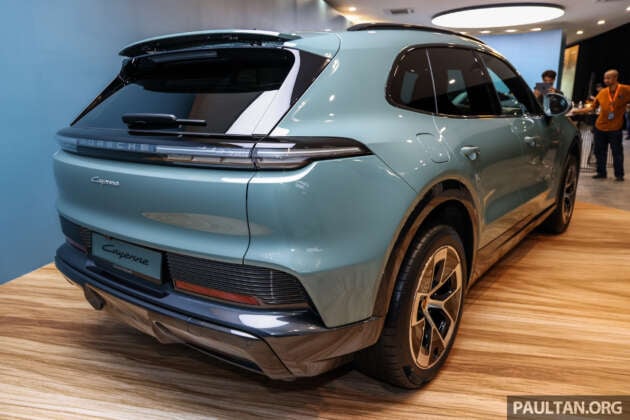
    On the outside, the Cayenne remains recognisably a Porsche, albeit with a slightly more angular design with slimmer matrix LED headlights as per the Taycan and Macan. The side view is characterised by a sweeping glasshouse and a pronounced upswept “flick” in the flanks, while the rear end is decidedly busy for the brand with its extremely wide taillight bar that sweeps downwards towards the centre.

    2026 Porsche Cayenne Electric previewed in Malaysia: 1,156 PS, 669 km WLTP, Active Ride, wireless charging

    Aerodynamic efficiency was a big consideration this time around, so the Cayenne gains an active grille shutter and rear spoiler, as well as front air curtains, aero wheels (which range from 20 to 22 inches in diameter), a completely flat underbody and a large rear diffuser – all for a drag coefficient as low as 0.25. The Turbo model gains additional active blades that jut out from the rear bumper corners.

    The Coupé model gets a sleeker 911-inspired “flyline” (roofline) that sweeps downwards towards the rear deck, which itself is longer and flatter than it is on the petrol version, giving it a slightly sedan-like look. The good news is that the more streamlined shape has resulted in a useful reduction in drag coefficient to 0.23, helping to deliver the aforementioned range increase. The display unit seen here is also fitted with the nameplate’s first powered doors, which will be offered as an option later on.

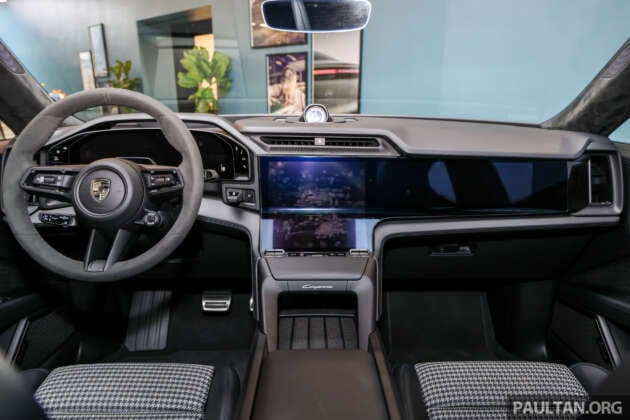
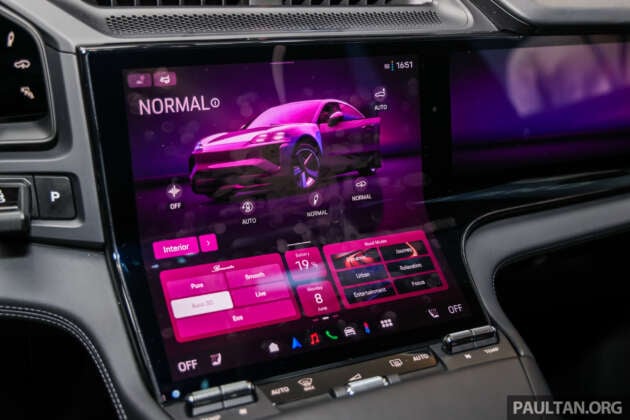
    Inside, the Cayenne is all screen, with the visually impressive array consisting of a 14.25-inch curved OLED instrument display and an optional 14.9-inch passenger display. The highlight here is of course the Flow Display – a striking OLED infotainment touchscreen with a horizontal bend to split the display and control areas. Together with an ergonomic palm rest, this eases the operation of the lower half.

    Blissfully, the Cayenne retains physical air-con and volume controls just ahead of the said palm rest. There’s also an augmented reality head-up display with an effective display size of 87 inches, AI-enhanced voice control, wireless Apple CarPlay and Android Auto and a magnetic pad for the Qi wireless charger – the latter is housed within a large adaptable storage bin with removable cupholders.

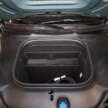
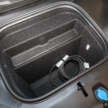
    Practicality is a large part of the Cayenne’s appeal, so rear passengers get powered seat recline and fore/aft adjustment (recline only on the Coupé), as well as plenty of extra legroom thanks to the wheelbase stretch. The boot is also massive at 781 litres for the Cayenne and 584 litres for the Coupé, and there is also a 90 litre front boot, openable by swiping the top of the bumper.

    The Cayenne Electric will not enjoy the EV tax incentives that benefitted the Taycan and Macan until this year, so expect this thing to cost a pretty penny. Still, are you excited for this impressive performance electric SUV? Let us know in the comments.

    GALLERY: Porsche Cayenne Electric in Malaysia


    GALLERY: Porsche Cayenne Turbo Coupé Electric in Malaysia

     
  • B15 biodiesel mandate can reduce Malaysia’s export reliance by boosting domestic usage – Felda chairman

    B15 biodiesel mandate can reduce Malaysia’s export reliance by boosting domestic usage – Felda chairman

    The increase in the biodiesel mandate from B10 to B15 (which happened on June 1) will reduce Malaysia’s reliance on export markets, Federal Land Development Authority (Felda) chairman Datuk Seri Ahmad Shabery Cheek has said, according to a Bernama report.

    “Export markets are good as we earn foreign exchange from them, but sometimes they impose various conditions, quotas or taxes. If our own country uses it (palm oil), it will benefit the domestic plantation industry and protect settlers’ incomes,” he said, adding that the B15 mandate would also encourage industry players to ramp up biodiesel production capacity, which would help maintain palm oil price stability in the future.

    “Malaysia can actually further increase biodiesel use in the future, given the country’s capacity to produce the fuel. The use of palm oil for biodiesel could potentially be raised to about five to six million tonnes a year without affecting domestic needs, thereby reducing the nation’s reliance on export markets,” said Shabery.

    B15 biodiesel mandate can reduce Malaysia’s export reliance by boosting domestic usage – Felda chairman

    Malaysia currently has 20 biodiesel plants with sufficient capacity to support up to a 30% biodiesel blend but most are operating below capacity because demand is currently limited to B10 at petrol stations and B7 in certain industrial sectors.

    The nation produces about 20 million tonnes of palm oil a year – three million tonnes are used for food needs such as cooking oil, margarine and related products, while one million tonnes are used for biodiesel. Therefore, Malaysia still depends on export markets for 15-16 million tonnes.

    Comprising 15% palm methyl ester (PME) and 85% petroleum diesel, B15 biodiesel replaces the B10 blend at no additional cost to the end user. There are plans to step up to B20, B30 and maybe even B50 in the future. Do you drive a diesel vehicle? Here’s what some carmakers – including Isuzu, Mazda, Hyundai, Kia, Ford and Mitsubishi – have to say about their engines running B15.

     
  • Perodua June 2026 promo – RM3,500 discount for Aruz, RM2,500 rebate for Ativa, RM500 off Bezza/Axia

    Click to enlarge

    Perodua is having a June 2026 promo for five models, valid from now till June 30. The usual suspects are the Aruz with a RM3,500 discount and the Ativa with a RM2,500 cash rebate. They’re joined by the Myvi with RM1,000 off, while the Bezza and Axia are yours with a RM500 discount.

    Launched in March 2021, the Ativa is still the only Perodua with a turbocharged engine. The A-segment SUV – the first P2 to ride on the DNGA platform – is powered by a 1.0-litre downsized turbo triple with 98 PS and 140 Nm of torque from 2,400 to 4,000 rpm. It’s paired to the D-CVT gearbox that’s now a mainstay for the market leader. The Ativa is priced from RM62,500 for the base X to RM73,400 for the top AV with the black roof option.

    Introduced in early 2019, the Aruz is seven-seat MPV with SUV styling and ground clearance that’s higher than most SUVs (220 mm). This is the Aruz’s biggest differentiator from P2’s other seven-seater, the Alza – that one is car-like and rides 60 mm lower. For those who want tall car visibility and peace of mind from minor flooding, the Aruz would be a good tool.

    The powertrain consists of a 1.5-litre naturally aspirated engine with 102 PS/133 Nm, and a four-speed torque converter automatic sending drive to the rear axle. Passion Red joined the colour range in late 2021 and Elegant Black surfaced in late 2024. In August, Vintage Brown replaced Electric Blue and the seven-seater also received a blacked out look.

    Today’s Myvi was launched in late 2021, while the Bezza – Perodua’s only sedan and Malaysia’s best-selling car – has been around in current facelift form since 2020. The DNGA-based Axia is the youngest of the lot; the D74A was introduced in early 2023. Click on the links for our launch reports.

    Aside from going to the showroom, you can also try Perodua Online Booking. If you have a car to trade-in, you can do so with Perodua’s POV used car division.

     
  • 2026 Mazda CX-60 3.3G AWD in Malaysia – 3.3T inline-six with mild hybrid; fr RM253k, RM52k more than 2.5L

    2026 Mazda CX-60 3.3G AWD in Malaysia – 3.3T inline-six with mild hybrid; fr RM253k, RM52k more than 2.5L

    As announced recently, Bermaz Motor will introduce a new variant of the Mazda CX-60 at this year’s Kuala Lumpur International Motor Show (KLIMS) called the 3.3G AWD. Ahead of this, the company has released full specifications and pricing for the upcoming range-topper in the CX-60 line-up.

    First, some backstory. The CX-60 made its global debut in March 2022 and is part of Mazda’s Large Product group. The first to be built on the Skyactiv Multi-Solution Scalable Architecture, it features a front-engine longitudinal layout and rear-wheel drive. In addition to familiar inline-four engines, the CX-60 was also announced with inline-six mills as well as a plug-in hybrid system.

    In Malaysia, the CX-60 was previewed at the previous KLIMS in 2024 with an inline-six engine before it was officially launched last September. When it went on sale, the CX-60 was offered in a sole 2.5G 2WD High variant that currently retails for RM200,510.40 on-the-road without insurance.

    That variant features Skyactiv-G 2.5 litre naturally-aspirated inline-four petrol engine rated at 191 PS (189 hp or 141 kW) and 261 Nm of torque, which is paired with an eight-speed automatic transmission to send drive to the rear wheels.

    2026 Mazda CX-60 3.3G AWD in Malaysia – 3.3T inline-six with mild hybrid; fr RM253k, RM52k more than 2.5L

    The new 3.3G AWD High Plus, as it is officially listed, gets the inline-six engine that some have asked for when the CX-60 launched here. The 3.3 litre petrol engine is turbocharged and serves up 284 PS (280 hp or 209 kW) from 5,000 to 6,000 rpm and 450 Nm from 2,300 to 3,500 rpm on its own.

    It is assisted by M Hybrid Boost, a 48-volt mild hybrid system featuring an integrated starter generator rated at 16 PS (16 hp or 12 kW) and 153 Nm – this is linked to a 0.33-kWh lithium-ion battery. Like the 2.5G 2WD High, the 3.3G AWD High Plus also gets an eight-speed auto but drive is routed to all four wheels via Mazda’s i-Activ AWD system.

    In terms of kit, both the new and current variants of the CX-60 share many items but there are some differences. We should also point out that there are two versions (internally codenamed KMES RA6 and RA7) of 3.3G AWD High Plus, each with specific touches to set them apart.

    To start, all variants of the CX-60 come fitted with 20-inch alloy wheels. However, the wheels on the 2.5G 2WD High have a silver metallic finish, while they are either black metallic (RA6) or machined black (RA7) for the 3.3G AWD High Plus. Tyres are 235/50 profile across the board, with i-Stop and Kinematic Posture Control also standard.

    2026 Mazda CX-60 3.3G AWD in Malaysia – 3.3T inline-six with mild hybrid; fr RM253k, RM52k more than 2.5L

    Click to enlarge

    Other shared items on the list include LED headlamps and taillights with signature illumination, LED daytime running lights, keyless entry and start, a panoramic sunroof with sliding and tilt glass, front and rear parking sensors, a 12.3-inch digital instrument cluster, a windshield-projected head-up display, paddle shifters, dual-zone climate control with rear vents, a 10-way powered driver’s seat, a 12.3-inch infotainment touchscreen, Apple CarPlay and Android Auto support, a 12-speaker Bose sound system and a wireless charger.

    In the 2.5G 2WD High, you get black leather upholstery, but the 3.3G AWD High Plus gets fancier Nappa leather in a Tan (RA6) or Pure White (RA7) colour. Going with the Tan option also nets you a two-tone leather steering wheel instead of the standard black in other variants. The presence of all-wheel drive also means the higher-end variant gains an Off-road drive mode in addition to Normal and Sport.

    Additionally, the front passenger seat in the 3.3G AWD High Plus has 10-way adjustability instead of eight, and both front seats come with a ventilation function that the now-base variant lacks. On the driving front, hill descent control is standard on the top variant but not available with the base option.

    Click to enlarge

    No differences when it comes to safety and driver assistance functions, as all CX-60 variants get seven airbags, the usual array of passive systems, adaptive LED headlamps, blind spot monitoring, front and rear cross traffic alert, lane departure warning, lane keep assist, emergency lane keeping assist, driver attention alert, front and rear Smart Brake Support (autonomous emergency braking), Mazda Radar Cruise Control (MRCC) with stop and go as well as high-speed Cruising & Traffic Support (CTS).

    So, how much more willing you paying for the privilege to own a Mazda with an inline-six engine? Well, the 3.3G AWD High Plus goes for RM252,872.80 regardless if you go with the Tan or Pure White interior, so you’re looking at a premium of RM52,362.40 over the 2.5G 2WD High – both continue to be fully imported (CBU) SUVs from Japan.

    As before, the CX-60 comes with a five-year, 100,000-km manufacturer’s warranty and free service package. Returning colour options include Rhodium White, Zircon Sand, Platinum Quartz, Soul Red Crystal and Jet Black, with Machine Gray being a new addition that is exclusive to the 3.3G AWD High Plus.

    GALLERY: 2026 Mazda CX-60 Malaysian brochure and price list

    GALLERY: Mazda CX-60 preview at KLIMS 2024

    GALLERY: 2025 Mazda CX-60 2.5G 2WD High

     
  • Nissan to show a new model at KLIMS 2026 – X-Trail?

    Nissan to show a new model at KLIMS 2026 – X-Trail?

    Go to Nissan Malaysia’s Facebook page and you’ll see this. What’s under that black cloth? We’re going to go out on a limb here and say it’s the T33 Nissan X-Trail, and judging by how Edaran Tan Chong Motor is going all out on e-Power series-hybrid tech, it could be the X-Trail e-Power.

    This thing has been a long time coming – you actually already saw the car at the same show two whole years ago, when it was already four years old!

    Now, with an all-new fourth-gen T34 X-Trail already globally unveiled, this reminds us of how we got the TM-facelift Hyundai Santa Fe a whole year after the new boxy one was globally unveiled. Granted, the Nissan got to ASEAN pretty late, only launching in Indonesia in July 2025 before going on sale in Thailand that December. Better late than never, we suppose.

    The X-Trail e-Power’s 1.5 litre KR15DDT turbo three-cylinder engine with VC-Turbo variable compression has only one job, which is to charge a 1.8-kWh lithium-ion battery. This battery feeds two electric motors – 204 PS/330 Nm up front and 136 PS/195 Nm out back – so it has e-4orce AWD. See what Thailand and Indonesia get here.

    Thai-market Nissan X-Trail e-Power

    Indonesian-market Nissan X-Trail e-Power

    Nissan X-Trail e-Power previewed at KLIMS 2024

     
  • Penang Mutiara Line LRT could expand after 2031

    Penang Mutiara Line LRT could expand after 2031

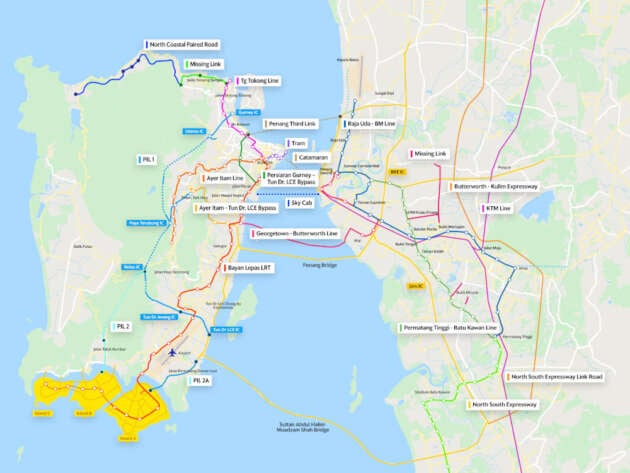
    The Mutiara Line LRT in Penang could be expanded to Tanjung Bungah on the island, as well as to Bukit Mertajam and Batu Kawan on the mainland, reported The Star. After the Mutiara line is completed in 2031, there is potential for the alignment to be extended to Tanjung Bungah which has significant tourism and residential activity, said MRT Corp business planning and project economics general manager Liyana Zainal.

    “It could be extended to Bukit Mertajam and Batu Kawan, and of course upwards (on the mainland),” Liyana said of the rail line’s potential expansion, adding that about 400,000 people commuted daily between the island and mainland, while more than six million tourists visited Penang annually by land and by sea.

    “Of the daily commuters, 62% travel by car and 34% by motorcycle, while another 6,000 to 7,000 people use ferry services each day… it is important to consider the more than six million tourists annually, as well as the 400,000 daily commuters travelling between the island and mainland. This sizeable population will contribute to LRT ridership, demonstrating strong demand and justifying the need for the Mutiara Line,” she said.

    Meanwhile, the Mutiara Line LRT stations at the Penang International Airport and Bandar Sri Pinang are seeing the fastest construction progress along the alignment since January, according to a separate report by The Star.

    For the Penang International Airport station site, construction of station piers and the viaduct is progressing well, with five piers already taking shape, while at the Bandar Sri Pinang station, foundation and column works have been completed. Construction activities along the 23.7km alignment from Komtar to Silicon Island are expected to intensify in the second half of the year, said Penang chief minister Chow Kon Yeow.

     
  • JPJ eBid: QDG and VRG number plates up for bidding

    JPJ has announced that JYY and VRF are the next number plate series to go up for bidding on its online auction platform, JPJ eBid.

    Sarawak’s latest running number series is ‘QDG’, and it will open for tender on June 10. The bidding period on JPJeBid is five days, ending 10pm on June 14. As usual, the results will be out the following day. The whole process is online now, as it has been for some time, and bidders will get the good (or bad) news via email.

    Also available on JPJ eBid is the WP Kuala Lumpur series ‘VRG’. The bidding period starts on June 11, and will close at 10pm on June 15. Results will be out the day after the auction closes.

    New car coming soon and want a nice number plate for the new ride? Why not DIY and skip the reseller’s markup and runner fees? If you have never bid for a number yourself, check out our step-by-step guide on how to navigate JPJ eBid and the techniques needed to get your preferred number at “retail price”.

     
  • iOS 27 Apple CarPlay – video apps and a smarter Siri, here’s what’s landing in your car this year

    iOS 27 Apple CarPlay – video apps and a smarter Siri, here’s what’s landing in your car this year

    Apple used its WWDC 2026 keynote to preview iOS 27, and while the headlines were dominated by a rebuilt, AI-powered Siri, there’s a quietly significant set of upgrades coming to Apple CarPlay – the in-car interface that, for many Malaysians, has become the default way to use a phone behind the wheel.

    The features won’t ship immediately; they arrive as a free software update this fall, with a developer beta available now and a public beta to follow in July. But the direction Apple is taking CarPlay is worth unpacking now.

    Video apps come to CarPlay, but only when you’re parked

    The most eye-catching addition is video. Apple first teased the idea back at WWDC 2025, but iOS 27 is where the feature actually becomes available. Developers can now build CarPlay apps that let you browse and play video directly on the car’s screen, and apps that support AirPlay video can stream to a compatible vehicle display straight from your iPhone.

    Before anyone panics about distracted driving, there’s an important caveat. Video playback only works when the car is parked. Apple says it imagines you using it while waiting at the airport pick-up zone, or, more relevant to the growing number of EV owners, while your car is plugged in and charging. Now, if only Tesla would go ahead and implement CarPlay already.

    One thing to note is that this feature depends on the vehicle supporting it, and Apple says it’s geared towards newer cars. So it isn’t a guarantee that every CarPlay-equipped vehicle on the road today will get video because it depends on the hardware on the car’s side.

    Siri AI arrives in the car

    The new conversational Siri – Apple is branding the rebuilt assistant as “Siri AI” – extends to CarPlay as well. Apple’s example was asking Siri which hiking trail a friend had recommended and getting the answer read back instantly, drawing on personal context from your messages without you having to dig through your phone. Useful when driving because you don’t have to look for the message on your phone.

    Siri AI in CarPlay requires an iPhone 15 Pro or newer. If you’re running an older iPhone, you’ll get the rest of the CarPlay improvements but not the smarter assistant.

    Four smaller-but-welcome tweaks

    Beyond the marquee features, a slide shown briefly during the keynote revealed four refinements that long-time CarPlay users will appreciate:

    • Audio scrubbing in the Now Playing screen – so you can finally jump around within a podcast or track from the car display.
    • Improved GPS accuracy and navigation heading – which should help with the small-but-annoying moments when the map can’t quite decide which way you’re facing.
    • A mini-player for audio within apps – keeping playback controls accessible without leaving what you’re doing.
    • Better wireless CarPlay reliability – arguably the most important one of all, given how flaky wireless CarPlay connections can be in day-to-day use.

    When will we actually be able to use the new CarPlay?

    All of these CarPlay features require an iPhone running iOS 27. The developer beta is out now, a public beta follows in July, and the full release should land alongside the next iPhone lineup in September.

    No idea where the Malaysian market is in the rollout schedule as these features are often rolled out market by market.

     
  • Collezione 100 celebrates a century of Ducati motorcycle history with 10 limited edition models

    Collezione 100 celebrates a century of Ducati motorcycle history with 10 limited edition models

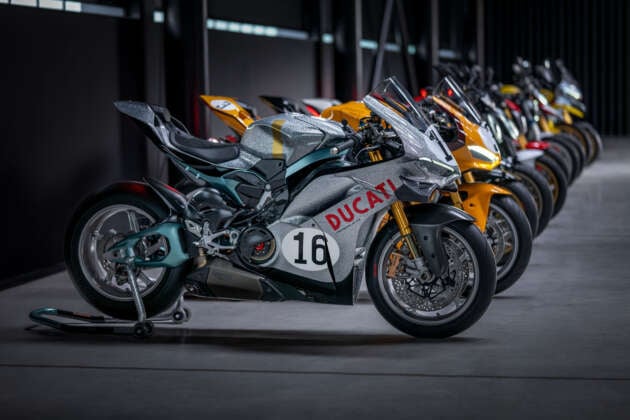
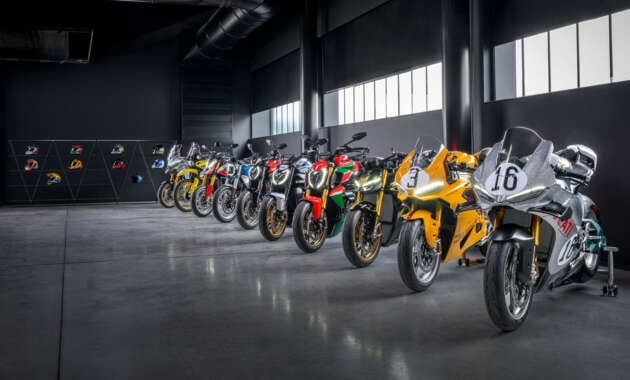
    Celebrating 100 years of Ducati history is the Collezione 100 (Collection 100) with 10 limited edition motorcycles from the Ducati catalogue. Limited to a production number of just 100 motorcycles each, the Collezione 100’s 10 motorcycles line-up is made unique with a special specification, a livery inspired by an iconic Ducati motorcycle from Ducati’s history, an Alcantara or leather seat featuring an embroidered “Ducati 100” logo, and the Bronzo Centenario colour.

    This special colour is applied to the brake callipers, while a nameplate with the edition number is found on the billet alloy triple crown, or brackets and fuel cap ring. Each special edition Collezione 100 machine also comes with a a dedicated rear stand, a motorcycle cover, a certificate of authenticity and a pair of numbered art prints signed by late 20th-century Italian artist Ugo Nespolo, while the V4 models will be presented in a customised wooden case.

    Intended for the collector, the Collezione 100 was presented to buyers at Mugello circuit in Italy where there was also the unveiling of a capsule collection comprising of a helmet and jacket as well as Nespoli’s art. Also unveiled during the presentation were two Collezione 100 racing livery Ducati Desmosedici GP race motorcycles that will be raced by the Ducati Lenovo team along with edition specific products from Carrera eyewear and Piquadro luggage.

    Public unveiling of the Collezione 100 will take place on 3 July during World Ducati Week 2026. Thereafter the collection will be on display in the UK for the Goodwood Festival of Speed, followed by taking up residence in various museums in Bologna, Italy.

    The Collezione 100 starts with the Panigale V4S 100, with inspiration from the 1972 Ducati 750 Imola Desmo ridden by Paul Smart and Bruno Spaggiari whose racing success caused the 750 Imola Desmo to be built in 1973. The special edition Panigale V4S is painted in a “glittery” silver colour, a reference to the science fiction aesthetic popularity in the 1970s, and used by Ducati for the 250 and 350 Desmo single-cylinder bikes, and later to the 500 GP and then to the 750 Imola Desmo.

    The Panigale V2S 100 takes inspiration from the 750 Super Sport Desmo ridden by Franco Uncini in the 1975 Italian ​​Championship, becoming a popular model of Ducatisti of that era. The yellow livery was used on road-going versions of the Super Sport Desmo, while the brown/burgundy colour was used on inboard marine engines assembled in the Borgo Panigale factory, with this limited edition Panigale V2S 100 made special by the fitting of a dry clutch.

    Inspired by the 1979 Ducati 900 Sport Desmo Darmah the Streetfighter V4 S 100 comes in black and gold graphics, a colour scheme popular in motorsports at the time (those of you who know, know). The Darmah, a made up name for marketing, built on Italy’s fascination at the time for exotic locations, with the Streetfighter V4S 100 carrying on theme with tiger head emblazoned on the under tail, and carried on into the matching Collezione 100 helmet and jacket.

    Meanwhile, the Monster 100 follows the styling of the Ducati Monster S4Rs Tricolore from 2008, the final edition of the iconic first generation Monster which began production in March 1993. The Monster 100 comes with a dry clutch, Alcantra seat with embroidered Ducati 100 logo, single-seat cover, windshield and carbon-fibre look cover.

    Next is the Ducati XDiavel V4 100, inspired by a special Ducati 750 Super Sport in the mid-1970s in the US, from a Daytona-winning race bike called the “California Hot Rod” raced by Cook Neilson. XDiavel V4 100 comes with a leather seat with “Ducati 100” logo, dry clutch and central section of the handlebar machined from solid with the name and serial number on a riveted plate.

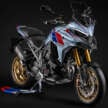
    The XDiavel V4 100’s stablemate, the Diavel V4 RS 100, takes inspiration from the 1979 Ducati 900 Replica, perhaps the most iconic motorcycle in Ducati’s history. The 900 Replica came about from Mike Hailwood’s Isle of Man TT winning race bike, with the livery later applied to some of its sportiest and most exclusive motorcycles, including the Diavel V4 RS 100, with Alcantra seat with “Ducati 100” logo.

    With livery taken from the 1979 Ducati 500 SL Pantah with the then new design trellis frame different from previous Ducati models, and Pantah engine that omitted the bevel gear system that drove every Ducati motorcycle engine from the 1955 Ducati Gran Sport Marianna, is the Ducati Multistrada V4S 100. Marking the first use of belt-driven Desmodromic valves in a Ducati V-twin, the Pantah also carried the engine as a stressed member in the trellis frame, while the sinwgarm pivot was located at the rear of the engine casing, while the original Pantah logo was designed by legendary Italian car designer Giorgetto Giugiaro.

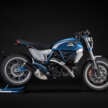
    A retro motorcycle like the Ducati Scrambler 100 would obviously take its cue from its stablemate of 64 years ago, the 1962 Ducati 250 Scrambler, developed exclusively for the US market. Based on the Scrambler Nightshift, the Scrambler 100 comes with Alcantara seat with an embroidered Ducati 100 logo and a Centenary Bronze finish plate with edition number.

    Collezione 100 celebrates a century of Ducati motorcycle history with 10 limited edition models

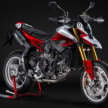
    The Ducati Hypermotard V2 SP 100 draws on the 1975 Ducati 860 “24 Horas de Montjuïc” (24 Hours of Montjuic), raced by Salvador Canellas and Benjamin “Min” Grau in the colours of Giorgio Nepoti, Rino Caracchi and Luigo Rizzi, whose surnames made up the legendary NCR Scuderia, then Ducati’s unofficial factory team, with tis famous “racing coyote” logo. Based on the ‘SP’ variant of the Hypermotard V2, the Hypermotard V2 SP 100 gets Ohlins suspension and forged wheels.

    Rounding out the Collezione 100 is the Ducati DesertX 100, with livery taken from the 1981 Ducati Pantah “Ice” which was something of an oddity in Ducati’s racing history, having been designed for ice racing and based on the Pantah 500. With studded tyres and brakes removed, the Pantah “Ice” came about when EFIM controlled both Ducati and Alfa Romeo, and used Alfa Romeo’s for ice racing in the Alps, and the bikes were used to put on intermission demonstration races for the spectators in between the main event.

     
  • Proton at KLIMS 2026: X50 Sport Edition, FutureMotion hybrid technology, upgraded eMas 7; eMas 5 CKD?

    Proton at KLIMS 2026: X50 Sport Edition, FutureMotion hybrid technology, upgraded eMas 7; eMas 5 CKD?

    Proton heads into the upcoming 2026 Kuala Lumpur Mobility Show (KLIMS 2026) with a range of exhibits, from new models as part of its full, current vehicle line-up, hybrid powertrain technology and intelligent mobility displays, and more.

    Among the models to be shown will be the Proton X50 Sport Edition, a new special edition based on the latest facelift that was launched last July. The line-up can also be expected to feature the S70 MC1, X90 MC, X70 MC3 and Saga MC3.

    An event listing on Facebook posted by the national carmaker revealed that the exhibits set for KLIMS also include a humanoid robot, an Intelligent Mobility Zone, FutureMotion hybrid electric vehicle technology, in addition to the brand’s current product line-up.

    The “FutureMotion HEV Technology” exhibit could point to a new form of powertrain electrification, as Proton no longer has hybridised powertrains in its production vehicles since the previous iteration of the X90 with its 48-volt mild hybrid system was discontinued.

    Hybridisation was mentioned as part of the carmaker’s product roadmap at the Proton Tech Showcase last December, with a 1DHT dedicated hybrid transmission developed with Horse Powertrain that is compatible with plug-in hybrid and hybrid models. The DHT-type transmission has been touted for models including the AMA02, known otherwise as the ‘Saga Cross’.

    For market-ready electrification, Proton eMas is set to reveal its latest variant of the eMas 7 BEV at KLIMS 2026, likely to take after its overseas twin the Geely EX5 that has been upgraded with a larger, 68.39 kWh battery, up from the previous 60.22 kWh unit.

    Meanwhile, the smaller eMas 5 could also emerge at the show as a locally assembled (CKD) variant, as the compact EV model is set to enter production in Tanjong Malim this month.

     
  • 2026 Hyundai Stargazer facelift to debut at KLIMS – 1.5L NA B-MPV rivals Toyota Veloz, Mitsubishi Xpander

    2026 Hyundai Stargazer facelift to debut at KLIMS – 1.5L NA B-MPV rivals Toyota Veloz, Mitsubishi Xpander

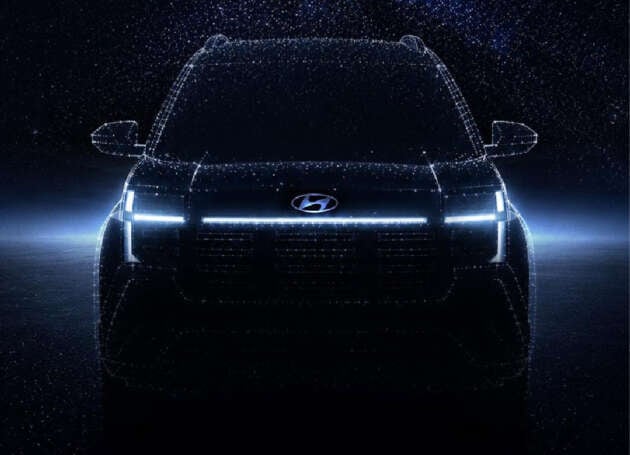
    Hyundai Motor Malaysia (HMY) has confirmed the Stargazer will make an appearance at this year’s Kuala Lumpur International Mobility Show (KLIMS). This was revealed in social media postings that went up a little after 3pm today with the caption “a new star takes centre stage.”

    The front lighting signature seen in the teaser clearly belongs to the facelifted Stargazer, which has already gone on sale in Thailand and Indonesia. In fact, both countries got the pre-facelift model years ago, so we’ve had to wait for a while for the SUV-styled MPV from the South Korean brand to make its way here.

    Measuring 4,575 mm long and 1,780 mm wide, the facelifted Stargazer occupies a larger footprint than the Perodua Alza, Toyota Veloz and Mitsubishi Xpander, while also having a superior wheelbase of 2,780 mm. In addition to the regular Stargazer, there’s also a crossover-inspired X version of the model in Indonesia that sports chunkier front and rear bumpers, a larger spoiler, more robust roof rails black wheel arch surrounds – Cartenz is an added moniker specific to that market.

    In neighbouring markets, the model is powered by a Smartstream 1.5 litre naturally-aspirated inline-four MPI petrol engine developing 115 (113 hp or 84.4 kW) and 144 Nm of torque. This is paired with Hyundai’s IVT, which is a continuously variable transmission (CVT) that uses a chain belt rather than a push belt, or a six-speed manual – the latter is offered in Indonesia and will certainly not come our way.

    If you’re been waiting for the Stargazer, it’s good news for you because you can check out the vehicle at KLIMS. As for how much it’ll cost, we’ll have to wait and see what information HMY is willing to divulge. When the company teased the B-MPV back in February this year, it said the model would only arrive in Q4 this year. Perhaps a launch will only take place around then? Let’s see.

    GALLERY: 2026 Hyundai Stargazer facelift at the 2026 Bangkok International Motor Show

    GALLERY: 2025 Hyundai Stargazer Cartenz at the 2025 Gaikindo Indonesia International Auto Show

    GALLERY: 2025 Hyundai Stargazer Cartenz X at the 2025 Gaikindo Indonesia International Auto Show

     
  • Kia Malaysia signs agreement with Stellantis Malaysia for CKD local assembly operations in Gurun, Kedah

    Kia Malaysia signs agreement with Stellantis Malaysia for CKD local assembly operations in Gurun, Kedah

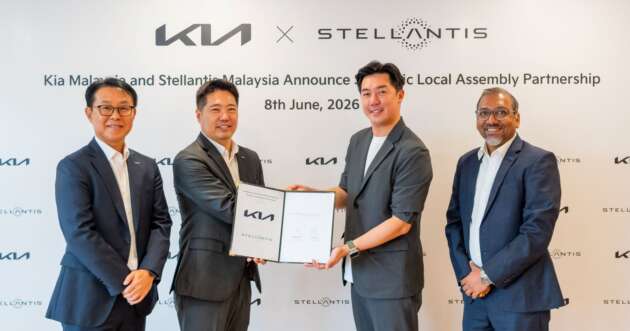
    Kia Malaysia has announced that it has signed a strategic agreement with Stellantis Malaysia for the Korean brand’s upcoming CKD (local assembly) operations in Malaysia.

    This will see Stellantis Malaysia serve as the contract assembler for Kia, at the Stellantis plant in Gurun, Kedah. Stellantis Malaysia states that production of Kia models at the facility is scheduled to begin in the third quarter of this year.

    The Gurun plant is equipped to accommodate the production of current Kia models such as the Sportage and Carnival, as well as future models from the brand, Kia stated. During Kia’s time under Bermaz, local assembly of the Carnival and Sportage for Malaysia was carried out at the Inokom plant in Kulim, Kedah.

    The Gurun, Kedah plant is the same location that assembled Kia vehicles under Naza from 2004, then named the Naza Automotive Manufacturing plant, and which was sold to PSA Group in 2018. Stellantis took full ownership of the plant in 2021.

    Currently employing more than 400 personnel, the 140-acre facility houses the main assembly plant, a two-storey office building, a paint and body shop, an on-site test track, as well as dedicated vendor and supplier zones, according to Kia Malaysia.

    “This collaboration marks a key milestone in Kia’s strategy to return, rebuild, and reposition Kia in Malaysia. By partnering with Stellantis Malaysia and leveraging Malaysia’s automotive supply chain ecosystem, Kia is poised to strengthen our local footprint while reinforcing manufacturing quality and readiness to deliver future model expansion, in line with our Malaysian and regional growth ambitions,” Kia Malaysia and Kia Sales Malaysia president and CEO Hyung Ho Kim said in a statement.

    “Through the continued development and utilisation of Stellantis’ Gurun facility capabilities, we remain committed to supporting the wider automotive and manufacturing ecosystem while creating shared value for partners, suppliers, and the industry,” Stellantis Asean managing director Isaac Yeo stated.

     
  • KLIMS 2026 happening at MITEC from June 12-21 – here’s what you can expect from each car brand there

    KLIMS 2026 happening at MITEC from June 12-21 –  here’s what you can expect from each car brand there

    The Kuala Lumpur International Mobility Show (KLIMS) returns this year and is set to be open to the public from June 12-21. If you’re planning a visit, here’s a rundown of some of the new cars that we’re expecting or have already been confirmed to be at the show.

    UPDATE: We’re continuously updating this post with new information on potential car reveals that will take place at KLIMS based on official releases or social media postings by car brands as and when they surface.

    Great Wall Motor

    Going in alphabetical order, GWM will be previewing “two upcoming electrified additions,” as stated in its release sent out prior to KLIMS. One of these models is most likely the Ora 5, which we were informed previously will arrive in hybrid form first before an EV version is introduced.

    The Ora 5 is sized between the BYD Atto 3 and Proton eMas 7 and has already been launched in Thailand in both hybrid and EV guises. The hybrid uses a 1.5 litre turbocharged inline-four petrol engine paired with an electric motor juiced by a 1.09-kWh battery for a total system output of 223 PS and 476 Nm. As for the EV version, its 204 PS/260 Nm electric motor is fed by a 58.3-kWh battery that provides up to 520 km of range following the NEDC standard.

    As for the other debutant, our guess is the Haval Raptor (also known as the H7 in some markets), a five-seat SUV that was previewed in Indonesia last July. The electrified version of this model is a plug-in hybrid with a 1.5 litre turbo inline-four petrol engine, a two-speed dedicated hybrid transmission (DHT), two electric motors (one front assisting the engine and another for the rear axle) for 378 PS and 750 Nm in unison.

    Those figures are with a 19.1-kWh battery, with the Raptor rated at 383 PS when fitted with a larger 27.5-kWh battery, both of which are offered in China. If the H6 isn’t rugged enough, perhaps the Raptor, which bears some design similarities to the H9, might fit the bill. That’s if it does show its butch face at KLIMS.

    Honda
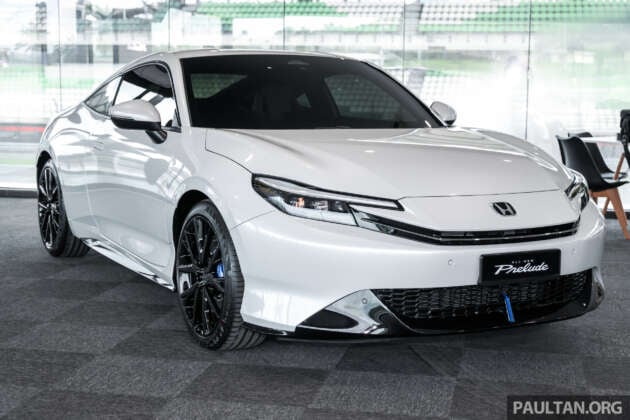
    KLIMS 2026 happening at MITEC from June 12-21 –  here’s what you can expect from each car brand there

    Honda is also a big player in the electrified space, as it already offers hybrid variants for the City, City Hatchback, Civic, HR-V and CR-V. Another hybrid is set to join the line-up very soon, although this one is more unique because it is the reborn Prelude.

    Open for booking since April and previewed to us twice since then, the two-door coupe should finally make its official launch debut at KLIMS. Underneath its sleek body, you’ll find a mix of the Civic Type R and Civic e:HEV, with the former’s dual-axis strut front suspension, adaptive dampers and Brembo brakes forming part of the chassis package.

    Meanwhile, the latter’s Intelligent Multi-Mode Drive (i-MMD) powertrain provides the Prelude’s propulsion, albeit with a twist. The Prelude will be the first Honda product in Malaysia to feature S+ Shift, a feature which integrates with Active Sound Control to simulate gear shifts of an eight-speed transmission unit for more driver engagement.

    Hyundai

    Hyundai Motor Malaysia (HMY) has already said in February that its big launch for the year is the N performance brand, with the Ioniq 5 N and Ioniq 6 N – both EVs – leading this rejuvenated charge. Both cars are already open for booking and we’ve already gotten estimated pricing for them – RM450k and RM460k respectively – so a launch at KLIMS is very likely a definite.

    With dual electric motors, the electric N cars pack 609 PS and 740 Nm of torque in addition to an arsenal of no less than 12 N-branded features, many of which are dedicated to providing a more dynamic driving experience.

    On the flipside, a recent social media post by HMY pretty much confirms the appearance of the Stargazer, a B-segment MPV that would compete against the likes of the Mitsubishi Xpander, Perodua Alza and Toyota Veloz. Thailand and Indonesia have long welcomed the Stargazer, so much so that the MPV has already been facelifted, so it’s good to know that we’re finally getting the MPV.

    Jetour

    Jetour Malaysia’s teaser for KLIMS is the G700, which is a body-on-frame luxury SUV that can also do a spot of off-roading. The G700’s target is clearly the GWM Tank 500 HEV, with the former featuring a more advanced plug-in hybrid powertrain. Plenty of luxury features inside the G700 too, including ventilated and massaging seats, a large infotainment touchscreen, a rear entertainment screen, dual sunroofs and a separate touchscreen to control the rear air-conditioned zone.

    Joining the G700 is the T1, which has been open for booking since late April and is likely to be launched at KLIMS. Less boxy and rugged than the T2 that went on sale earlier, the T1 is offered in two variants that come with turbocharged inline-four petrol engines. The 1.5T 2WD gets a 1.5 litre unit paired with a seven-speed dual-clutch transmission driving the front wheels, while the 2.0T XWD features a 2.0 litre engine, 7DCT and four-wheel drive.

    Kia

    Kia has quite a number of exhibits planned for KLIMS, three of which are EVs that were made known to us just a few days ago. The first two – the EV4 and EV5 – are built on the 400-volt version of the E-GMP (Electric-Global Modular Platform) and come with “reasonable” power outputs.

    The EV4 is available in sedan and hatchback body styles, the former likely to attract more attention with its funky design. Meanwhile, the EV5 is a smart-looking SUV that is larger than a BYD Atto 3 but slightly smaller than a Tesla Model Y. The third EV is the PV5, an electric van that comes in standard and long body styles and can be configured for various purposes, be it passenger or cargo transport.

    While EVs are the highlight of Kia Malaysia’s KLIMS booth, we could also see an internal combustion model at the event in the form of the K4 hatchback, which made its global debut last September. This is the replacement for the Forte/Cerato (the K3 name has been transferred to a Rio successor) and is offered with several turbocharged and naturally-aspirated petrol engines, some with mild hybrid assistance.

    Mazda
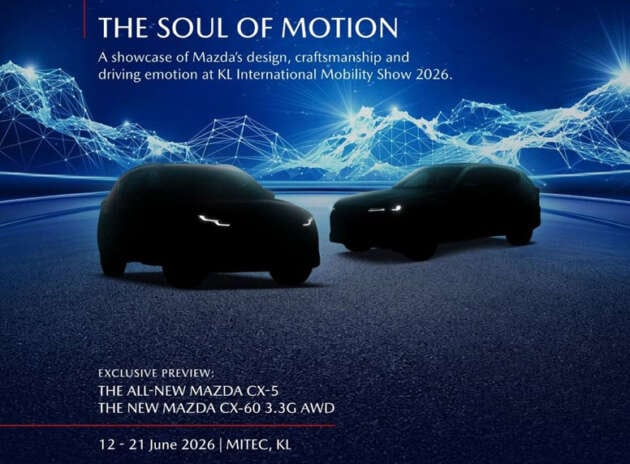
    KLIMS 2026 happening at MITEC from June 12-21 –  here’s what you can expect from each car brand there

    Rumours of the third-generation Mazda CX-5 arrival in Malaysia have been floating around for some time, and we’ll finally get to see the SUV at KLIMS. Earlier this month, Bermaz Motor confirmed in a social media posting that the CX-5’s debut at the event is part of an exclusive preview, so no launch just yet.

    In the same post, the company also said it will showcase a new variant of the CX-60 called the 3.3G AWD. This will sit above the 2.5G 2WD that the CX-60 originally launched with, and it comes at quite a premium. Bermaz Motor isn’t being coy about this top-spec CX-60 variant, as it has already published full details on its website.

    According to the official price, the CX-60 3.3G AWD is priced at RM252,872.80 on-the-road without insurance, which makes it about RM52k more than the 2.5G 2WD. For the money, you’re getting a 3.3 litre turbocharged inline-six petrol engine with M Hybrid Boost (a 48-volt mild hybrid system) that makes 284 PS and 450 Nm. The kit list is similar across variants, although the higher-spec option gets fancier Nappa leather seat upholstery in two colours as well as more adjustment for the front passenger seat.

    MG

    Another brand that has revealed its KLIMS cards is MG, which will show the new ZS and IM6, the latter marking the first appearance of a model from the IM (Intelligence in Motion) premium sub-brand in Malaysia.

    The ZS will be presented in Hybrid+ and Turbo variants, and this generation of the model is larger than the previous ones previewed here previously – – over 100 mm longer (4,430 mm) and nine mm wider (1,818 mm), with a 29 mm longer wheelbase (2,610 mm). Those who have been keeping track will know the ZS in its first generation was sold here as an EV before the new generation appeared at the last KLIMS in December 2024.

    As for the IM6, it is SAIC Motor’s answer to the BYD Sealion 7 and Xpeng G6, beating both in terms of footprint. This is a pure EV that is available with a few powertrain configurations, with higher-end variants even coming with air suspension as well as rear-wheel steering.

    Nissan
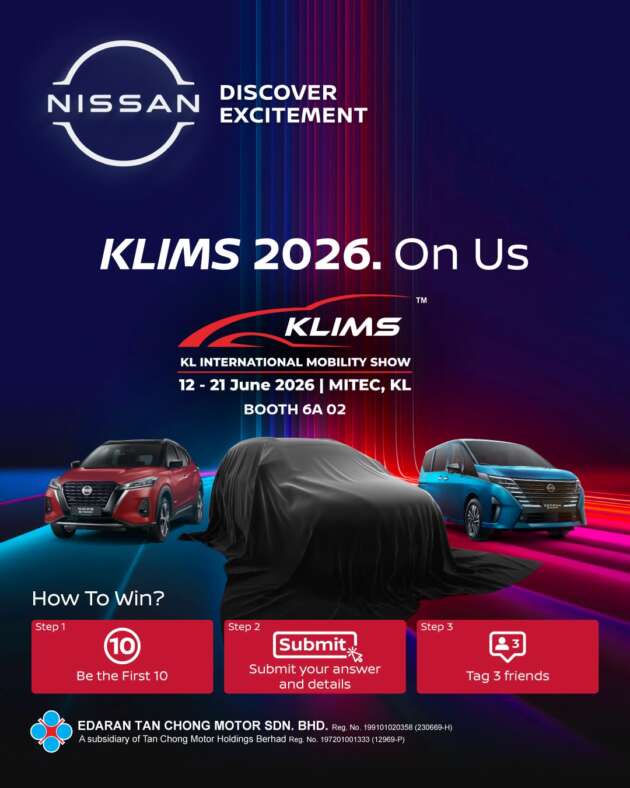
    KLIMS 2026 happening at MITEC from June 12-21 –  here’s what you can expect from each car brand there

    Edaran Tan Chong Motor (ETCM) has been leaning pretty heavily into Nissan’s e-Power, with the hybrid system now featured in the Kicks as well as the Serena. At the previous KLIMS in 2024, the company even previewed the fourth-generation (T33) X-Trail with e-Power, but that car never went on sale here.

    Could it finally be time we say goodbye to the third-generation (T32) X-Trail, an SUV that has been around here since 2015? That’s our guess based on a KLIMS teaser posted on Nissan Malaysia’s Facebook page.

    Mind you, Indonesia and Thailand already welcomed the X-Trail e-Power last year, with the SUV sporting the brand’s e-Power and e-4ORCE all-wheel drive technologies. The e-4ORCE all-wheel drive system is made up of two electric motors, with a BM46 unit at the front being rated at 204 PS (201 hp or 150 kW) and 330 Nm of torque. Meanwhile, the rear MM48 unit serves up 136 PS (134 hp or 100 kW) and 195 Nm.

    Both are powered by a 1.8-kWh lithium-ion battery that is juiced by petrol engine, which is a KR15DDT 1.5 litre turbocharged inline-three making 144 PS (142 hp or 106 kW) and 250 Nm. The engine acts solely as a generator and does not directly drive the wheels in any way.

    Perodua

    KLIMS 2026 happening at MITEC from June 12-21 –  here’s what you can expect from each car brand there

    Perodua recently confirmed the Ativa Hybrid for Malaysia, which means it will be produced locally (CKD) for sale through normal channels and not via the subscription-only trial programme previously. This announcement was made just last month, with the company saying it is still finalising discussions, including production timelines and pricing, among other details.

    As such, it’s unlikely that we’ll get up close with the first CKD unit anytime soon, although the company could present one of the fully-imported (CBU) units that 300 subscribers got when the programme went live way back in September 2022.

    Those cars are essentially a rebadged Daihatsu Rocky e-Smart Hybrid powered by a 106 PS/170 Nm electric motor (Ativa 1.0T has 98 PS/140 Nm). This is accompanied by a 82 PS/105 Nm 1.2-litre WA-VEX Atkinson-cycle three-cylinder naturally aspirated engine acting purely acts as a generator for the hybrid battery – it works in a similar fashion to Nissan’s e-Power system in the Kicks.

    We’re also speculating a sedan concept to be shown at KLIMS based on Perodua’s social media post for KLIMS. In that post, we see the side silhouette of a sedan and words that point towards the future but not much else. Could this be our first look at a new generation of Bezza, a model that has been around since 2016? Maybe? We’ll have to wait and see.

    Proton

    KLIMS 2026 happening at MITEC from June 12-21 –  here’s what you can expect from each car brand there

    Proton’s exhibits for KLIMS, based on its Facebook event post, include the X50 Sport Edition, which is likely another kitted-up version of the SUV, this time based on the facelifted model – the pre-facelift Sport Edition was launched at the last KLIMS. Special versions of existing models are nothing new for Proton – the facelifted X50 got a Black Edition this year – and the new X50 Sport Edition is another one to join the product portfolio.

    The post also lists a humanoid robot as part of the booth, presumably as a representation of autonomy, along with something called ‘FutureMotion HEV Technology’. Strange, considering no current Proton model has any form of electrification ever since the X90 lost its 48-volt mild hybrid system with the MC1, so this must be a preview of future hybrid technologies.

    Proton has indeed touched upon hybrid tech when it revealed its product roadmap a few months ago, with DHT-type transmission being touted for future models, including the much-hyped AMA02, otherwise known among enthusiast circles as the ‘Saga Cross’.

    Actual electrification in the present is over at Proton eMas, with a new variant of the fully electric eMas 7 set to make its debut at KLIMS, as teased on social media. We’re expecting improvements to the EV’s powertrain for more range and possibly a revised kit list. Let’s wait and see.

    Toyota

    KLIMS 2026 happening at MITEC from June 12-21 –  here’s what you can expect from each car brand there

    It has been a busy few months for UMW Toyota Motor (UMWT), with plenty of big launches and product updates since the start of the year. However, the company has been pretty quiet about what it has planned for KLIMS, so we’re left speculating for now.

    Among the many launches this year was the all-new Hilux EV, which marks the arrival of the ninth-generation pick-up truck on our shores. It isn’t far-fetched to assume that mainstream combustion-engined versions of the Hilux will also come our way because not everyone is ready to forgo diesel power entirely with their pick-up trucks.

    If the previous KLIMS served as any indication, we should also expect some global concept cars to be presented at the show alongside cars under the Gazoo Racing (GR) banner. It would be really cool if the Corolla Concept made it to MITEC, but let’s say what the big T has cooked up in a few days’ time.

    TQ Wuling

    KLIMS 2026 happening at MITEC from June 12-21 –  here’s what you can expect from each car brand there

    After launching the Bingo EV last December, TQ Wuling has teased a much larger vehicle for KLIMS this year. Taking the form of an SUV, the design of the taillights seen in the teaser points towards the Huajing S, which is a product born from the SAIC-GM-Wuling joint venture in partnership with Huawei.

    This is a relatively new model that was first unveiled in December 2025 and only went on sale in China sometime in April this year. Powered by a plug-in hybrid system, the Huajing S features a 1.5 litre turbocharged inline-four petrol engine and an electric motor for a total system output of 525 PS and 620 Nm of torque. Depending on the battery pack (31 or 41.9 kWh) and configuration, the electric-only range is between 130 and 175 km.

    Weststar Maxus

    Weststar Maxus took to Facebook earlier this month to tease the Maxus eTerron 9, an electric pick-up truck that will make its debut at KLIMS. Currently open for registrations of interest, the eTerron 9 is longer than both the Ford Ranger and Toyota Hilux and offers up to 430 km of range on the WLTP standard.

    This is courtesy of a 102-kWh battery pack that powers a pair of electric motors – one on each axle – for a combined output of 442 PS. That’s enough for a 0-100 km/h time of 5.8 seconds and a towing capacity of 3.5 tonnes.

    Xpeng

    Xpeng recently announced that the first CKD version of the G6 has rolled off the assembly line at EPMB’s Melaka plant, while also teasing the facelifted X9. Before all of that, our colleagues at paultan.org/BM were told the P7 sedan will be shown at KLIMS, albeit in left-hand drive guise.

    While the P7 looks interesting, it may not be destined for our market as the Chinese automaker announced last year that it is the P7+, not the P7, that will be sold in 36 countries from 2026. Confused? To simplify, the P7 is a larger and cheaper version of the P7i, which itself was a refresh of the first-generation P7.

    Unlike the P7 which is an EV only, the P7+ is also available as a range-extended EV (REEV). However, it does miss out on some of the luxuries of the P7 such as a three-axis infotainment touchscreen and fancy gullwing doors. Perhaps the presence of the P7 at KLIMS is merely to gauge public interest.

    Zeekr

    Zeekr is another Chinese brand that isn’t being mysterious about its KLIMS line-up. Front and centre in its social media posting are the 9X and 009 Grand, ultra-lux products that are set to be showcased at the event.

    If we refer to Zeekr Malaysia’s product roadmap, both are likely to go on sale here in the near future, and we’re hoping to get more details at KLIMS. The 9X oozes Rolls-Royce Cullinan vibes and is a plug-in hybrid with up to 1,400 PS and 1,410 Nm, coming complete with powered doors and a feature-filled cabin to pamper passengers.

    The 009 Grand is no different and is Zeekr’s answer to the Lexus LM. The rear seats are where you want to be in this four-seat MPV, as it has plush seats with a variety of functions as well as what is essentially a television for consuming media.

    Shifting away from the big boys, there’s also the Zeekr X facelifted for 2026. While compact in size, the updates are pretty upmarket if we refer to the Thailand market, as the X there gets powered front doors and loses door handles in favour of electric poppers operated by buttons on the B- and C-pillars. The interior also receives massaging front seats, while the powertrain gets boosted for more power, albeit with some range penalties.

    So, there’s your preview of what you can expect to see at KLIMS. The event takes place at the Malaysia International Trade and Exhibition Centre (MITEC) from June 12-21, and we’ll be covering every new product launch and preview, so stay tuned.



Sell your car to Carro, get paid in 24 hours


Latest Fuel Prices

PETROL
BUDI 95 RM1.99
RON 95 RM3.72 (-0.20)
RON 97 RM4.35 (-0.30)
RON 100 RM6.75
VPR RM7.98
DIESEL
EURO 5 B10 RM4.67 (-0.20)
EURO 5 B7 RM4.87 (-0.20)
Last Updated Jun 04, 2026

Latest Videos


Tools